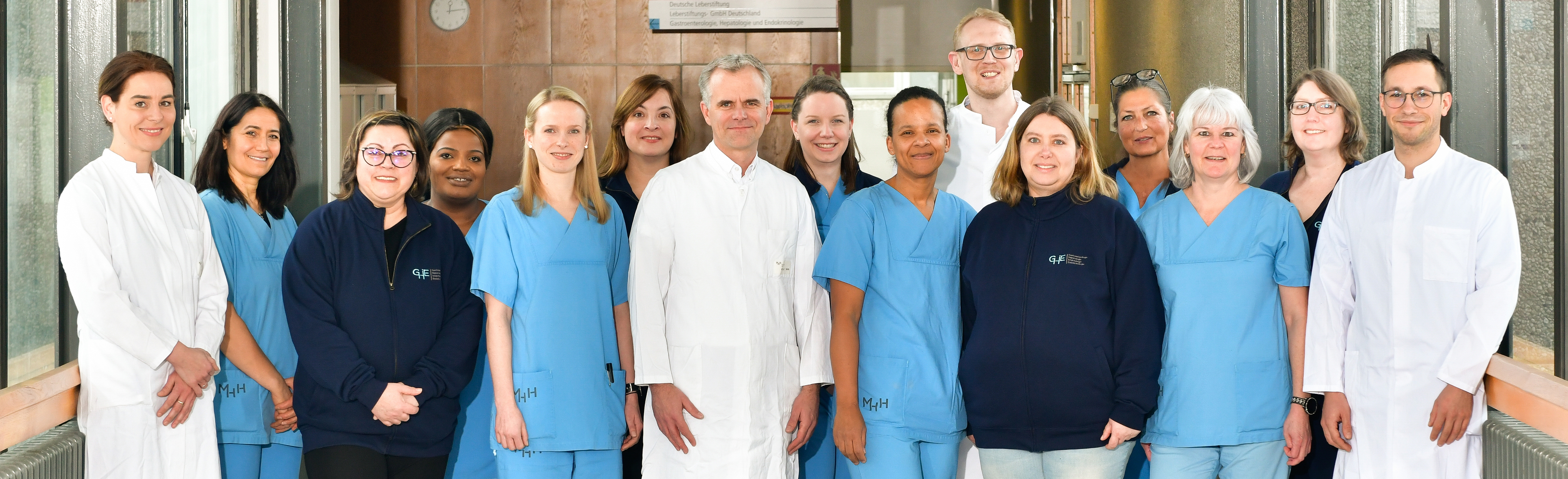
The diagnosis of a malignant tumour is a drastic event - our goal is to design individually optimized therapies together with our patients.
The range of services offered by our gastroenterological oncology outpatient clinic includes the treatment of malignant tumors of the pancreas, liver and bile ducts (including gallbladder tumors), as well as gastric and intestinal tumors and neuroendocrine neoplasia. Substantial progress has been made in the treatment of all of these tumor diseases in recent years. Our aim is to develop modern and individualized treatment concepts for our patients. To this end, we continuously review the results of international studies so that we can quickly integrate useful approaches into our treatment concepts. Our outpatient clinic also has an active portfolio of selected therapy studies through which we can provide patients with access to selected therapeutic approaches that we consider to be oncologically meaningful and forward-looking.
At the heart of modern oncological therapy development is the interdisciplinary exchange at tumor conferences - together with representatives of visceral surgery, radiotherapy, nuclear medicine, (interventional) radiology as well as pathology and human genetics, we consistently discuss every patient with gastrointestinal tumor disease when diagnostic or therapeutic decisions need to be made in order to review therapy results or if a change in therapy modality is being considered. These twice-weekly conferences are supplemented by the bi-weekly molecular tumour board, in which the results of complex genetic diagnostics are discussed separately and possible therapeutic consequences in terms of personalized oncology are determined.
Treatment recommendations are made on the basis of the tumor conferences and, if necessary, inpatient admission is planned or contact with another specialist department is arranged.
For patients receiving outpatient infusion therapy (chemotherapy, immunotherapy, targeted therapies), we have 10 therapy places available on the premises of our outpatient clinic. Here you will be cared for by our dedicated, oncologically trained nursing staff. Our patients are supported by our colleagues in psycho-oncology, nutritional medicine and sports medicine.
If you are considering treatment in our gastroenterology and oncology outpatient clinic, or if you or your oncologist would like a second opinion, please contact us.
In order to facilitate rapid treatment planning, we ask you to bring with you to your first visit, if available, current imaging (e.g. on CD) including the corresponding written findings, as well as meaningful medical reports documenting the previous diagnosis and treatment of the tumor disease.
Cholangiocellular carcinoma (bile duct cancer) is the second most common tumor of the liver after hepatocellular carcinoma. The treatment of tumors of the bile ducts is a focus of the Medical School, which is why we offer our patients a comprehensive range of diagnostic and therapeutic measures. At our weekly interdisciplinary tumor conferences, we develop an optimized treatment concept for each patient depending on the stage of the tumor. We place particular emphasis on tumor sequencing and molecular therapies for cholangiocellular carcinoma.
Diagnostics:
- Contrast-enhanced sonography, magnetic resonance imaging and computed tomography by an interdisciplinary team from the gastroenterology and radiology departments
- Molecular diagnostics (tumor sequencing) with next-generation DNA and RNA sequencing
- Endoscopic diagnostics and therapy with ERCP, PTCD system, endosonography, stent implantation and intraductal RFA
- In selected cases, nuclear medicine PET-CT diagnostics
Therapy:
- Case discussion in an interdisciplinary team of experts from the fields of gastroenterology, visceral surgery, radiology, pathology, radiotherapy, nuclear medicine and human genetics
- Surgical therapies (e.g. laparoscopic and/or robotic resections) by the visceral surgery team (Prof. Schmelzle),
- Assessment of indications for liver transplantation for early carcinomas and patients with primary sclerosing cholangitis and severe dysplasia
- Interventional radiological and nuclear medicine therapies (transarterial chemoembolization, selective internal radiotherapy, chemosaturation, ablative therapies such as radiofrequency and microwave ablation) by the radiology and nuclear medicine teams (Prof. Wacker and Prof. Bengel)
- Radiotherapy (e.g. stereotaxy) by the radiotherapy team (Prof. Christiansen)
- System therapies with chemotherapy, immunotherapies and molecular therapies for patient-specific mutations (e.g. FGFR fusions, IDH1 mutations, etc.)
- Treatment within the framework of current therapy studies
- Discussion of molecular genetic findings in the molecular tumor board
- Complex palliative medical treatment by our interdisciplinary palliative care team
- Nutritional medical care by our nutrition team
Hepatocellular carcinoma (liver cancer) is the most common liver tumor. In our certified therapy center for hepatocellular carcinoma, we offer our patients a comprehensive range of diagnostic and therapeutic measures. At our weekly interdisciplinary tumor conferences, we create an optimized therapy concept for each patient depending on the respective tumor stage and adapted to the liver function and possible concomitant diseases.
Diagnostics:
- Contrast-enhanced sonography, magnetic resonance imaging and computed tomography by an interdisciplinary team of liver experts from the gastroenterology and radiology departments
- Molecular diagnostics (tumor sequencing) with next-generation DNA and RNA sequencing
- In selected cases, nuclear medicine PET-CT diagnostics
Therapy:
- Case discussion in an interdisciplinary team of experts from the fields of gastroenterology, visceral surgery, radiology, pathology, radiotherapy, nuclear medicine and human genetics
- Surgical therapies (e.g. laparoscopic and/or robotic resections) by the visceral surgery team (Prof. Schmelzle),
- Assessment of indications for liver transplantation
- Interventional radiological and nuclear medicine therapies (transarterial chemoembolization, selective internal radiotherapy, ablative therapies such as radiofrequency and microwave ablation) by the radiology and nuclear medicine teams (Prof. Wacker and Prof. Bengel)
- Radiotherapy (e.g. stereotaxy) by the radiotherapy team (Prof. Christiansen)
- System therapies with immunotherapies or tyrosine kinase inhibitors
- Treatment within the framework of current therapy studies
- Discussion of molecular genetic findings in the molecular tumor board
- Complex palliative medical treatment by our interdisciplinary palliative care team
- Nutritional medical care by our nutrition team
Colorectal carcinoma (colon cancer) is the most common gastrointestinal tumor. At our certified center for rectal and colon cancer, we develop an optimized treatment concept for each patient at our weekly interdisciplinary tumour conferences, depending on the stage of the tumour. For rectal cancer in particular, we try to use modern treatment concepts such as total neoadjuvant therapy to ideally enable patients to preserve their bowel without surgery.
Diagnostics:
- Contrast-enhanced sonography, magnetic resonance imaging (special rectal MRI scans) and computed tomography scans by an interdisciplinary team from the gastroenterology and radiology departments
- Endoscopic diagnostics and therapy (e.g. EMR, ESD and full-wall resections for early-stage tumors and large intestinal polyps)
- Molecular diagnostics (tumor sequencing) with next-generation DNA and RNA sequencing
- Nuclear medicine PET-CT diagnostics in selected cases
Therapy:
- Case discussion in an interdisciplinary team of experts from the fields of gastroenterology, visceral surgery, radiology, pathology, radiotherapy, nuclear medicine and human genetics
- Surgical therapies (e.g. laparoscopic and/or robotic resections) by the visceral surgery team (Prof. Schmelzle),
- Interventional radiological and nuclear medicine therapies (transarterial chemoembolization, selective internal radiotherapy, ablative therapies such as radiofrequency and microwave ablation) by the radiology and nuclear medicine teams (Prof. Wacker and Prof. Bengel)
- Radiotherapy (e.g. stereotaxy) by the radiotherapy team (Prof. Christiansen)
- Systemic chemotherapy, immunotherapy for microsatellite-instable tumors
- Treatment within the framework of current therapy studies
- Discussion of molecular genetic findings in the molecular tumor board
- Complex palliative medical treatment by our interdisciplinary palliative care team
- Nutritional medical care by our nutrition team
Tumors of the skin and choroid are treated at the MHH by colleagues from the Clinical Department of Dermatology. In close consultation with the dermatologists, local treatment of liver metastases using chemosaturation may be indicated(https://chemosat.com/patient-and-caregivers/what-is-chemosaturation-therapy.html). In exceptional cases, this therapy can also be offered for metastases of other tumors (e.g. bile duct carcinomas) after prior approval by the health insurance company.
Diagnostics:
- Contrast-enhanced sonography, magnetic resonance imaging and computed tomography by an interdisciplinary team from the departments of gastroenterology and radiology. Before chemosaturation is performed, an MRI of the head is always carried out to rule out metastases and vascular anomalies
Therapy:
- Case discussion in an interdisciplinary team of experts from the fields of dermatology, gastroenterology, visceral surgery, radiology, pathology, radiotherapy, nuclear medicine and human genetics
Inpatient chemosaturation after therapy recommendation by dermatology and our interdisciplinary tumor board
Neuroendocrine tumors are tumors that should only be treated by an interdisciplinary team with sufficient experience in the treatment of this tumor entity due to their rarity, their great heterogeneity and the wide range of treatment options. The Medical School has specialized in the treatment of neuroendocrine tumors for many years and offers the complete therapeutic spectrum for NET patients. In particular, there is close cooperation between the Clinical Departments of Gastroenterology, Hepatology, Infectious Diseases and Endocrinology and the Clinical Department of Nuclear Medicine for expert diagnosis and therapy.
Diagnostics:
- Contrast-enhanced sonography, magnetic resonance imaging and computed tomography by an interdisciplinary team from the departments of gastroenterology and radiology
- Endoscopic diagnostics and therapy (e.g. EMR, ESD and full-wall resections for early-stage neuroendocrine tumors)
- Molecular diagnostics (tumor sequencing) with next-generation DNA and RNA sequencing
- Endocrinological diagnostics
- Nuclear medicine PET-CT diagnostics as part of outpatient ASV care: Patients diagnosed with a neuroendocrine tumor have the opportunity to receive the necessary PET-CT imaging (as DOTATATE or FDG-PET) at the MHH under legally prescribed conditions. If you have any questions, please contact either us or our colleagues in Nuclear Medicine directly (Prof. Bengel, Clinical Department of Nuclear Medicine).
Therapy:
- Case discussion in an interdisciplinary team of experts from the fields of gastroenterology, visceral surgery, radiology, pathology, radiotherapy, nuclear medicine and human genetics
- Nuclear medicine radioligand therapy (PRRT) by the Clinical Department of Nuclear Medicine (Prof. Bengel)
- Surgical therapies (e.g. laparoscopic and/or robotic resections) by the Visceral Surgery team (Prof. Schmelzle),
- Interventional radiological and nuclear medicine therapies (transarterial chemoembolization, selective internal radiotherapy, ablative therapies such as radiofrequency and microwave ablation) by the radiology and nuclear medicine teams (Prof. Wacker and Prof. Bengel)
- Radiotherapy (e.g. stereotaxy) by the radiotherapy team (Prof. Christiansen)
- Systemic chemotherapy, therapy with tyrosine kinase inhibitors
- Treatment within the framework of current therapy studies
- Discussion of molecular genetic findings in the molecular tumor board
- Complex palliative medical treatment by our interdisciplinary palliative care team
- Nutritional medical care by our nutrition team
Tumors of the oesophagus and stomach pose a particular challenge due to the early impairment of food intake. At our certified center for esophageal and gastric cancer, we develop an optimized treatment concept for each patient at our weekly interdisciplinary tumour conferences, depending on the stage of the tumour.
Diagnostics:
- Contrast-enhanced sonography, magnetic resonance imaging and computed tomography by an interdisciplinary team from the gastroenterology and radiology departments
- Endoscopic diagnostics and therapy (e.g. EMR, ESD and full-wall resections for early-stage tumors and polyps in the oesophagus/stomach area, insertion of feeding tubes)
- Molecular diagnostics (tumor sequencing) with next-generation DNA and RNA sequencing
- Nuclear medicine PET-CT diagnostics in selected cases
Therapy:
- Case discussion in an interdisciplinary team of experts from the fields of gastroenterology, visceral surgery, radiology, pathology, radiotherapy, nuclear medicine and human genetics
- Surgical therapies (e.g. laparoscopic and/or robotic resections) by the visceral surgery team (Prof. Schmelzle),
- Interventional radiological and nuclear medicine therapies (transarterial chemoembolization, selective internal radiotherapy, ablative therapies such as radiofrequency and microwave ablation) by the radiology and nuclear medicine teams (Prof. Wacker and Prof. Bengel)
- Radiotherapy (e.g. stereotaxy) by the radiotherapy team (Prof. Christiansen)
- Systemic chemotherapy and immunotherapy
- Treatment within the framework of current therapy studies
- Discussion of molecular genetic findings in the molecular tumor board
- Complex palliative medical treatment by our interdisciplinary palliative care team
- Nutritional medical care by our nutrition team
Pancreatic carcinoma (pancreatic cancer) is one of the most common gastrointestinal tumors. At our certified center for pancreatic cancer, we create an optimized treatment concept for each patient at our weekly interdisciplinary tumor conferences, depending on the stage of the tumor.
Diagnostics:
- Contrast-enhanced sonography, magnetic resonance imaging and computed tomography by an interdisciplinary team from the gastroenterology and radiology departments
- Molecular diagnostics (tumor sequencing) with next-generation DNA and RNA sequencing
- Endoscopic diagnostics and therapy with ERCP, PTCD system, endosonography, stent implantation and intraductal RFA
- In selected cases, nuclear medicine PET-CT diagnostics
Therapy:
- Case discussion in an interdisciplinary team of experts from the fields of gastroenterology, visceral surgery, radiology, pathology, radiotherapy, nuclear medicine and human genetics
- Surgical therapies (e.g. laparoscopic and/or robotic resections) by the visceral surgery team (Prof. Schmelzle),
- Interventional radiological and nuclear medicine therapies (transarterial chemoembolization, selective internal radiotherapy, ablative therapies such as radiofrequency and microwave ablation) by the radiology and nuclear medicine teams (Prof. Wacker and Prof. Bengel)
- Radiotherapy (e.g. stereotaxy) by the radiotherapy team (Prof. Christiansen)
- Systemic chemotherapy
- Treatment within the framework of current therapy studies
- Discussion of molecular genetic findings in the molecular tumor board
- Complex palliative medical treatment by our interdisciplinary palliative care team, including interventional pain therapy (coeliac plexus blockade)
- Nutritional medical care by our nutrition team