Dr. rer. nat. Tetyana Yevsa working group
Welcome to the working group of Dr. rer. nat. Tetyana Yevsa. Here we would like to give you an insight into the scientific topics of our research group. We would also like to introduce you to the members of the research group and our publications.
Hepatocellular carcinoma (HCC) and cholangiocarcinoma (CCA) are primary carcinomas of the liver and together are the fourth most common cause of cancer-related deaths worldwide. HCC develops as a result of liver cirrhosis, which is usually caused by a chronic infection (hepatitis B or hepatitis C virus). In Europe, other common causes of HCC are alcoholic and non-alcoholic fatty liver disease. The incidence of HCC and CCA is steadily increasing, so that the mortality rate and incidence of liver cancer has risen worldwide over the past 30 years. New and innovative therapies are therefore required to effectively counteract this increasing trend.
In order to develop suitable therapeutic approaches against gastrointestinal malignancies (HCC, CCA and pancreatic ductal adenocarcinoma (PDAC)) for patients, the new strategies must first be tested in vitro in cell cultures and then in vivo in autochthonous/orthotopic and immunocompetent animal models. The autochthonous/orthotopic mouse models of HCC, CCA and PDAC that we have developed and use in our studies are physiological and tumor development in mice is similar to that in humans. Compared to subcutaneous tumor models, such autochthonous/orthotopic mouse models are of higher clinical relevance and provide more transferable data, for example in terms of drug efficacy, and consequently reflect the clinical outcomes of patients.
Current evidence suggests that T cells play an important role in the development and progression of liver cancer. They are responsible for migrating into tumors and preventing the growth of malignant cells through a T cell-mediated immune response. However, by stimulating checkpoint molecules on T cells, the tumor environment causes their activity to come to a standstill. Some of these checkpoint molecules, such as PD-1, are well known and are currently blocked by specific antibodies in liver cancer therapy. In our research, using RNA interference and the CRISPR-Cas9 method, we would like to identify further such inhibitory molecules on T cells and then treat them specifically in the form of personalized T cell-based immunotherapy.
In addition to T-cell based immunotherapy, our focus is also on the development of a cancer vaccine that can be used preventively and prophylactically for the treatment of hepatobiliary tumors. Our vaccine is based on a highly attenuated Listeria monocytogenes strain that expresses tumor-specific antigens. We are currently testing the efficacy and safety of the vaccine in autochthonous mouse models with different application strategies.
In another project, we aim to investigate the role of antigen-presenting cells (APC) in premalignant and malignant livers. We are also investigating the interaction of biochemical and immunological processes. The knowledge we will gain from these data may be beneficial for the development of an APC-based immunotherapy as well as for other therapeutic methods in which APCs can be used for the treatment of liver cancer.
In another project, we are testing the efficacy of classical chemotherapy and traditional Chinese medicine (TCM). This combination has a promising effect in oncology. TCM has a long history and is administered in China alongside chemotherapy. In our study, we aim to investigate the mechanism of action of TCM sufficiently in molecular biology and cell biology in order to be able to use it in a more targeted and effective way.
We are also investigating new immunomodulatory therapy strategies in acute liver damage and in transplantation medicine. Acute liver failure (ALV) is a clinically dramatic syndrome with a high mortality rate. Apart from transplantation, there is usually no causal treatment option. By characterizing ALV and new immunomodulatory strategies, our aim is to develop new therapeutic approaches to treat ALV with new strategies and to improve the function and survival of liver transplants with new immunomodulatory strategies.
In other projects, we are investigating the interactions between infections and gastrointestinal carcinomas as well as the protective role of the microbiome in liver cancer.
- Development of new immunotherapies using in vivo RNA interference (RNAi) and CRISPR-Cas9 screening in immune cells during tumorigenesis.
- Investigation of the role of professional antigen-presenting cells for senescence surveillance and suppression of liver cancer development.
- Investigation of interactions between infections and gastrointestinal carcinomas. Role of the microbiome in liver cancer.
- Investigation and characterization of therapy-induced senescence (TIS) and associated immune responses in liver cancer.
- Investigation of interactions between biochemical and immunological processes in liver cancer development.
- Development of bacteria- and virus-based vaccines for the prevention and treatment of gastrointestinal tumor diseases.
- Immune characterization and development of new therapeutic strategies in acute liver injury and in the field of transplantation.
Further information
- DAAD Research Grants (Award) - Doctorates in Germany, 2019-20 - for Ms. Nataliia Petriv
- DAAD Research Grants - Leonhard Euler Program, 2019-20 - for Ms. Myroslava Vatashchuk
- DAAD Research Grants - Leonhard Euler Program, 2018-19 - for Ms. Anastasiia Hrushchenko and Ms. Lesia Sishchuk
- DAAD Research Fellowships - Leonhard Euler Program, 2017-18 - for Ms. Mariia Holovchak and Ms. Nataliia Petriv
- Poster Award - 32nd Ernst Klenk Symposium in Molecular Medicine in Cologne, 2016 - for Ms. Lisa Hönicke
- Research Award from Gilead Sciences "International Research Scholars Program in Liver Disease" for Dr. rer. nat. Tetyana Yevsa
- German Research Foundation (DFG)
- Wilhelm Sander Foundation
- Fritz Thyssen Foundation
- Young Academy Junior Researcher Support Program of the Hannover Medical School
- HiLF I
- HiLF II
- Ellen Schmidt Habilitation Program of the Hannover Medical School
- German Academic Exchange Service (DAAD)
- Integrated Research and Treatment Center for Transplantation (IFB-Tx)
- Waltraud and Burghard Meyer Foundation
Our working group
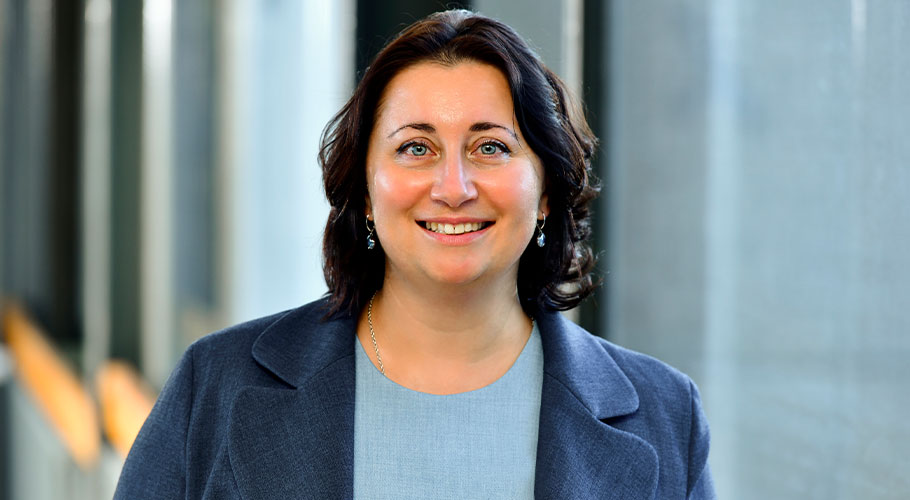
Dr. rer. nat. Tetyana Yevsa
Clinical Department of Gastroenterology, Hepatology, Infectious Diseases and Endocrinology
Hannover Medical School OE 6810
Carl-Neuberg-Str. 1
30625 Hannover
Phone +49 511 532-5649
Yevsa.Tetyana@mh-hannover.de
- M. Sc. Inga Hochnadel (PhD student, cand. Dr. rer. nat.)
- M. Sc. Nataliia Petriv (PhD student, cand. Dr. rer. nat.)
- MD Huizhen Suo (Doctoral student, cand. Dr. med.)
- Dr. med. Nils Jedicke (PostDoc, assistant physician)
- B.Sc. Myroslava Vatashchuk (Master's student)
- Jennifer Schmidt (Voluntary Scientific Year)
Alumni scientists
- Dr. rer. nat. Lisa Hönicke
- M. Sc. Mariia Holovchak
- M. Sc. Anastasiia Hrushchenko
- M. Sc. Lesia Sishchuk
- B.Sc. Jan René Haak
- B.Sc. Philip Gemke