2,664 children were born at the MHH in 2025.
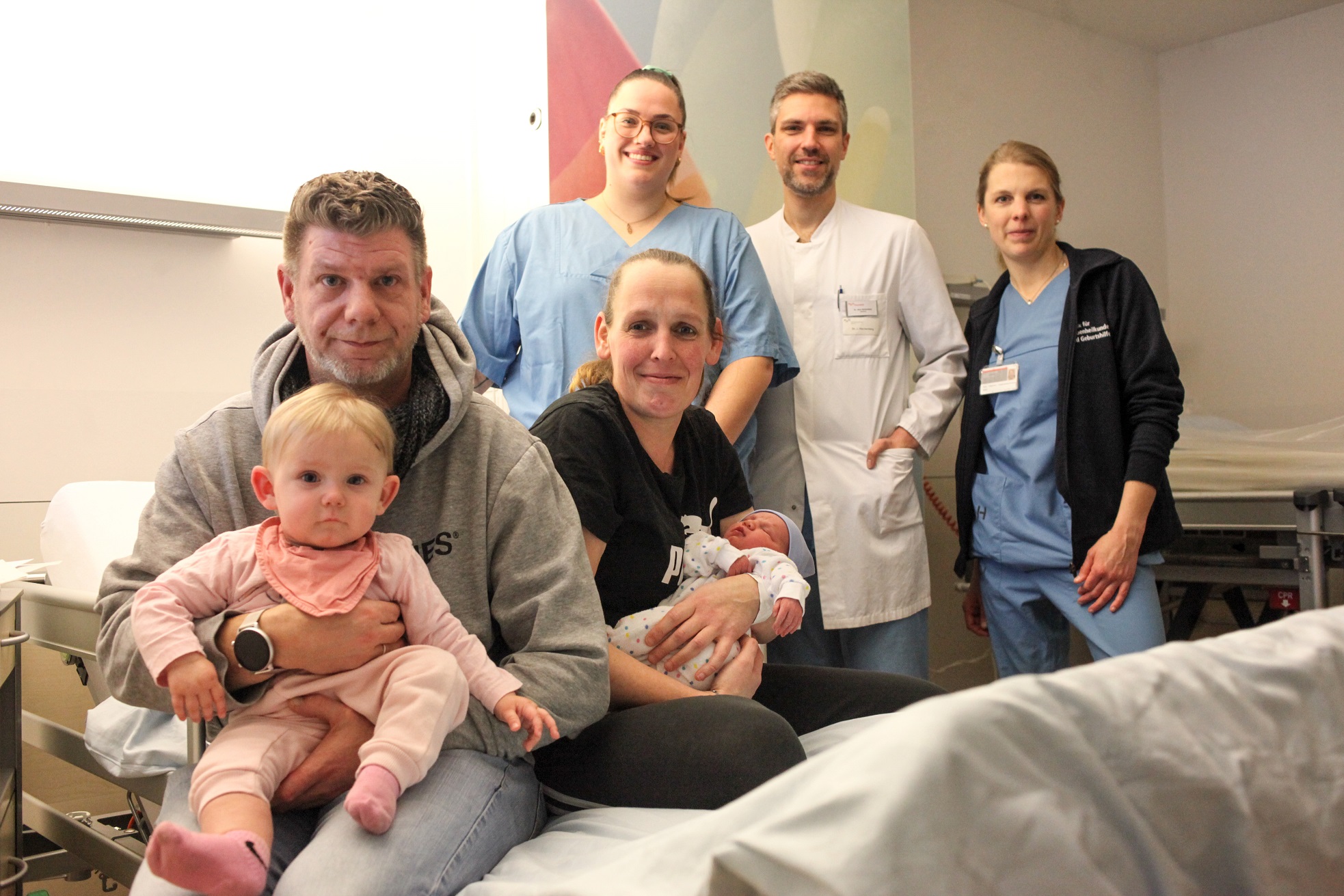
Interdisciplinary collaboration: Father Bastian with sister Miriam Sophie, mother Kerstin with Fabian Bastian, midwife Luna Klein, senior physician Dr. Jens Hachenberg and midwife Nina Meier. Copyright: Katrin Kutter
Accompanied by fireworks into life: At 00:15 on January 1, little Fabian Bastian was born in the Clinical Department of Gynaecology and Obstetrics at Hannover Medical School (MHH) - 53 centimetres tall, weighing 3065 grams, three weeks premature and yet healthy. He was Hannover's first New Year's baby in 2026. Parents Kerstin and Bastian had planned a quiet New Year's Eve - with their three siblings, lead pouring and a nice meal. But then everything turned out differently: "I went into labor in the morning, arrived at the Clinical Department at around 8:30 p.m. and after just two hours in the delivery room, the little one was already there," reports the 37-year-old mother. "The fireworks were still going off outside."
Last year, a total of 2,664 children were born at the MHH Women's Hospital. Of the 2,581 births, 1,351 were boys and 1,309 girls. Four children were assigned to the "diverse" category - their gender could not be clearly determined. There were 81 twin births and one triplet birth. In 2024, there were 2,671 births and a total of 2,772 children. Nothing is left to chance in the delivery room at the MHH. 35 midwives, eleven physicians and three medical assistants work hand in hand in the delivery room - and create a close-knit safety net for parents-to-be. "Obstetrics is teamwork - we make sure that parents feel they are in good hands right from the start," says Halina Huppertz, head midwife at the MHH for 16 years.
Perinatal Centre certified
"Our low caesarean section rate, the intensive care of pregnant women and the consistently individualized birth mode planning, even for premature babies and children with malformations, show that modern high-performance medicine and family-oriented obstetrics go together perfectly," says Prof. Dr. Constantin von Kaisenberg, Head of Prenatal Medicine and Obstetrics at the Perinatal Centre. "The renewed certification of our center according to periZert in December 2025 confirms our high standards in structural and process quality."
The figures from 2025 speak for themselves:
- 45.9 percent of pregnant women gave birth to their first baby at the MHH. 50.1 percent of women giving birth already had one or more children.
- 55 children were born extremely prematurely before the 29th week of pregnancy.
- 9 newborns weighed less than 500 grams at birth.
- Only 29.8 percent of children were born by caesarean section. Considering that many high-risk pregnant women give birth at the MHH, this is a very low figure.
- 37 spontaneous deliveries from breech presentation and 38 spontaneous deliveries of twins.
Low caesarean section rate
The caesarean section rate at the MHH was below 30 percent in 2025 - well below the previous year's figure and the statistically expected rate, even after risk adjustment. "As a level 1 maximum care hospital, we also care for seriously ill mothers, extremely premature babies and complex pregnancies - all of these cases are included in the statistics," explains midwife Luna Klein. "More than 40 percent of twin and breech births at the MHH now occur naturally." And time and again, "miracle birth stories" emerge that move parents and team alike.
Individual care for pregnant women
The team provides pregnant women with information in specialized consultation hours and birth preparation courses, for example in the case of twin pregnancies or breech presentation. "We want to allay the fears of insecure parents, dispel myths and work with them to find the right birth path," explains Nina Meier. The midwife heads the special interdisciplinary consultation hours together with associate professor Dr. Lars Brodowski, Deputy Head of Obstetrics and Prenatal Medicine. "Interdisciplinary teamwork at the cutting edge of science, clinically at the highest level and supported by genuine enthusiasm for the joint task. That is the strength of the MHH - every day for life," says Dr. Brodowski.
Text: Camilla Mosel