Scientific working group Dr. med. Miriam Wiestler
Welcome to the scientific working group of Dr. med. Miriam Wiestler.
Inflammatory bowel diseases (IBD), composed of the two main clinical phenotypes, ulcerative colitis (UC) and Crohn's disease (CD), are characterized by recurrent, chronic inflammation of the gastrointestinal tract. Controlling inflammatory activity and achieving a stable remission of the disease plays a major role in today's therapy in order to prevent structural intestinal changes and improve the quality of life of IBD patients. Medical treatments for IBD have been increasingly revolutionized over the last decade, but even newer therapeutic methods such as biologicals typically lead to lasting clinical remission in no more than 50% of patients. Today, we believe that IBD results from the complex interplay of westernized, lifestyle-associated environmental factors and genetic predispositions that lead to uncontrolled immune responses against luminal trigger factors.
Research interests
As with many other diseases, sex- and gender-specific differences also play a central role in inflammatory bowel disease (IBD). Women and men differ in terms of symptoms, disease progression, quality of life and response to treatment.
Despite these known differences, sex- and gender-specific aspects have not yet been sufficiently taken into account in IBD research.
The aim of our research is therefore to systematically incorporate a sex- and gender-sensitive perspective into the investigation and treatment of IBD. Our projects deal with, among other things:
- Sex- and gender-specific differences in symptoms and quality of life,
- Sex- and gender-specific differences in immunological mechanisms
- the role of hormonal, nutritional and psychosocial factors,
- and the importance of sex- and gender-sensitive approaches in therapy and diagnosis.
Through this research, we aim to contribute to further improving the diagnosis, treatment and care of all patients with IBD.
Nutrition plays an important role in the course and management of inflammatory bowel disease (IBD). It can influence immunological processes, the composition of the microbiota, as well as inflammatory activity, symptoms and quality of life of those affected.
In our research projects, we investigate the relationship between nutrition and IBD based on broad patient cohorts. We apply various nutritional science methods and combine them with mechanistic, immunological analyses to shed light on the complex interactions between nutrition, the immune system, the microbiome and the course of IBD.
We are also interested in psychosocial influences in connection with dietary behaviour and IBD. Through this integrative approach, we aim to develop the broadest possible, patient-centred understanding of the role of nutrition in IBD – with the goal of promoting optimised nutritional concepts to improve the care of patients with IBD.
Treatment strategies for inflammatory bowel disease have advanced significantly in recent years. Nevertheless, even modern therapeutic approaches such as biologic therapies only achieve lasting clinical remission in around half of patients.
It is currently assumed that IBD arises from a complex interaction between Western lifestyle-associated environmental factors and genetic predispositions, which lead to misdirected immune responses to luminal trigger factors.
In our research projects, we investigate the underlying immunological regulatory mechanisms using large, well-characterised patient cohorts. In close cooperation with our partners, we use state-of-the-art technologies – including multiomics analyses – to comprehensively capture these complex processes at the molecular level.
The aim is to gain as holistic and integrative an understanding as possible of the immunological basis of IBD in order to identify new approaches for personalised, gender-sensitive and more effective therapy in the long term.
CARMEN:
The aim of the CARMEN study is to develop a better understanding of the influence of the female hormone cycle on the course of IBD disease and treatment. Although this factor plays a critical role in patients’ lives, it has not been systematically studied. Further information will be available soon here.
SIGMOID:
Through the SIGMOID study, we are evaluating the identification of novel, predictive biomarkers for treatment response in patients with inflammatory bowel disease (IBD) under different treatment regimens. In the future, this should guide individualised, optimised treatment regimens in IBD patient care, thereby personalising and improving patient care globally. To this end, innovative analysis techniques such as sc RNA sequencing and multi-omics are being used in collaboration with Prof. Yang Li's working group at the Centre for Individualised Infection Medicine (CiiM). This study is funded by the German Research Foundation (DFG) as part of the PRACTIS Clinician Scientist Programme.
NOURISHED:
With the NOURISHED study, we initiated a cross-sectional study of IBD patients and healthy control subjects to investigate the relationship between dietary patterns, the gut microbiome and its metabolic activity. We hope this will give us a better understanding of disturbances in the microbiome-metabolome axis in IBD, including the identification of potential diagnostic and, above all, (nutritional) therapeutic approaches.
DORO:
The DORO study is a german-wide multicentric, anonymised, web-based cross-sectional survey on gender-specific differences in IBD diagnosis and further course of treatment.
Further information
In our research projects and working group activities, we believe it is important to actively involve patients with IBD and to take their experiences and needs into account.
We believe that patient involvement and participation are crucial to improving the quality of research and its clinical relevance.
The treatment and research of IBD requires interdisciplinary collaboration between different fields of expertise. By bringing together experts from medicine, biology, microbiology and many other areas, we can develop a comprehensive understanding of the complex mechanisms behind IBD.
In our research projects and working group activities, we therefore enjoy cooperating extensively with a wide range of internal and external partners.
If you have any questions or are interested in getting involved, please do not hesitate to contact us.
-
MHHplus funding
-
Covid-19 Research Network Lower Saxony (COFONI)
-
Fellow of the Clinician Scientist Program PRACTIS at the Hannover Medical School (funded by the DFG)
-
Hochschulinterne Leistungsförderung (HiLF I)
Gill J, Pueschel L, ...., Wiestler M. Chronic Imbalance? Gender Disparities in Gastroenterology Across a Decade of the Visceral Medicine Congress in Germany. Zeitschrift für Gastroenterologie 2025 (efirst). doi:10.1055/a-2701-1372
Pueschel L, Hupa-Breier K, Wedemeyer H, Lenzen, H, Wiestler, M. Food-related Quality of Life in patients with Inflammatory Bowel Disease: Translation and Validation of the German version of FR-QoL-29. Zeitschrift für Gastroenterologie 2025 (efirst). doi:10.1055/a-2542-6781
Pueschel, L.; Wedemeyer, H.; Lenzen, H.; Wiestler, M. Sex Differences Outweigh Dietary Factors in Food-Related Quality of Life in Patients with Inflammatory Bowel Disease. Nutrients 2025, 17, 1114. doi.org/10.3390/nu17071114
Pueschel, L.; Nothacker, S.; Kuhn, L.; Wedemeyer, H.; Lenzen, H.; Wiestler, M. Exploring Dietary- and Disease-Related Influences on Flatulence and Fecal Odor Perception in Inflammatory Bowel Disease. J. Clin. Med. 2025, 14, 137. doi.org/10.3390/jcm14010137
Pink I, Wiestler M, Pueschel L, Ruwisch J, Drick N, Boblitz L, Scharbau M, Welte T, Haufe S, Tegtbur U, et al. Exploring Physical Activity, Sleep, and Nutrition’s Role in Fatigue Among Post-COVID-19 Patients. Nutrients. 2024; 16(23):4056. doi.org/10.3390/nu16234056
Pueschel L, Kockelmann F, Kueck M, … , Wiestler M, Patients with Inflammatory Bowel Disease Show Fewer Sex-Related Differences in Their Dietary Behavior Than the General Population: A Qualitative Analysis. Nutrients 2024; 16. DOI: 10.3390/nu16172954
Peyrin-Biroulet L, Rahier JF, Kirchgesner J, … Beaugerie L; I-CARE Collaborator Group. I-CARE, a European Prospective Cohort Study Assessing Safety and Effectiveness of Biologics in Inflammatory Bowel Disease. Clin Gastroenterol Hepatol. 2023 Mar;21(3):771-788.e10.
Bergquist A, Weismüller T, Levy C, … , Wiestler M, … Lenzen H. International PSC Study Group. Impact on follow-up strategies in patients with primary sclerosing cholangitis. Liver Int. 2023 Jan;43(1):127-138.
Li G, Zhang B, Hao J, Chu X, Wiestler M, Cornberg M, Xu CJ, Liu X, Li Y. Identification of Novel Population-Specific Cell Subsets in Chinese Ulcerative Colitis Patients Using Single-Cell RNA Sequencing. Cell Mol Gastroenterol Hepatol. 2021 Feb 2;12(1):99-117.
Wiestler M, Kockelmann F, Kück M, Kerling A, Tegtbur U, Manns MP, Attaran Bandarabadi M, Bachmann O. „Quality of life is associated with wearable-based physical activity in patients with inflammatory bowel disease: A prospective, observational study”. Clin Transl Gastroenterol. 2019 Nov 1;.
Frank, B., Wiestler M., … , O. Fletcher and B. Burwinkel (2008). "Association of a common AKAP9 variant with breast cancer risk: a collaborative analysis." J Natl Cancer Inst 100(6): 437-442.
Frank, B., S. H. Rigas, J. L. Bermejo, Wiestler M., … , A. Cox and B. Burwinkel (2008). "The CASP8 -652 6N del promoter polymorphism and breast cancer risk: a multicenter study." Breast Cancer Res Treat 111(1): 139-144.
Publications on PubMed Podcast
Gender aspects in IBD: Aren't all our patients the same?
Scientific working group: Team
Dr. med. Miriam Wiestler
Senior physician Infusion clinic / clinic administration
Specialist in Internal Medicine and Gastroenterology
Nutritionist DAEM/DGEM
Abdominal sonography DEGUM level I
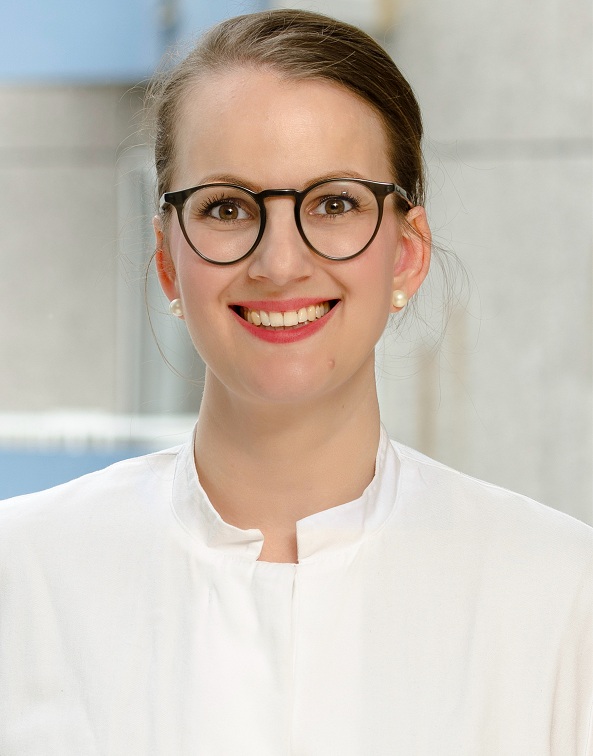
- Lea Pueschel, M.Sc.
Ms Pueschel is a data scientist with a degree in medical information management.
- Josephine Conrad - Doctoral student (Dr. med.)
- Stefanie Fuhrberg - Doctoral student (Dr. med)
- Jennifer Gill, Physician - Doctoral student (Dr. med.)
- Leonie Kuhn - Doctoral student (Dr. med)
- Navid Pueschel, B.Sc. (Psychology)
- Marie-Louise Witte, M.A. (Medical information management)
Our scientific working group is always looking for motivated doctoral candidates and students. If you are interested, please send us a meaningful application.