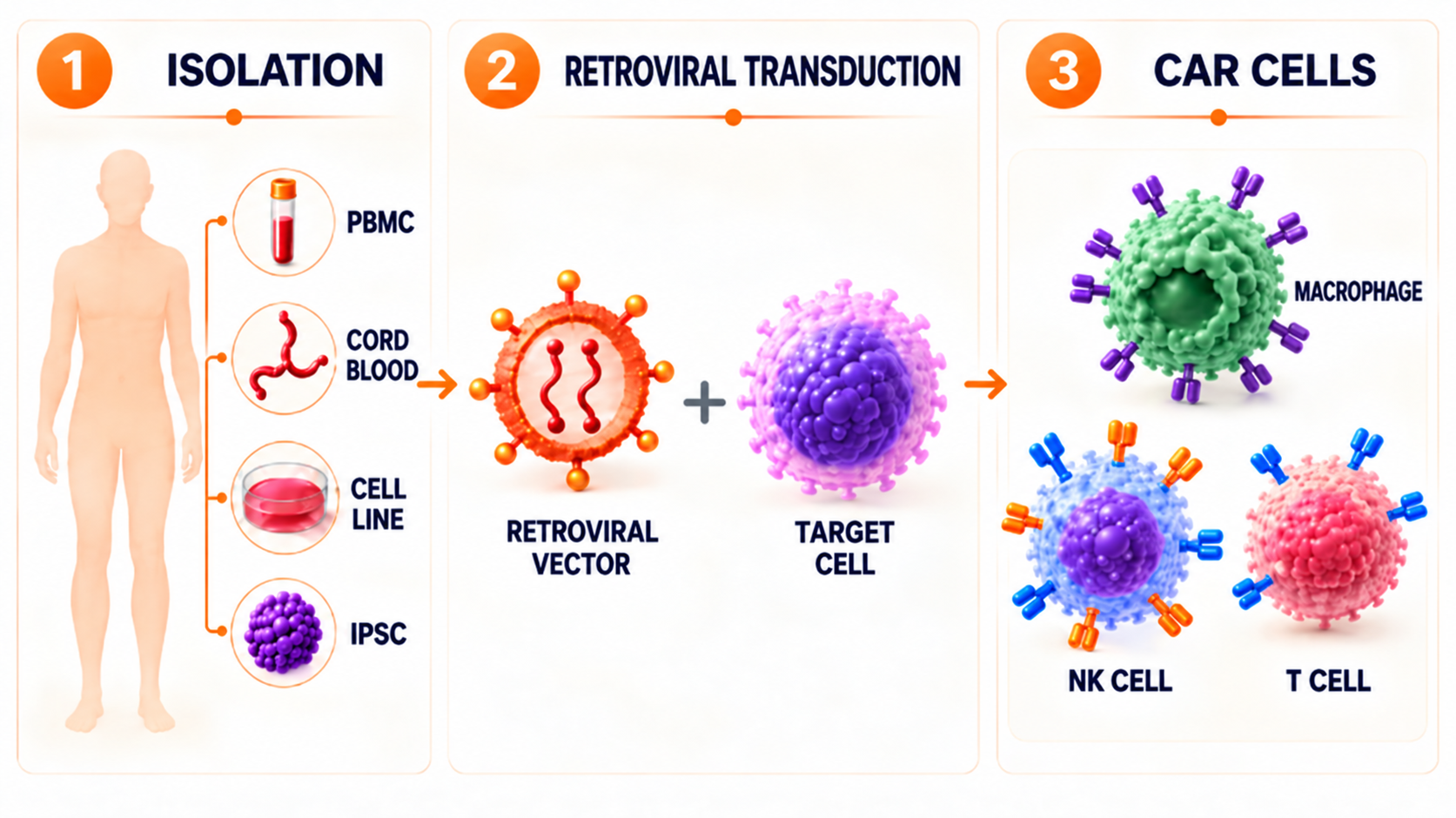
From immune cells to precisely engineered therapeutic products
Chimeric antigen receptor (CAR) technology enables the genetic redirection of cellular specificity by expressing synthetic receptors that recognize target antigens. Our research focuses on the genetic modification of immune cells derived from cord blood and peripheral blood, as well as induced pluripotent stem cells (iPSCs) and established cell lines, using retroviral vector systems. We generate and investigate CAR-engineered T cells, natural killer (NK) cells, and macrophages as cellular platforms for applications in cancer immunotherapy, immune-cell biology, and regenerative medicine. Our work ranges from optimizing CAR architecture and cellular function to developing advanced platforms such as TRUCK T cells, with a strong focus on translating promising concepts toward clinical application.
Our Projects
Combining innate cytotoxicity with engineered target recognition
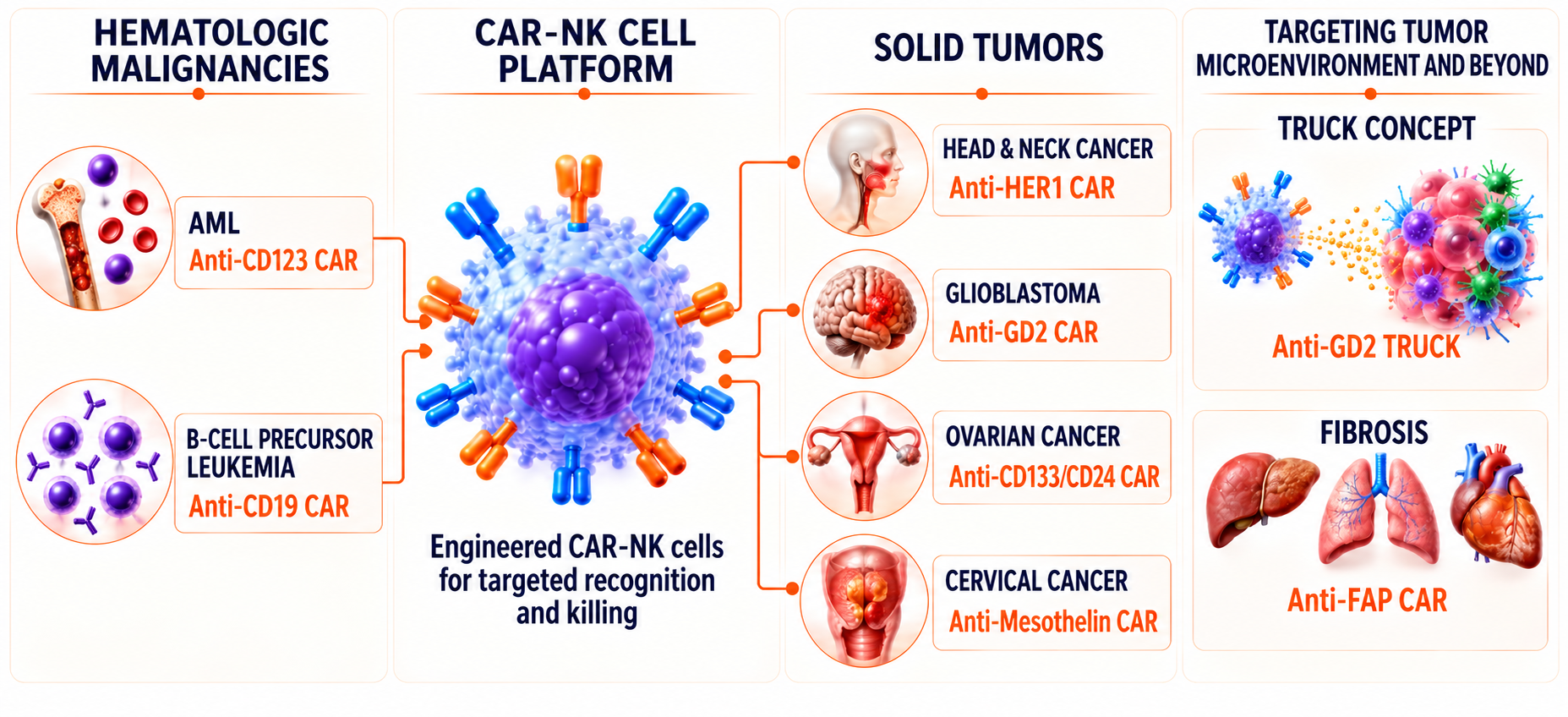
Natural killer (NK) cells provide a powerful platform for next-generation CAR therapies. They combine engineered, antigen-specific targeting with their innate ability to recognize and eliminate abnormal cells, offering the potential for a favorable safety profile, reduced risk of severe treatment-related toxicities, and allogeneic “off-the-shelf” use. These advantages could shorten manufacturing and treatment times, reduce costs, and ultimately make advanced cellular therapies accessible to more patients.
Our research develops and expands CAR-NK cell therapies across hematologic malignancies, solid tumors, and disease-associated microenvironments. Our work includes targeting CD123 in AML (Morgan et al., 2021), CD19 in B-cell precursor leukemia (Suerth et al., 2015), HER1 in head and neck cancer (Nowak et al., 2023), GD2 in glioblastoma (Rudek et al., 2021), CD133/CD24 in ovarian cancer (Klapdor et al., 2017/ Klapdor et al. 2019), and mesothelin in cervical cancer (Kutle et al., 2024). We are also advancing GD2-directed TRUCK approaches (Rudek et al., 2021) and FAP-targeted CAR-NK cells for fibrotic disease (Polten et al., 2025).
Our goal is to translate the unique biology of NK cells into safer, more versatile, and more broadly accessible cellular therapies for patients.
Contact us for further information: Morgan.Michael@mh-hannover.de
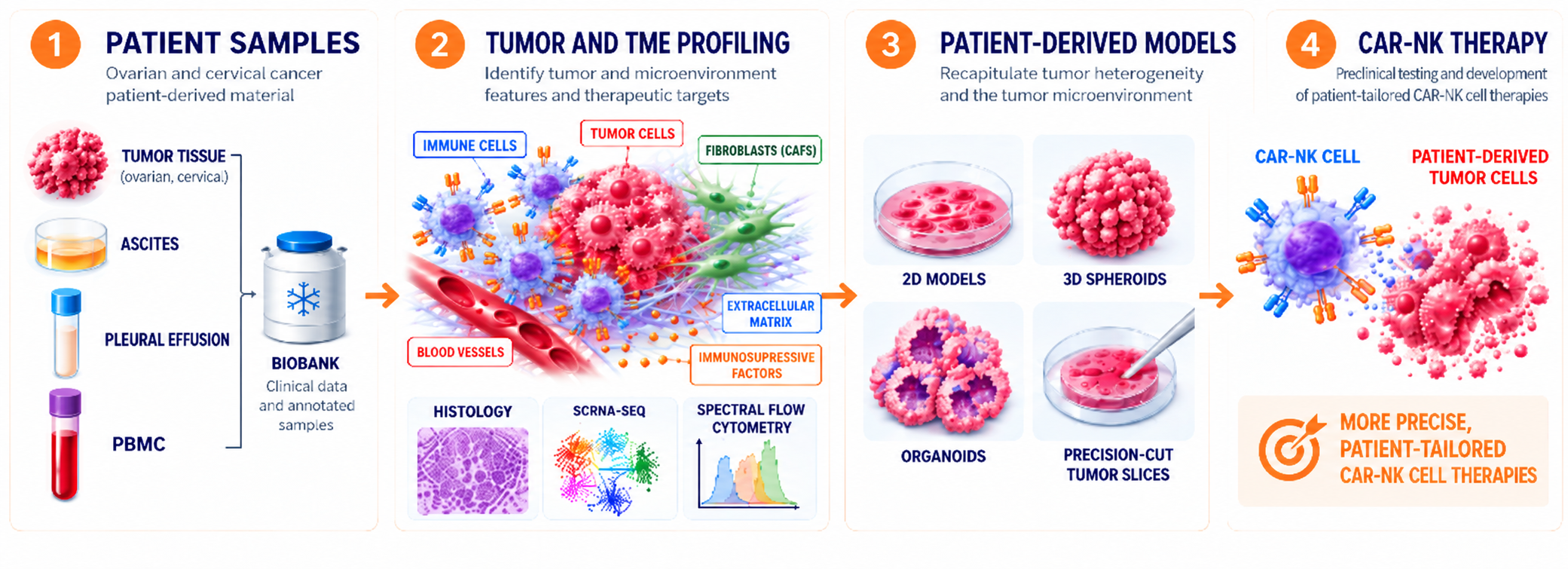
Our research develops a translational pipeline for ovarian and cervical cancer, connecting patient-derived samples with advanced tumor profiling, disease models, and CAR-NK cell testing. Our goal is to identify clinically relevant tumor and microenvironment features, strengthen preclinical development, and advance more precise, patient-tailored CAR-NK cell therapies.
Through strong collaboration with the Clinic for Obstetrics and Gynecology, we integrate clinical expertise and patient-derived materials into our research, helping to bridge preclinical discovery and future clinical translation. This work is supported by Germany’s National Strategy for Gene- and Cell-Based Therapies.
Contact for Further Information: Kutle.Ivana@mh-Hannover.de (IEH), Stalp.Jan@mh-hannover.de (Clinic)
Optimizing primary T cells for targeted cellular therapy
We investigate the genetic engineering of primary T cells from sources including peripheral and cord blood. Using optimized vector systems and tailored CAR designs, we explore how receptor architecture and cellular properties can be combined to enhance target recognition, activation, and antitumor function. Our work aims to develop robust and adaptable T-cell platforms for targeting a range of oncogenic antigens.
Modulate tumor microenvironment
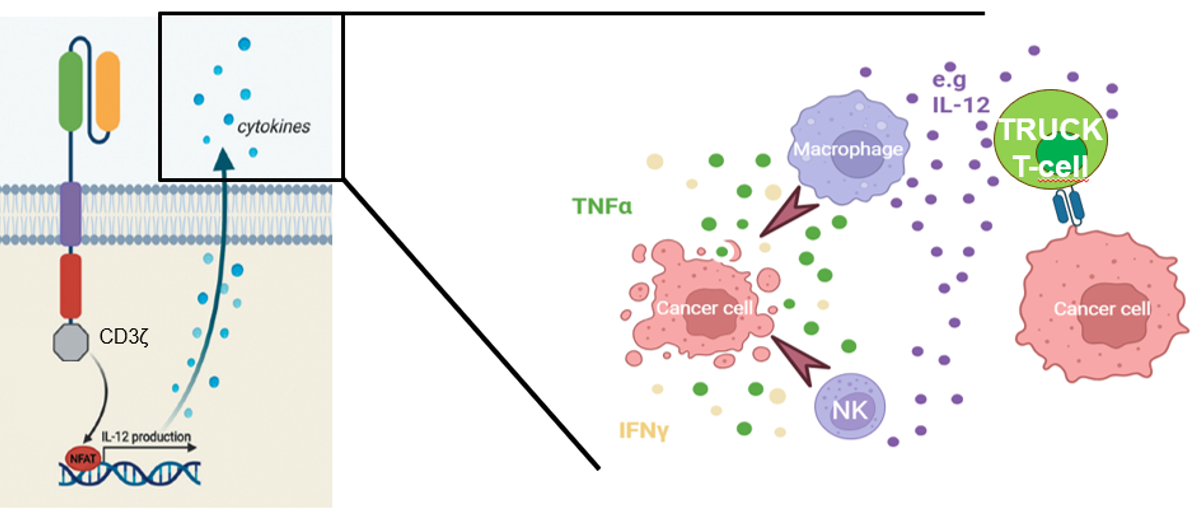
TRUCKs (“T cells redirected for antigen-unrestricted cytokine-initiated killing”), also called “4th generation” CAR T cells, combine the direct antitumor attack of the CAR T cell with the immune-modulating capacities of the delivered cytokine. Through CAR-induced release, the cytokine is delivered directly to the targeted tissue, helping to avoid potential side effects associated with systemic delivery methods. The cytokine cargo can potentiate the anti-cancer activity of CAR T cells by recruiting and activating additional immune effector cells.
This concept has advanced to a phase I safety, dose finding, and feasibility trial of GD2-IL18 CART in patients with relapsed or refractory GD2-positive solid cancers. This is a basket study in which pediatric and adult patients with GD2-positive neuroblastoma, sarcoma, or breast cancer are treated with the goal of assessing safety and initial evidence of efficacy. (GD2-IL18 CART-Clinical Trial)
Contact us for further information: Morgan.Michael@mh-hannover.de
Programming macrophages for targeted cellular therapy
Macrophages possess unique capabilities for tissue infiltration, target recognition, phagocytosis, and interaction with their local environment. We investigate the genetic engineering of monocytes and macrophages from different cellular sources, including peripheral blood, cord blood, CD34⁺ progenitors, and iPSCs. Through optimized vector systems and CAR engineering, we explore how these innate immune cells can be equipped with defined target recognition and tailored effector functions.
Contact us for further information: Morgan.Michael@mh-hannover.de
About us
Our Vision