Dy@EoL
Interaction at the end of life in dyads of parents and adult children

Background
In an ageing society, the number of parents who are confronted with a serious illness in their adult child is increasing. In Germany alone, around 16,000 adults die every year before reaching the age of 45. At the same time, adult children are confronted with life-threatening illnesses in their parents.
To date, little is known about the interaction between seriously ill children at the end of life and their parents (or parents' parents) and between seriously ill parents and their adult children. The support, accompaniment and care of the seriously ill and dying and their relatives can only be of high quality if the specific needs of patients and relatives are known and psychosocial support measures are available.
Objectives
The project focuses on two dyads: (1) terminally ill adult children and their parents and (2) terminally ill parents and their adult children. The aim of the research project was to describe the particularities of the interaction between the two groups of patients and their relatives. Based on the results, hypotheses and a theoretical framework of the specifics, similarities and differences within and between the two study groups were to be developed. Subsequently, clinical conclusions were to be derived from this as to how those affected can be supported and accompanied in the best possible way.

Methods
A mixed-methods approach was used to collect the data:
- Guided interviews with patients and their relatives were used to examine the dyadic interaction in more detail with regard to Communications, role experience, knowledge of the disease and support. The focus was on individual experiences, expectations and wishes. The interview data was analyzed according to the principles of grounded theory.
- In addition, established quantitative questionnaires were used to record social support, emotional closeness and attachment. The quantitative data was analyzed according to existing manuals.
- Interview and questionnaire data were contextualized using a socio-demographic questionnaire.
Hypotheses about the interaction in parent-adult child dyads were then derived and recommendations for psychosocial support measures were developed with the involvement of an expert advisory board. The recommendations were agreed on throughout Germany using the Delphi technique.
Further information: Illustration of the project process
Dy@EoL brochure with recommendations for action
The recommendations developed on the basis of the empirical data collected in the Dy@EoL project were published by the Dy@EoL project group in cooperation with the German Society for Palliative Medicine in the brochure "Dealing with stress at the end of life - recommendations for psychosocial support measures for parents and adult children" (pdf). The recommendations are aimed at professionals and volunteers working in inpatient and outpatient hospice and palliative care.
Publications
-
Gawinski L, Stiel S, Schneider N, Herbst FA. Communication in dyads of adult children at the end of life with their parents and parents at the end of life with their adult children: Findings from a mixed-methods study. Psycho-Oncol 2021; DOI: 10.1002/pon.5728 (PubMed)
-
Herbst FA, Gawinski L, Schneider N, Stiel S. Consensus-based recommendations for psychosocial support measures for parents and adult children at the end of life: Results of a Delphi study in Germany. Support Care Cancer. 2021; DOI: 10.1007/s00520-021-06452-x (PubMed)
-
Herbst FA, Gawinski L, Schneider N, Stiel S. 'Mums are sacred, and mums don't die': A mixed-methods study of adult child-parent dyadic relationships at the end of life. J Psychosoc Oncol 2021; DOI: 10.1080/07347332.2021.1902452 (PubMed)
-
Herbst FA, Gawinski L, Schneider N, Stiel S. 'She can't support me because she's so old': A mixed-methods study of support experiences and needs in adult child-parent dyads at the end of life. Omega-J. Death Dying 2021; DOI: 10.1177/00302228211008748 (PubMed)
-
Herbst FA, Gawinski L, Schneider N, Stiel S. "She can't support me because she's so old herself": Research team at Hannover Medical School develops recommendations for psychosocial support measures for adult children and parents at the end of life. Hospiz-Dialog Nordrhein-Westfalen (Focus: Special aspects of palliative care). 2021; 86: 17-19 (Hospiz-Dialog NRW)
- Herbst FA, Gawinski L, Stiel S, Schneider N. Dealing with stress at the end of life - recommendations for psychosocial support measures for parents and adult children. Publisher: Dy@EoL project group of the Institute ofGeneral Medicine and Palliative Medicine at Hannover Medical School & German Society for Palliative Medicine e.V. 2020. ISBN no. 978-3-00-067516-4 (pdf)
- Gawinski L, Stiel S, Schneider N, Zimmermann T, Herbst FA. Methodological reflections on the recruitment of adult child-parent dyads for end-of-life research in Germany: Experiences from the Dy@EoL study. J Pain Symptom Manag. 2020; DOI: 10.1016/j.jpainsymman.2020.10.016 (PubMed)
- Herbst FA, Gawinski L, Schneider N, Stiel S. Adult Child-Parent Dyadic Interactions at the End of Life: A Scoping Review. BMJ Support Palliative Care. 2020; 10(2): 175-185 (PubMed)
- Herbst FA, Schneider N, Stiel S. The role of expert advisory boards in palliative research. Z Palliativmed. 2019; 20(1): 23-28
-
Roewer HAA, Stiel S, Herbst FA. The Influence of Family Communication on Experienced Relief and Burden at the End of Life-An Explorative Analysis of Qualitative Data of Parent-Adult Child Dyads. Illn Crisis Loss. 2023: DOI: 10541373231195448 (SAGE)
- Stiel S, Stelzer E-M, Schneider N, Herbst FA. Exploring end-of-life interaction in dyads of parents and adult children: a protocol for a mixed-methods study. BMC Palliative Care 2018, 17: 68 (PubMed)
Awards
The Dy@EoL project team was awarded the 2021 German Society for Palliative Medicine (DGP) Award for their work "Dy@EoL - Interaction at the end of life in dyads of parents and adult children". The Palliative Medicine Prize is awarded to individuals and institutions that have made an important contribution to the further development of scientific palliative medicine. Read the DGP press release here.
Funding
The research project was funded as part of the BMBF's "Guideline for the Promotion of Research in Palliative Care - Projects of Young Scientists" from October 1, 2017 to December 31, 2020 (funding reference 01GY1711).
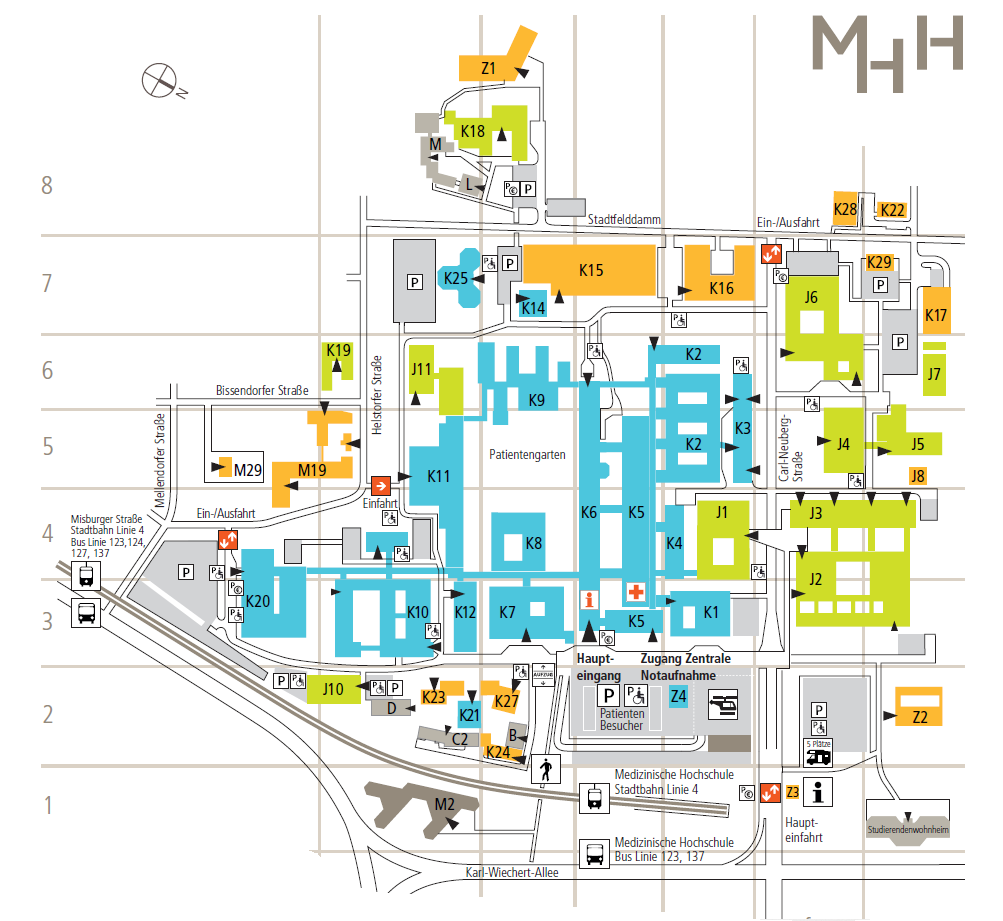
Dy@EoL - Contact:
PD Dr. Franziska Herbst (Project Manager)
Dy@EoL - Project Office:
Phone: +49 511 532-4991
Address: +49 5.532-432
Hannover Medical School
Institute ofGeneral Medicine and Palliative Medicine
Carl-Neuberg-Straße 1
30625 Hanover