ImPAct
Implementation of hospice culture and palliative competence in care facilities for the elderly at Diakonie Niedersachsen

Background
More and more people are spending the last phase of their lives in care facilities for the elderly and are also dying there. The hospice and palliative care culture in Facilities or Institutions is therefore of great importance.
For this reason, the Diakonisches Werk evangelischer Kirchen in Niedersachsen (DWiN) began training employees in its Facilities or Institutions in "Palliative Practice" (40-hour basic curriculum of the Robert Bosch Foundation) throughout Lower Saxony in 2013.
By 2018, several hundred employees from ten professional areas had taken part (e.g. management, quality management, housekeeping and kitchen, Nursing, social work, administration, occupational therapy).
Aims
The Institute ofGeneral Medicine and Palliative Medicine (Palliative Care Working Group) is conducting accompanying research to evaluate the training measures. The following will be investigated
- Practical effectiveness and sustainability of the qualification-related approach,
- The usefulness of a continuation of the qualification program
- Transferability of the approach to other Facilities or Institutions.
The aim is to formulate overarching recommendations for action for the sustainable establishment of hospice culture and palliative competence in residential care facilities or Institutions for the elderly. As part of this, standards for resident- and employee-related quality characteristics at an organizational (organization, structure, personnel) and conceptual level (content-related cornerstones of palliative care) are to be developed.
Publications
- Final ImPAct final report, July 2022
-
Walther W, Müller-Mundt G, Wiese B, Schneider N, Stiel S. Providing palliative care for residents in LTC facilities: an analysis of routine data of LTC facilities in Lower Saxony, Germany. BMC Palliative Care. 2022; 21: 111(BMC Palliat Care)
- Walther W, Stiel S, Schneider N, Müller-Mundt G. Care of people at the end of life in geriatric care facilities in Lower Saxony - A quantitative survey of relatives. Z Palliativmed. 2022; 23(02): 96-104(Z Palliativmed)

Methods
The process and outcome evaluation is carried out using quantitative and qualitative methods of health services research (mixed methods). The evaluation study is divided into three main phases.
Phase 1: Institution-wide (retrospective) analysis of the current situation
Determination of the framework conditions for the implementation of hospice and palliative care and the status of integration of the hospice culture by means of a written survey of facility managers, employees and selected relatives of deceased residents
Phase 2: Qualitative case studies in selected Facilities or Institutions
Exemplary determination of conducive and inhibiting factors in the implementation of hospice culture and palliative competence in six selected elderly care facilities by means of qualitative guided interviews and group discussions at residential area level
Phase 3: Synopsis of the results
Summarizing the results and conducting an expert plenary session to critically reflect on the central conclusions; subsequent development of recommendations for action for "good palliative care"
Funding
The project is funded by the GKV Spitzenverband as part of the model program for the further development of long-term care insurance in accordance with Section 8 (3) SGB XI. The project recipient is the Diakonisches Werk evangelischer Kirchen in Niedersachsen e.V. (DWiN).
The funding period is from 01.08.2019 to 30.04.2022.
Palliative care in elderly care: conference report 2020
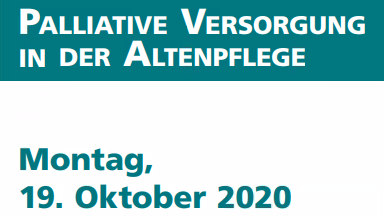
Facilities or Institutions for the care of the elderly are the place where more and more older people live and die. The hybrid conference on October 19, 2020 with over 70 participants from practice and research was dedicated to the special practical and ethical challenges of supporting residents in the last phase of life and their relatives.
It was held under the auspices of the Center for Health Ethics (ZfG) at the Protestant Academy Loccum in Hanover in cooperation with the Lower Saxony Bremen branch of the German Society for Palliative Medicine (DGP) and the Institute ofGeneral Medicine and Palliative Medicine at Hannover Medical School (MHH). Wenke Walther from the Institute's Palliative Care Working Group presented the initial results of the accompanying scientific research of the Diakonie Niedersachen model project "Implementation of Palliative Competence and Hospice Culture in Inpatient Facilities or Institutions (ImPAct)" for discussion.
ImPAct - Contact
ImPAct - Team:
Dr. Gabriele Müller-Mundt (Project Manager)
Phone: +49 511 532-35573
E-mail: mueller-mundt.gabriele@mh-hannover.de
Dr. Wenke Walther (Research Assistant)
Phone: +49 511 532-8091
E-mail: walther.wenke@mh-hannover.de
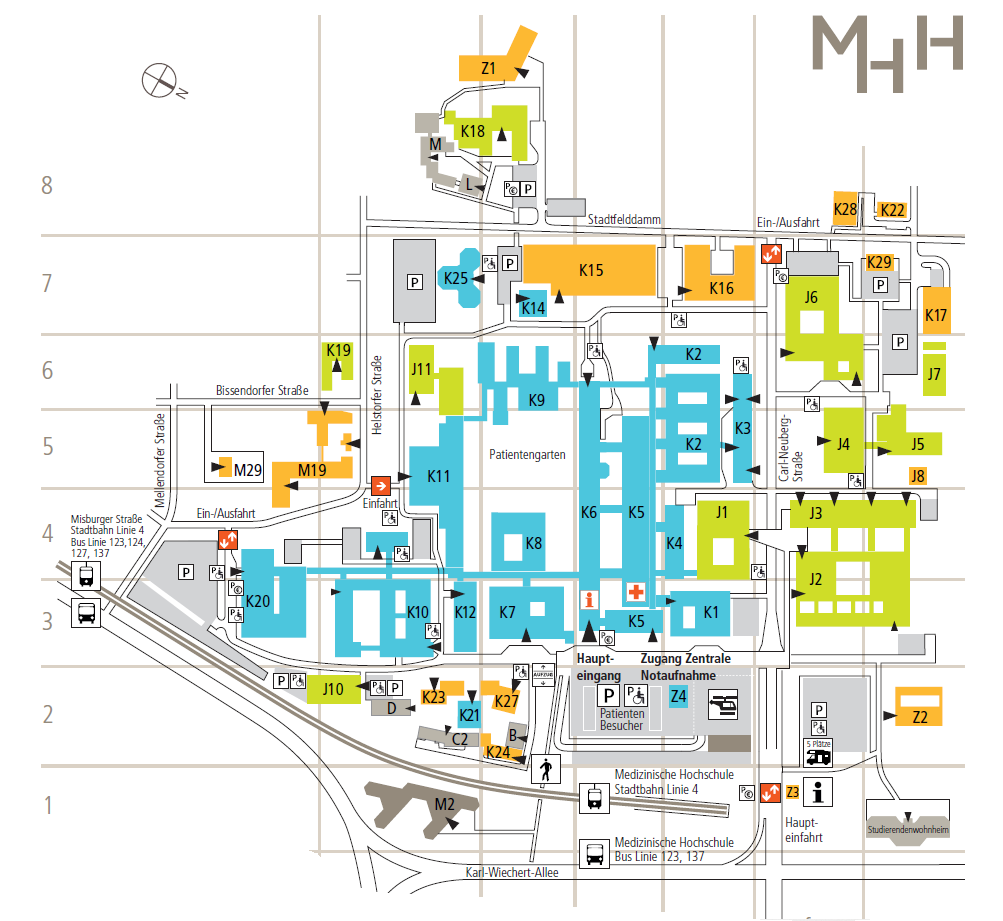
Address
Hannover Medical School
Institute ofGeneral Medicine and Palliative Medicine
Carl-Neuberg-Strasse 1
30625 Hanover