Digital planning / navigation
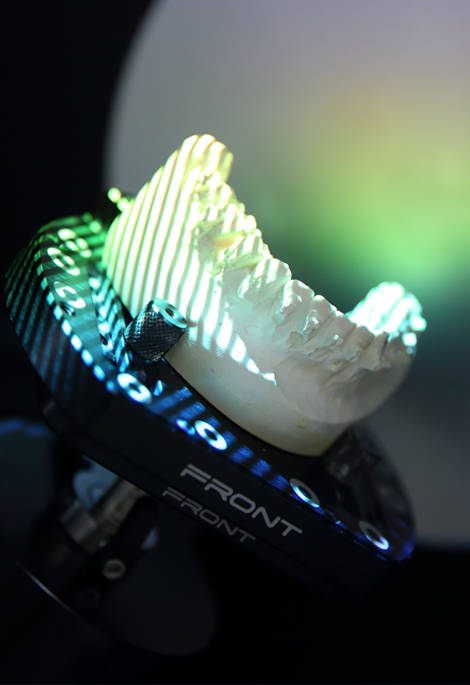
In modern medicine, imaging techniques are increasingly being used, such as computer tomography, magnetic resonance imaging or digital volume tomography. The advantage of these procedures is that an exact 3D image of the patient can be obtained, which, in addition to providing findings, is also suitable for
- mark target structures and/or
- to virtually plan individual steps of the operation.
Virtual planning is based on the patient's current situation, determines the expected defect area and defines the surgical procedure (e.g. when reconstructing a bony defect). This planning can be embedded in a digital workflow, for example to plan patient-specific implants preoperatively.
As part of our research activities, we are working on the continuous further development of these tools. The original image information can be retrieved at any time. In addition to intervention planning, this also enables continuous quality assurance of the individual treatment steps. It is also possible to adapt the planned therapy to the individual patient.
The virtual surgical planning is transferred to the operating theatre via special navigation systems that recognize the patient in three dimensions and allow comparison with the virtual planning.
Interdisciplinary treatment
The interactive use of image information enables the optimization of interdisciplinary treatment in the various departments. In addition to successful treatment, this information is also used to restore the defect as faithfully as possible. This results in an interdisciplinary, optimized treatment that is aimed at achieving the best possible treatment outcome and ensuring the patient's quality of life. The optimized use of image information does not mean any additional radiation exposure; it is simply a matter of exploiting the available image information in order to sustainably improve individual treatment.
" back to the research page