Study structure
Study programmes in dentistry
Basis
Since 1955, dentistry students have been trained on the basis of largely unchanged licensing regulations for dentists.
In 2019, a far-reaching amendment to the previous licensing regulations was passed.
The new licensing regulations for dentists(ZApprO) came into force on October 1, 2021. Therefore, all students who have started their studies since October 1, 2021 will study according to the new licensing regulations.
The transitional provisions of Sections 133 and 134 ZApprO stipulate that students who began their studies before October 1, 2021 must continue and complete them in accordance with the old licensing regulations - subject to certain deadlines.
Objectives of the new licensing regulations
With the ZApprO, there is a new time allocation and weighting of the training content. More medical teaching content will be integrated, the interdisciplinarity between Human medicine and dentistry will be strengthened and the supervision ratio will be improved. Furthermore, there will be a stronger focus on the development of students' scientific skills.
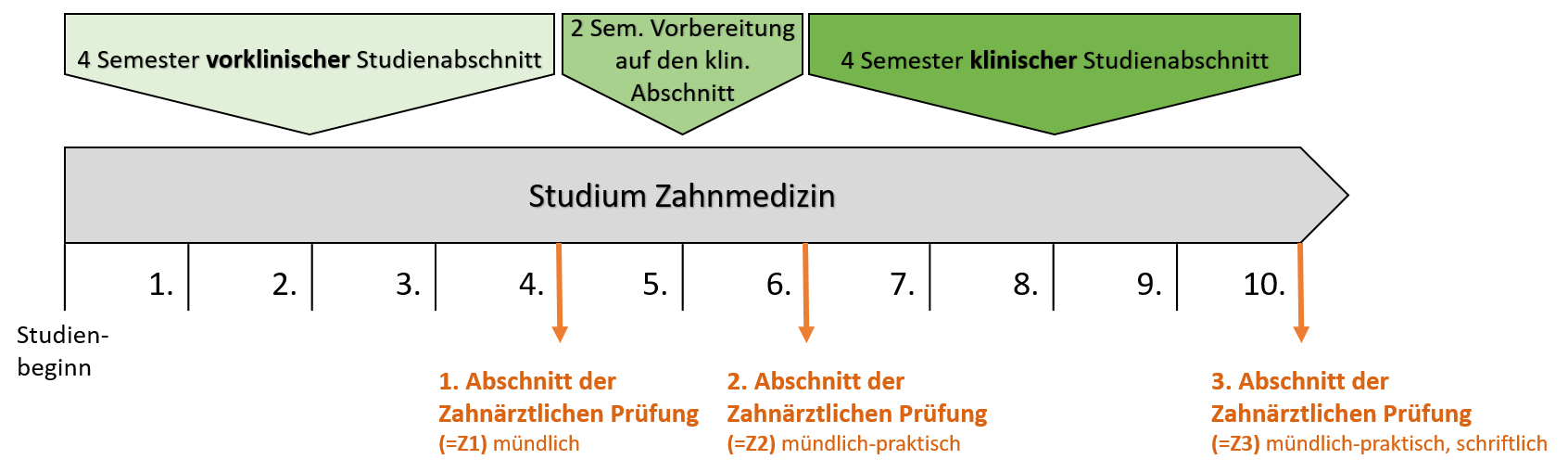
Structure of the study programmes
The degree program is divided into three sections: a pre-clinical section, a preparatory-clinical section and a clinical section (see Fig. 1). The first semester of study at Hannover Medical School always begins in the winter semester and is subject to an annual rhythm. The courses have a module structure in accordance with the ZApprO.

In the pre-clinical section (1st to 4th semester), training in scientific and theoretical principles takes place and includes courses in the following subjects: biology, physics/physiology, chemistry, biochemistry and molecular biology, anatomy (microscopic and macroscopic anatomy), professional field studies and medical terminology. Participation in the exercise in medical terminology is compulsory for all students. Any existing Latinum will no longer be recognized. Initial practical and theoretical content of dentistry is taught in the "Internship of Propaedeutics in Dentistry with a Focus on Dental Technology" and the "Internship of Propaedeutics in Dentistry with a Focus on Preventive Dentistry". At the MHH, students also gain an insight into the history of medicine and dentistry. In this section, an elective course (Sustainable Dentistry or Clinical Neuroanatomy) can also be taken voluntarily.
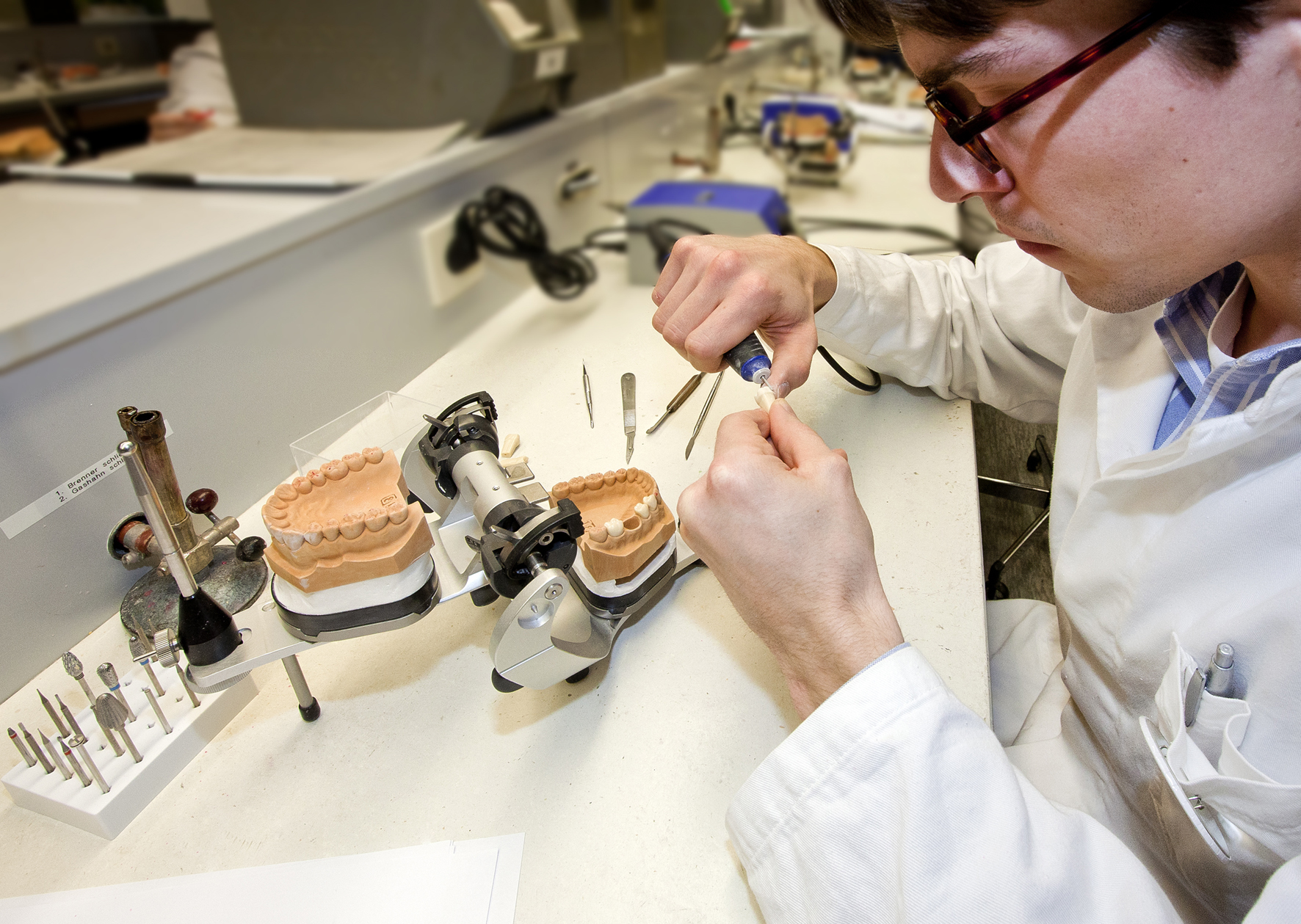
The preparatory clinical section (5th and 6th semesters) includes the internships in dental conservation on the phantom and dental prosthetics on the phantom, as well as the internship in orthodontic propaedeutics and prophylaxis and the internship in dental-surgical propaedeutics and Emergency Medicine. The radiology internship also takes place here, with a special focus on radiation protection. These courses serve to prepare students theoretically and, above all, practically for patient treatment using simulated treatment situations (exercises at phantom workstations and models). These "phantom courses" correspond didactically to the medical skills lab. The following courses also take place at the MHH in the 5th and 6th semesters: Cross-sectional Area (QB) Scientific Work, Pharmacology and Institute of Toxicology, Pathology, 'Hygiene, Microbiology and Virology', Dermatology and Allergology, QB Clinical Materials Science, QB Health Sciences.
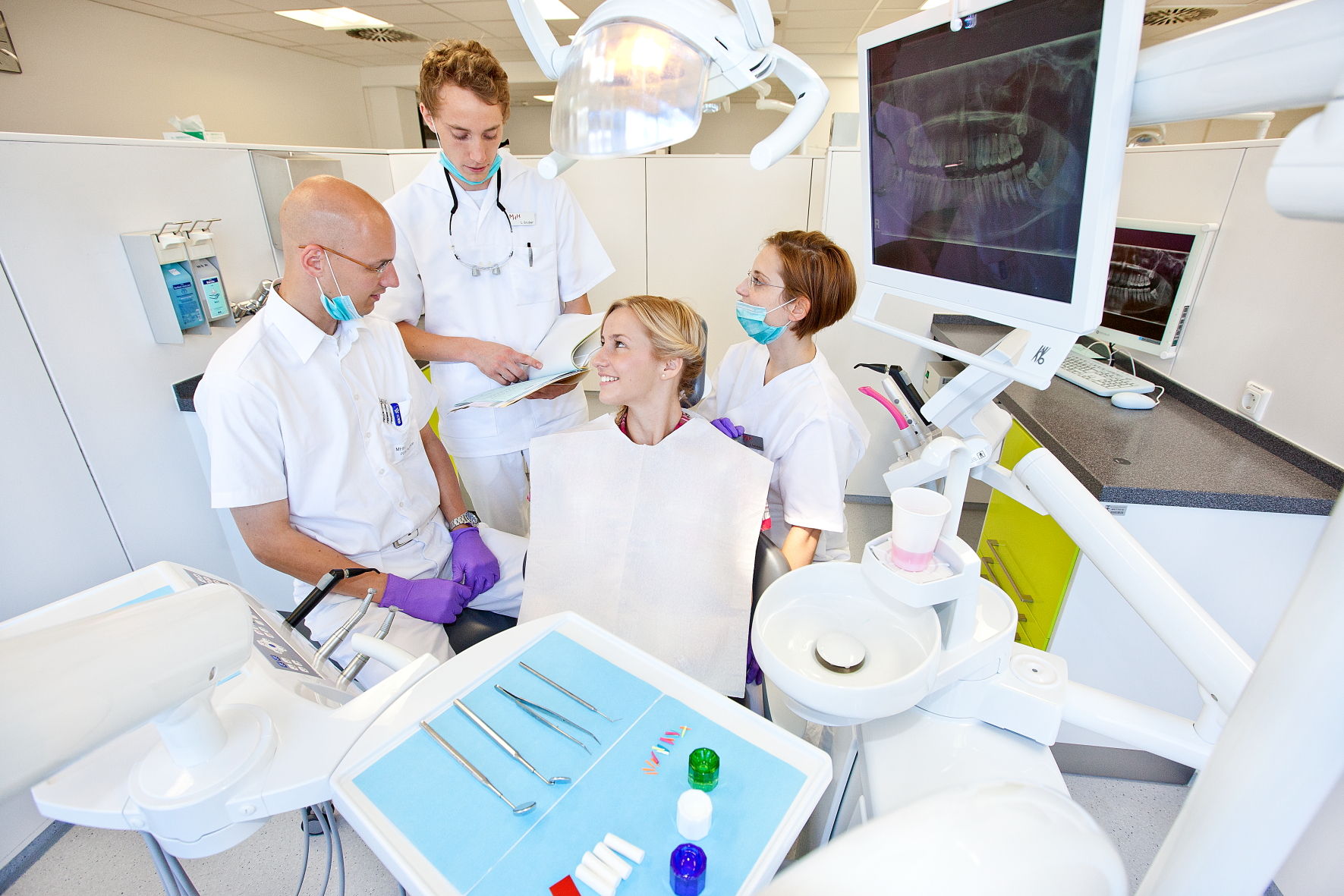
In the clinical section (7th to 10th semester) , treatment of patients takes place in the form of integrated courses (I-IV). The following internships must also be completed:
Internship in the Clinical Department or Polyclinic for Dental, Oral and Maxillofacial Diseases I and II
Internship in dentistry diagnostics and therapy I and II
Internship in orthodontic diagnostics and therapy I and II
Surgical course I and II.
Other courses that must be attended in the clinical section are Internal Medicine incl. Immunology, Professional Studies and Practice Management, QB Pain Medicine, QB Emergency Medicine, QB Medicine and Dentistry of the Aging and the Elderly, QB Diseases of the Head and Neck, QB Oral Medicine and Systemic Aspects.
In the cross-sectional areas (QBs), interdisciplinary teaching is offered that is closely interlinked with Human medicine.
In addition, a compulsory elective course must be completed after the preclinical phase of study. The work completed in the elective course is graded. The grade is listed on the dental examination certificate.
Additional coursework to be completed
Before beginning the course of study or during the non-teaching periods of the course of study prior to applying for admission to the first section of the dental examination, first aid training and one month's nursing service must be completed.
After passing the first section of the dental examination and before applying for admission to the third section of the dental examination, a clinical traineeship of four weeks must be completed in a dental practice during non-teaching periods.
Further information on the nursing service, first aid training and the clinical traineeship can be found on the website of the State Examination Office of the Lower Saxony Licensing Association (NiZzA):
State examinations
The dental examination consists of three parts: The First Section of the Dental Examination, the Second Section of the Dental Examination and the Third Section of the Dental Examination(Z1, Z2 and Z3, see Fig. 1).
First section of the dental examination (Z1, after the 4th semester):
This comprises oral examinations in the following subject groups or subject:
- Biochemistry and molecular biology, chemistry,
- Microscopic and macroscopic anatomy, biology,
- Physiology, Physics and
- Dentistry propaedeutics.
Second section of the dental examination (Z2, after the 6th semester):
It consists of a practical and an oral examination element in the following subjects: Dental prosthetics, subject group dental conservation (endodontology, pediatric dentistry, periodontology, dental hard substance theory, prevention and restoration), orthodontics, oral surgery and oral and maxillofacial surgery.
Third section of the dental examination (Z3, after the 10th semester):
This section consists of a written examination in 14 primarily medical subjects and oral-practical examinations in the dentistry subjects.
Content and conduct of the written part:
The written part of the examination comprises 200 nationally standardized questions (MC format) and is conducted on a nationally standardized date. The Institute for Medical and Pharmaceutical Examination Questions (IMPP) is responsible for the design and implementation. The examination questions cover the following subjects: Pharmacology and Institute of Toxicology, Pathology, Hygiene, Microbiology and Virology, Internal Medicine, Dermatology and Allergology. As well as the following cross-sectional areas: Emergency Medicine, Pain Medicine, Medicine and Dentistry of Ageing and the Elderly, Clinical Materials Science, Oral Medicine and Systemic Aspects, Diseases of the Head and Neck, Health Sciences, Scientific Work, Ethics and History of Medicine and Dentistry.
Oral-practical part:
This takes place after the written examination over a period of six months and begins during the lecture-free period. It consists of a practical and an oral examination element in the following subjects: Dental prosthetics, orthodontics, dental, oral and maxillofacial diseases, oral surgery, oral and maxillofacial surgery, dental radiology and the subject group dental conservation (endodontology, pediatric dentistry, periodontology and dental hard substance theory, prevention and restoration).