Anesthesia and intensive care EEG
Schultz
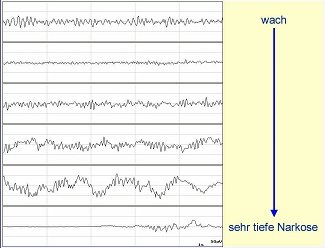
Electroencephalography (EEG), i.e. the recording of brain waves, is suitable for monitoring patients in the operating theater and intensive care unit.
A major indication for the use of EEG in the operating room is the assessment of the effects of hypnotic substances.
Areas of application in the intensive care unit are sedation control, therapy control, e.g. in status epilepticus, assessment of the condition and progress of comatose patients as well as diagnostic use with regard to epileptic activity and circumscribed cerebral dysfunctions.
The aims of the working group are to optimize anaesthetic monitoring and intensive care therapy with the aid of the EEG.
The following work priorities currently exist:
- Gender-specific effects of intravenous and inhalation anesthetics
- Awake and anesthesia EEG in children of different ages
- Intensive EEG in children at the earliest age
Projects
Several of our own series of measurements have shown that Ms need more propofol than men and still wake up more quickly at the end of anesthesia.
It is not yet known whether gender-specific pharmacokinetic or pharmacodynamic differences are responsible for this. Our own study results for inhalation anesthetics indicate that pharmacodynamic factors are involved.
The waking EEG changes during childhood in the sense of a progressive increase in frequency. Under the influence of anesthetics, the EEG in children differentiates differently than in adults, depending on age and individual development.
The project will investigate correlations between EEG and clinical observations in children of different ages.
This project analyzes the intensive EEG in children at an early age.