
PD Dr. Jan Frederik Karsten
Senior Physician, Head of Cardiothoracic, Transplantation and Vascular Surgery / Urology
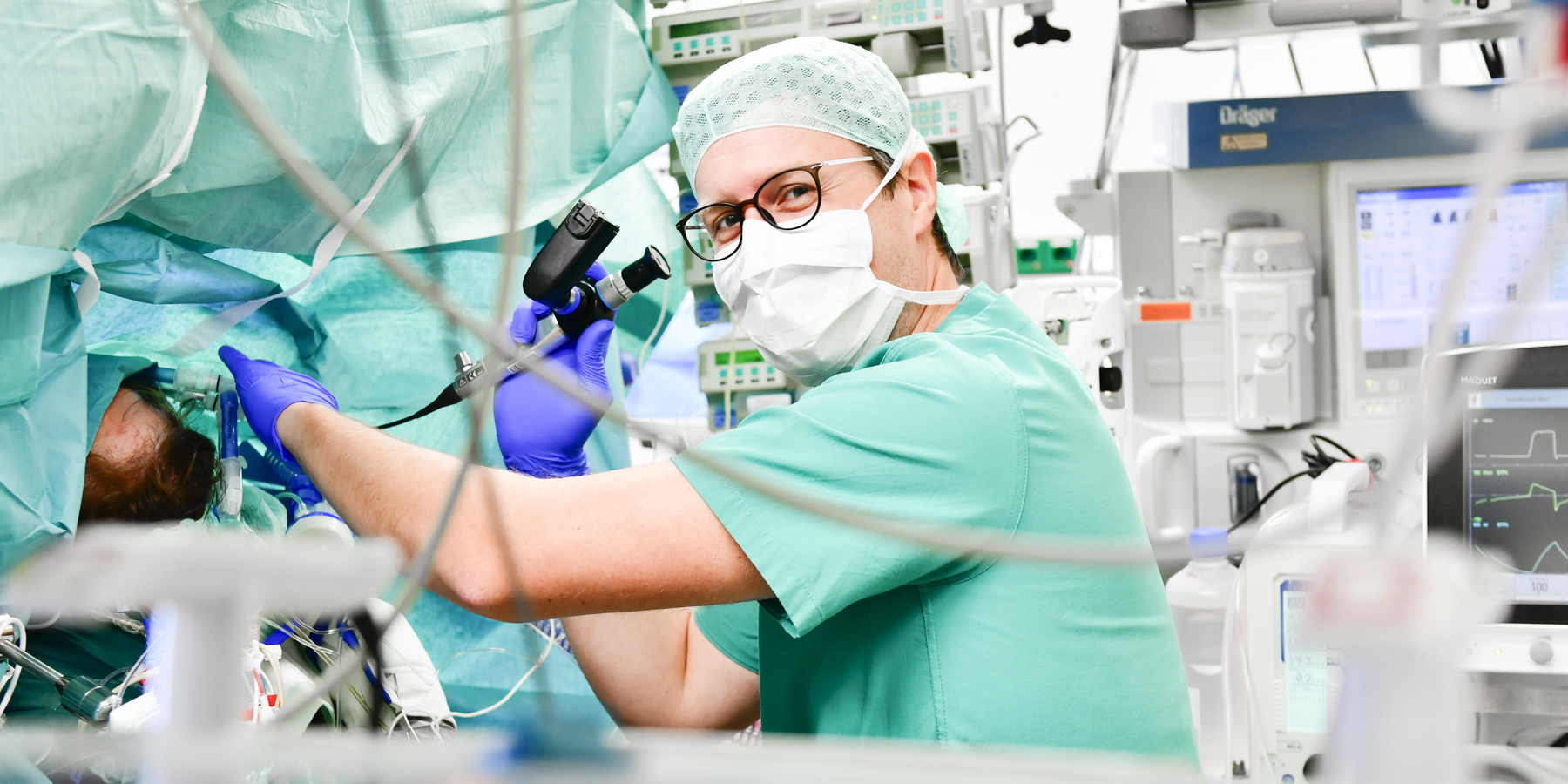
The staff in the Cardioanesthesia department care for patients in the surgical subspecialties of cardiac surgery, thoracic surgery, transplant surgery (heart and lung transplantation) and vascular surgery.
We accompany adolescent patients, adults (with and without congenital heart defects) and very elderly patients through surgery using the latest anesthesiological concepts.
The Clinical Department of Cardiac, Thoracic, Transplantation and Vascular Surgery (HTTG) is a nationally and internationally recognized specialist department for (minimally invasive) coronary and valve surgery, implantation of artificial heart systems, heart and lung transplants and (minimally invasive) thoracic and vascular surgery. The result of surgery is teamwork - as the Department of Cardioanesthesia, we are part of the team! We inform patients about the individual anesthesiological procedure in a personal anesthesia consultation. This may give patients the opportunity to get to know their cardioanesthesia colleagues.
In addition to the differentiated use of medication and the latest ventilation and monitoring technology, the experience of our medical colleagues is a key factor in modern anesthesia.
In the cardio-anaesthesia department, senior and functional senior physicians, several specialists, experienced assistant physicians and experienced (specialist) nursing staff look after the well-being of the patients.
In addition to anesthesia for conventional coronary surgery and operations on heart valves, anesthesiological concepts for minimally invasive surgical procedures (OPCAB, MIDCAB, MIC CABG, MIC AKE/R, MIC MKE/R, TAVI) are increasingly becoming a challenge.
Focused transesophageal echocardiography (TEE), which is available in every operating theater, plays a major role here. In addition to confirming the diagnosis, the anesthetist can assess the surgical result directly in the OR and demonstrate it to the surgeon. In terms of perioperative patient safety, TEE is firmly integrated into the anesthesiology concept and provides the examiner with an important "view of things".
Aortic arch surgery and surgical procedures on the thoracic aorta also present the anesthetist with a major challenge. In particular, interventions in hypothermic circulatory arrest with selective organ perfusion require special anesthesiological management and are regularly supervised by us.
Uniportal video-assisted thoracoscopic surgery (VATS) is now an established minimally invasive surgical procedure. For conventional VATS, mechanical side-separated ventilation is the procedure of choice. The uniportal VATS technique, which is performed with a few small devices, has also made it possible to adapt the anesthesiological concept to the minimally invasive surgical approach. The anesthesiological concept for so-called non-intubated VATS procedures includes pure regional anesthesia, regional anesthesia with sedation or general anesthesia with supraglottic airway protection under spontaneous breathing. With the development of new minimally invasive surgical procedures and the associated reduced surgical trauma, the patient spectrum is expanding to include patients who are significantly more ill in pulmonary terms.
The Clinical Department for HTTG is one of the largest transplant centers for heart and lung transplantation in Germany. Indication and listing, surgery with post-operative intensive medical therapy and further medical care are reflected in an interdisciplinary care concept. The staff in the cardio-anaesthesia department are familiar with the special (anaesthesiological) aspects of caring for patients with severe heart and lung diseases: patients are received by us at the operating theater and accompanied throughout until they are admitted to the intensive care unit.
If patients have an artificial heart system implanted in an emergency or as planned ("bridge-to-transplant", "bridge-to-recovery"), the staff in the cardioanaesthesia department are responsible for the general anaesthesia and monitoring required for this.
In addition to the classic vascular surgical procedures on extracranial vessels or surgery on vessels of the lower and upper extremities, the treatment of diseases of the aorta is a focus area of the surgical department. Regardless of whether it is an emergency or elective procedure, minimally invasive endovascular stenting techniques (EVAR, TEVAR) are increasingly being used. As with minimally invasive coronary and valve surgery, patients are often very elderly and/or multimorbid and require differentiated individual anaesthetic management.
The scientific focus of the Clinical Department of Anaesthesiology and Intensive Care Medicine is on cardio-anaesthesia in questions of perioperative ventilation and its alternatives, coagulation management and teaching and care research.
As a university center, we see teaching as part of our work and give students, learners in the field of Nursing and interested parties from other medical disciplines an insight into our daily work. As a certified training center for qualified training in TEE in anesthesiology and intensive care medicine (DGAI), courses are held regularly.


