
More news on the homepage
Fighting liver cancer with cells of the innate immune system
MHH gastroenterologist Dr. Bernd Heinrich is looking for new therapies against hepatocellular carcinoma (HCC), a malignant liver tumor.
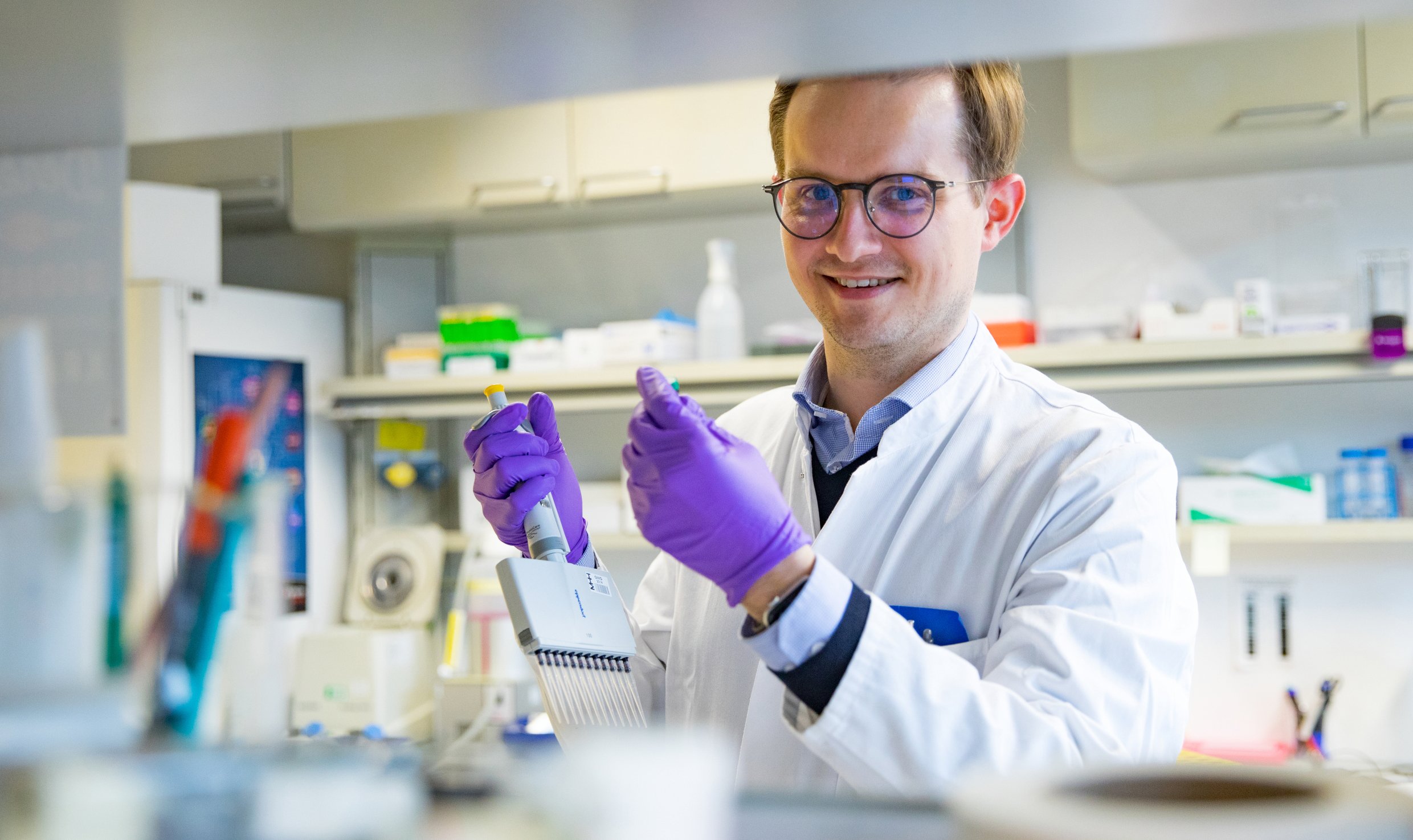
Hepatocellular carcinoma (HCC) is one of the most common cancers worldwide. Although viral hepatitis and heavy alcohol consumption are important risk factors, non-alcoholic fatty liver disease (NAFLD) is now one of the main causes of this form of liver cancer due to an unhealthy diet, particularly in industrialized countries. Treatment is difficult. There are indications that certain immunotherapies, which are already part of the standard treatment for HCC, only have a limited effect in patients with NAFLD. Dr. Bernd Heinrich, assistant physician at our Clinical Department of Gastroenterology, Hepatology, Infectious Diseases and Endocrinology, would therefore like to take a different approach. He is focusing on cells of the innate immune system in order to combat liver cancer. As part of the renowned Max Eder Young Investigator Group Program of German Cancer Aid, the physician will receive 800,000 euros in funding over four years and will be able to set up his own research group. "This gives me a great opportunity to put my research ideas into practice," says the gastroenterologist. And MHH President Prof. Dr. Michael Manns is delighted that German Cancer Aid is once again awarding the Max Eder Scholarship to a research talent at the university after 2021: "This is a great success for the promotion of young scientists and cancer research at the MHH."
Cancer cells paralyze immune cells
Our immune system has two lines of defense. The non-specific immune defense, the so-called innate immune system, is the first line of defense against most infections and is directed non-specifically against all pathogens. The second, adaptive immune defense is also known as the acquired immune system. Here, the immune system learns to specifically recognize pathogens and form antibodies against the invaders. Standard immunotherapies against tumors target the acquired immune system, which is weakened by the cancer. Although some tumors are teeming with immune cells, they do not attack them. The reason: the cancer cells send out signals that paralyze the attack. Checkpoint inhibitors are used to wake up the "sleeping" immune cells: These special antibodies bind to the surface of the immune cells, which are then reactivated and attack the tumor. "Unfortunately, the response rates are low, especially in patients with fatty liver," says Dr. Heinrich. He therefore relies on representatives of the first line of defense, the innate lymphoid cells (ILC), to defend against cancer.
Shortly after completing his doctorate as a postdoctoral fellow at the National Cancer Institute in Bethesda, USA, the gastroenterologist began researching the immune system in cell cultures and animal models of liver cancer and liver metastases. He was particularly interested in the influence of fatty liver disease on the immune response in liver tumors and the role of ILCs in the immediate tumor environment. "The therapeutic potential of ILCs for immunotherapy is still largely unknown," he notes. With his new research group, he first wants to clarify what role these immune cells play in cancer defense and how they communicate with the cells of the acquired immune system in the HCC tumor. To this end, samples of human tumor tissue are compared with healthy liver tissue and analyzed to determine which immune cells are active when and where. "In this way, we learn how the network of innate and acquired immune cells in the HCC tumor works and can better understand the disease," explains Dr. Heinrich.
Cytokines to activate immune cells
In the next step, he would like to modify the cells of the innate immune system so that they act more effectively against the cancer cells. This is to be achieved with the help of cytokines. These messenger substances are produced when the immune system reacts and activate certain defense cells such as ILCs. "In order to avoid the excessive immune reaction known as a cytokine storm, we don't want to release the messenger substances directly into the liver, but only their blueprint in the form of mRNA," explains the junior research group leader. This means that the activating cytokines are only produced gradually and the cytokine level rises in a controlled manner. The scientist hopes that a second therapeutic approach will come from a certain subgroup of ILCs that work like natural killer cells (NK) and initiate programmed cell death in cells that cannot "identify" themselves as healthy body cells - such as tumor cells. This type of ILC is apparently less common in NAFLD patients and could be one reason why this group of HCC patients responds less well to the immunotherapies used to date. The research group now wants to specifically investigate a substance that mobilizes NK-like ILC and could therefore improve the anti-tumour response. If the therapeutic approaches work in the mouse model, they could then be tested in a clinical trial on humans. "This is an ambitious four-year program," Dr. Heinrich admits. "But we hope to achieve our goals in the four years of funding."