
More news on the homepage
Better treatment of hepatitis E virus after transplantation
A precise analysis procedure is intended to provide decision-making aids for the treatment of a hepatitis E infection.
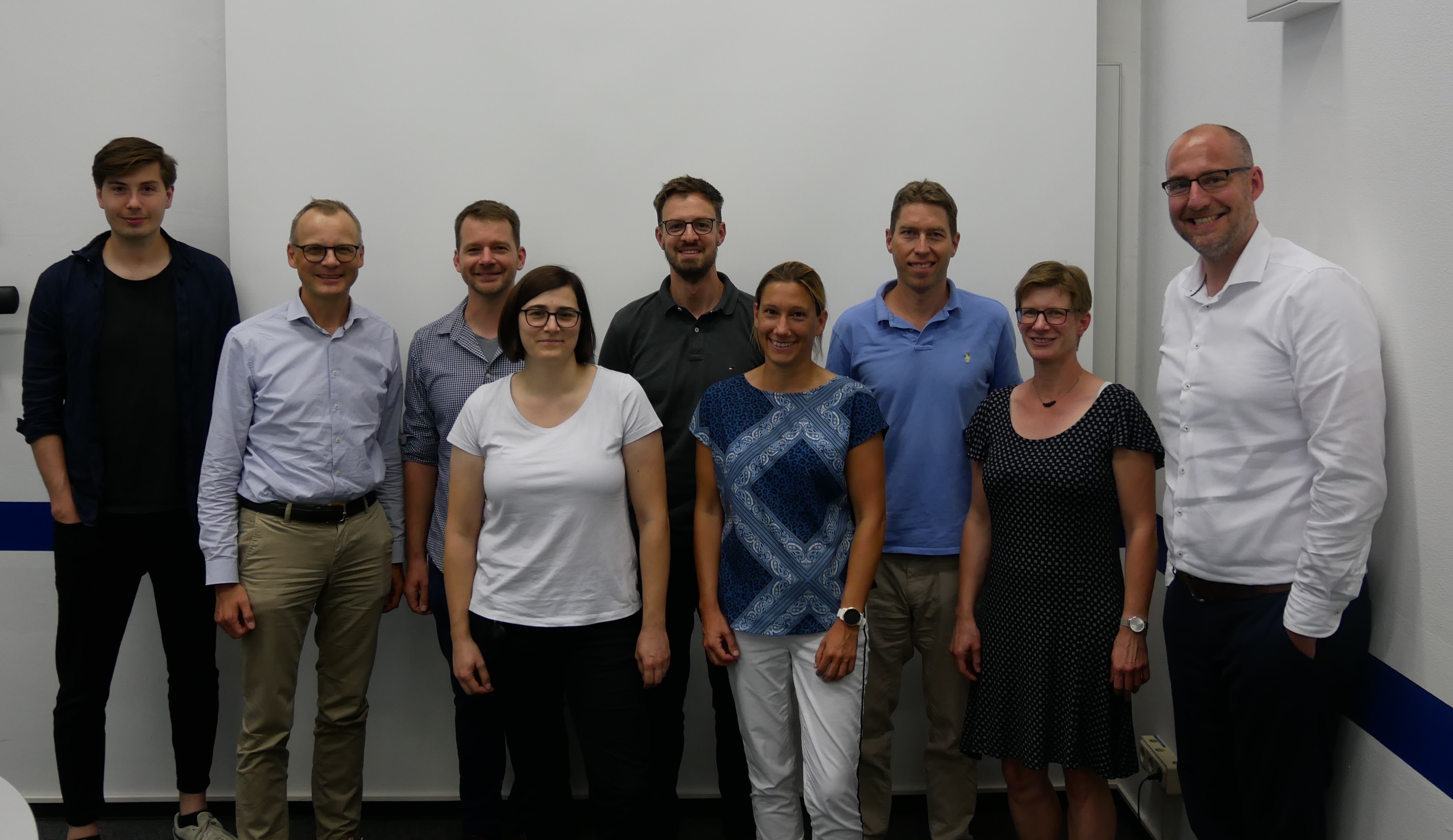
Hundreds of thousands of people in Germany are infected with the hepatitis E virus every year; most of them don't realize it. However, if the immune system is weakened, the disease can become dangerous, for example after an organ transplant. The aim of the "HepEDiaSeq" project, which has been launched under the coordination of Prof. Dr. Eike Steinmann, Head of the Department of Molecular & Medical Virology at Ruhr-Universität Bochum (RUB), is to treat the disease more successfully in this case. The project team is developing a method to recognize viral variants and thus provide decision support for therapy. The project is being funded for three years by the Federal Ministry of Education and Research with around 1.5 million euros.
Cooperation partners
In addition to Prof. Dr. Eike Steinmann, associate professor Dr. Tanja Vollmer from the Institute of Laboratory and Transfusion Medicine at the Heart and Diabetes Center North Rhine-Westphalia - University Hospital of the RUB, Prof. Dr. Heiner Wedemeyer from the Clinical Department of Gastroenterology, Hepatology and Endocrinology at Hannover Medical School and associate professor Dr. Christian Stephan from KAIROS GmbH are involved in the project. Using an interdisciplinary approach that combines expertise from medicine, virology and computer science, the scientists hope to develop a reliable method that diagnoses HEV infections with a high degree of sensitivity and simultaneously identifies viral variants. The biomedical research portal CentraXX from KAIROS GmbH will be used as part of the study management in order to record the enormous amounts of data from the various sites in a structured manner and to use it for in-depth analyses.
Widespread, rarely recognized
Hepatitis E is the most common cause of acute liver inflammation worldwide. It is estimated that around 400,000 people in Germany contract the disease every year, for example by eating raw pork. The infection usually heals without consequences and is often not even noticed. In pregnant women or people with a weakened immune system, however, the infection can become chronic and, in the worst case, fatal. "This makes hepatitis E a serious problem for organ transplant patients, whose immune system must be suppressed with medication to prevent the rejection of the foreign organ," explains Eike Steinmann.
Goal
In the project, the partners want to develop a so-called deep sequencing method that not only detects HEV with high sensitivity, but also recognizes different variants of the virus in parallel. Current test methods for HEV have limitations in terms of sensitivity and also do not provide any information about the different viral variants within a patient. The new findings should make it possible to treat the infection more effectively. "We currently only have the active ingredient ribavirin available for treatment," says Steinmann. "But deciding on the administration and dosage is difficult. We want to develop a so-called decision support tool that enables a personalized treatment approach and thus supports the treatment decisions of the treating physicians."
Press contact
Prof. Dr. Eike Steinmann
Department of Molecular and Medical Virology
Faculty of Medicine
Ruhr-Universität Bochum
Phone: +49 234 32 28189
Email: eike.steinmann@rub.de