
More news on the homepage
The path to personalized hepatitis D treatment
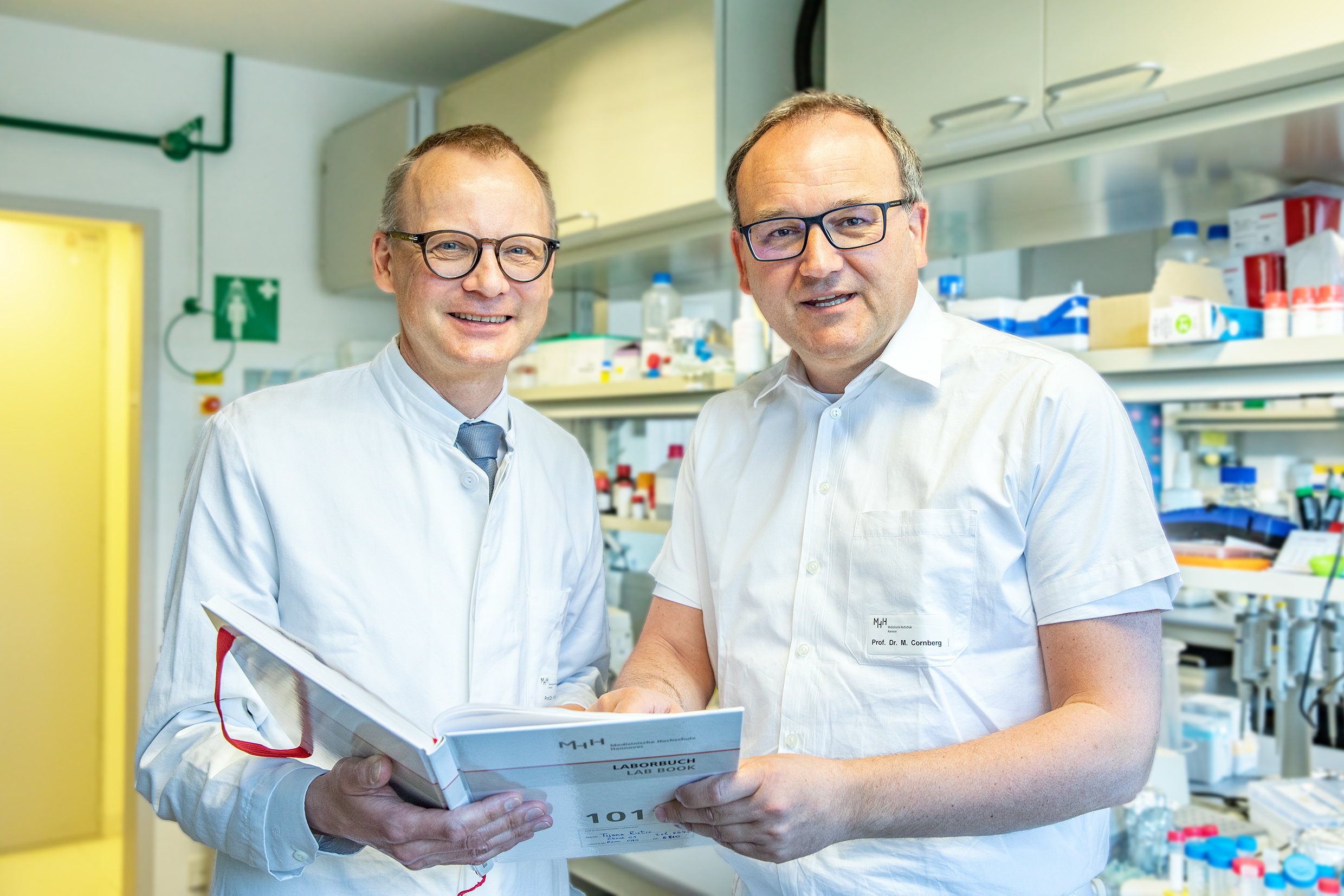
EU supports multicenter project with a total of 6.75 million euros
Hepatitis D is by far the most severe form of chronic viral hepatitis, often leading to liver failure, liver cancer and death. However, knowledge about the disease is still very limited. The reason why those affected have very different courses of the disease is also still unknown. An international research project led by Prof. Dr. Heiner Wedemeyer, Director of the MHH Clinical Department of Gastroenterology, Hepatology and Endocrinology at Hannover Medical School (MHH), now aims to clarify this. Together with the Centre for Individualised Infection Medicine (CiiM), a Facilities or Institutions of the MHH and the Helmholtz Centre for Infection Research (HZI) in Braunschweig, the research team wants to study a large multi-centre cohort of hepatitis D patients in order to better understand which personal characteristics determine the outcome of the infection. The D-SOLVE project ("Understanding the individual host response against hepatitis D virus to develop a personalized approach for the management of hepatitis D") is being funded by the European Union with a total of 6.75 million euros over four years. Around two million euros of this will go to the MHH.
Hepatitis D puzzles medicine
Hepatitis D is caused by a co-infection of the hepatitis B virus (HBV) with the hepatitis D virus (HDV). Up to 20 million people worldwide are infected with HDV, including around 250,000 patients in the European Union. However, the disease still poses some mysteries for medicine. For example, it is not yet known why up to 50 percent of those affected are spontaneously able to control the multiplication of hepatitis D viruses in the body. The questions of why some patients reach an advanced stage of liver disease or why only some respond to antiviral treatment are also unanswered. As HDV is a rare disease, there is not a large amount of medical data on HDV-infected patients or suitable biobanks with tissue or blood samples from HDV patients in the individual Clinical Departments. There is also no reliable animal model in which the reactions to the virus could be scientifically investigated.
Developing a new treatment approach
"With the multicenter study, we will be able to access data and biosamples from more than 500 patients with HDV and search for biomarkers for the immune response to the virus," explains Professor Wedemeyer. "In this way, we want to develop a novel individualized approach for treatment against HDV that clearly defines which patients need to be treated particularly quickly, how long the treatment should last and what happens to those who do not respond well to antiviral drugs."
Blueprint for personalized infection medicine
To this end, the researchers want to clarify the various influences of the viruses, the individual immune responses of those infected with HDV and also therapeutic influences. In addition to the direct findings from the patient samples, a mouse model specially adapted to HDV is also being used for this purpose. "With the D-SOLVE consortium, we have brought together the necessary outstanding clinical, immunological, bioinformatic and virological expertise in the field of HDV from leading centers in Europe," emphasizes Prof. Dr. Markus Cornberg, Director of the CiiM. The aim is to personalize patient monitoring strategies and antiviral treatment approaches in order to reduce the burden of disease, improve patients' quality of life and reduce the healthcare costs caused by HDV infections. Once the key clinical questions of viral control, disease progression and response to antiviral treatment are answered, the findings could serve as a blueprint for personalized infectious disease medicine and help control other viral diseases.
SERVICE:
Forfurther information, please contact Prof. Dr. Heiner Wedemeyer, wedemeyer.heiner@mh-hannover.de, phone (0511) 532-3306 and here.