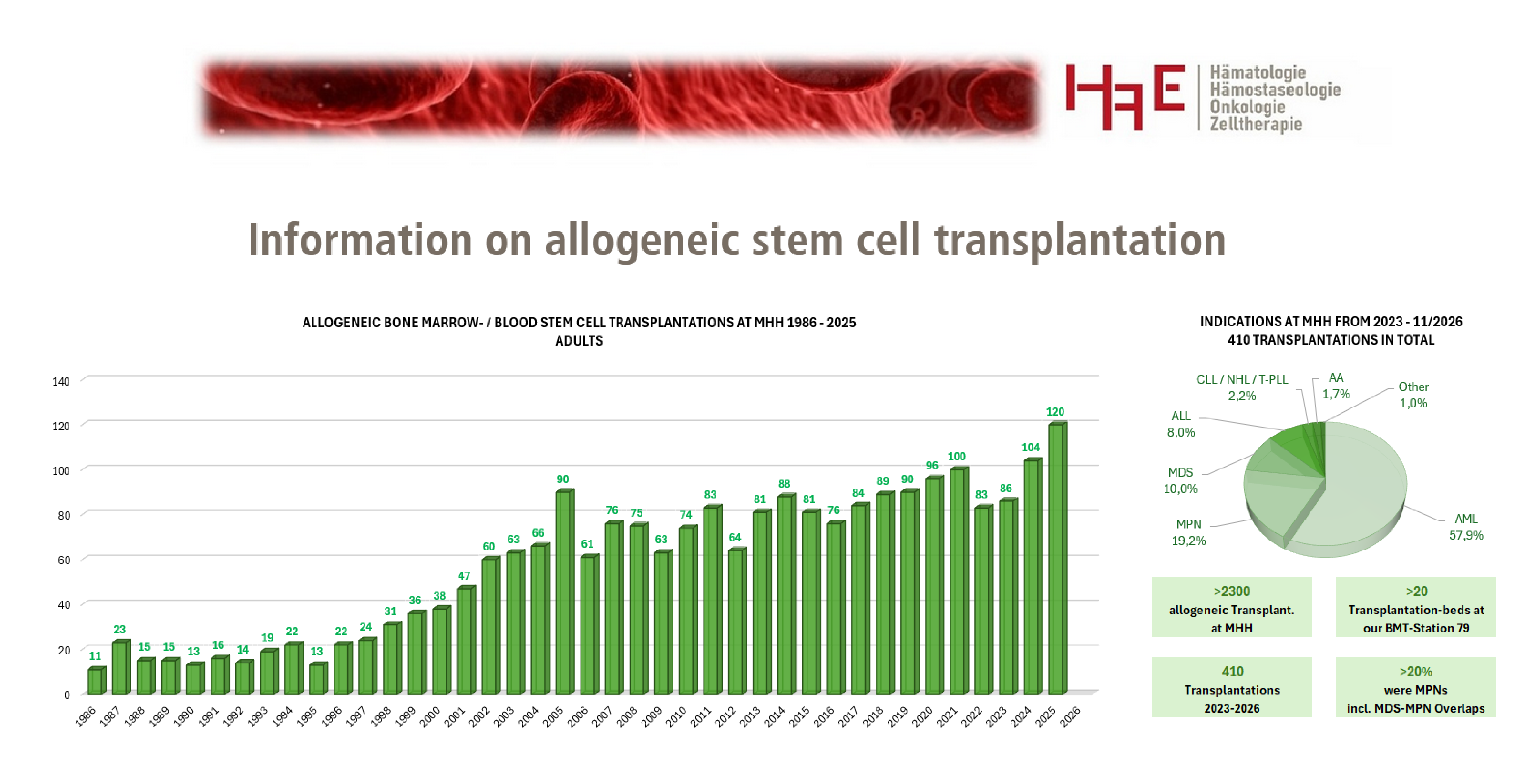
Allogeneic stem cell transplantation (SCT) is a form of stem cell transplantation used to treat malignant hematologic diseases. In contrast to autologous SCT, in which the patient’s own blood stem cells - previously collected from the patient - are reinfused, allogeneic SCT involves the transfer of blood stem cells from a donor to a recipient (the donor and recipient are therefore not the same person).
The transfer of healthy hematopoietic cells from a donor enables the regeneration of blood cell production following aggressive chemotherapy (or radiation therapy). Furthermore, the donor’s immunocompetent cells, which are also transferred, attack the malignant cells associated with the recipient’s underlying disease, thereby contributing to the curative effect. This cellular response is also known as the graft-versus-leukemia reaction.
A prerequisite for an allogeneic HSCT is a tissue-compatible donor, where “tissue-compatible” refers to a high degree of compatibility of the MHCs (Major Histocompatibility Complex). MHCs are cell surface proteins that are essential as antigens for immunological self-recognition. This match between donor and recipient is important to prevent graft rejection, also known as graft-versus-host disease.
If an allogeneic stem cell transplant is an option for you, we will, of course, provide you with further information during our office hours.