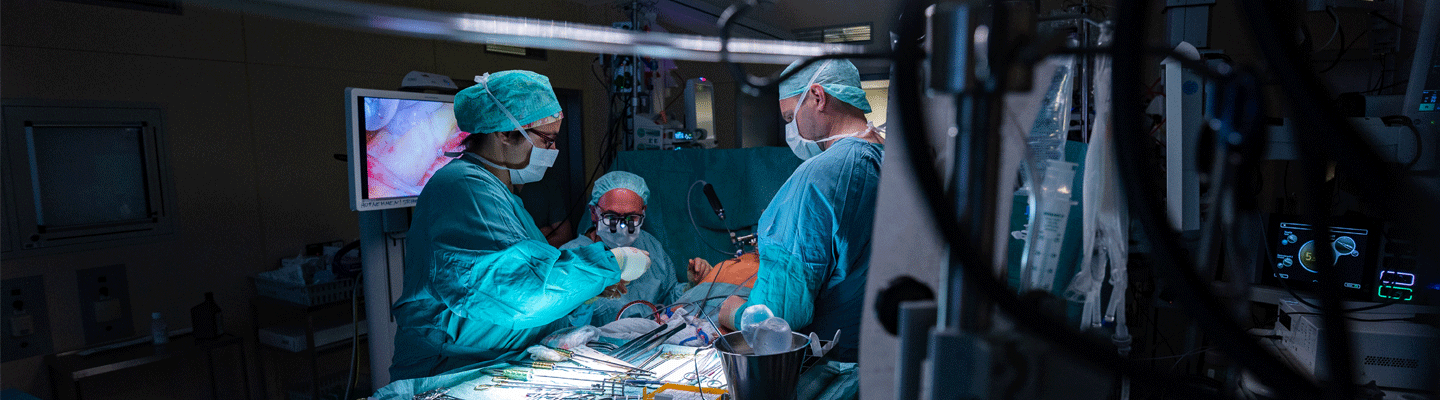
Minimally invasive heart surgery
Prof. Dr. Alexander Weymann, FECTS, FESC, MHBA
Minimally invasive surgery means performing operations using the smallest possible access to the surgical site. This is also possible in cardiac surgery. Particularly in operations on the heart valves, the surgeon gains good access to the heart with only small incisions in the intercostal space. 3D video systems with small cameras are used, which offer the surgeon various perspectives of the tissue and its instruments in addition to a direct view of the area to be operated on, thus further maximizing the safety of the procedure. Ultrasound examinations (echocardiography) are carried out during the operation, allowing the success of the procedure to be monitored directly. The possibility of minimally invasive heart surgery means that, above all, the median sternotomy, i.e. the frontal opening of the chest, with its associated risks, is avoided. This results in better wound healing and the avoidance of wound infections. In addition, the sternum is mechanically fully weight-bearing again shortly after the operation, whereas the conventional method requires at least three months of physical rest until the bone healing of the sternum is complete. In addition to a very good cosmetic result, all of the above measures serve to reduce surgical trauma and postoperative pain, as well as reducing blood loss and speeding up recovery after the operation. At the Clinical Department for HTTG Surgery, we routinely perform endoscopic treatment on the heart valves and have many years of experience and excellent surgical expertise. We discuss the most suitable surgical approach with patients in a detailed consultation before the operation.
Main areas of treatment
- Repair or replacement of the mitral valve or tricuspid valve
- Aortic valve replacement and aortic valve reconstruction
- Correction of congenital heart defects
- MIDCAB bypass surgery
- Removal of cardiac tumors
Heart valve surgery
In most cases, diseases of the heart valves can only be treated surgically. It is often possible to preserve the patient's own heart valve by repairing the defect (reconstruction). However, if reconstruction is not possible due to a particularly severe valve defect, the diseased valve must be replaced with a heart valve prosthesis. Together with the patient, we select the optimal heart valve prosthesis, taking into account the patient's life situation and concomitant illnesses. All the advantages and disadvantages of the various prosthesis models (biological or mechanical heart valve) are explained in detailed discussions.
In cases where valve implantation cannot be recommended even when using modern, catheter-based procedures, we offer innovative, seamless heart valve prostheses in Hanover. Although these valves are implanted using conventional, open surgical techniques, the procedure takes less time and is therefore less stressful for the patient as they do not have to be sutured in place.
The Clinical Department for HTTG Surgery is significantly involved in the development of new valve prostheses and gentler surgical procedures. In addition to the long-established procedures, we can therefore also offer state-of-the-art techniques. Children in particular benefit from a growing heart valve developed in Hanover. It differs fundamentally from the previously available valve prostheses made of plastic or fixed biological material, which naturally cannot grow. In contrast, the growing heart valve adapts to the growth of the patient's body, so that children are spared risky and stressful repeat operations. This concept is also available to adult patients after careful examination in individual cases.
Main areas of treatment
- Valve replacement and valve reconstruction procedures, especially mitral valve reconstruction
- Aortic valve reconstruction according to David
- Seamless heart valve
- "Growing" heart valve (tissue engineering)
- Multiple valve replacement
- Minimally invasive mitral valve surgery
- Repeat procedures after previous cardiac surgery in the past
- Interventional aortic valve replacement (transapical / aortic)