Thomas Illig reaches 2nd place in the ranking of Germany's most cited "minds" in hormone and metabolism research
4.09.2019
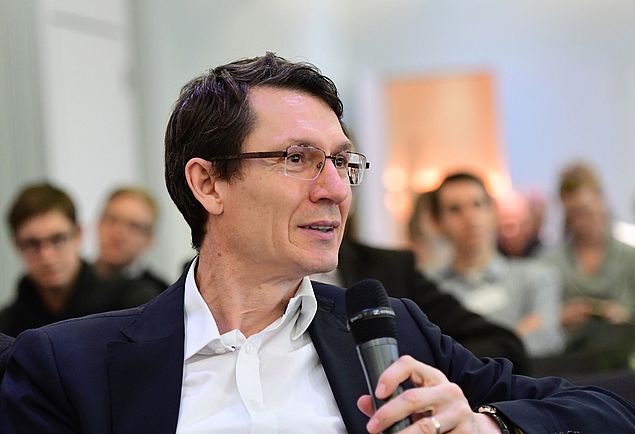
Prof. Dr. Thomas Illig, Scientific Director of the Hannover Unified Biobank (HUB) and Deputy Head of the Institute of Human Genetics at Hannover Medical School (MHH), achieved second place in the laboratory journal ranking ("Heads") for the discipline of hormone and metabolism research.
Between 2008 and 2017, he published 366 articles, which were cited a total of 39,945 times. The ranking of the laboratory journal (issue 09/2019) takes into account articles with at least one author with an address in the German-speaking world - preferably including specialist journals on hormone and metabolic research or employees of institutes in this field.
Many of the hormone and metabolic research publications listed above have a particular focus on nutrition, obesity, the body mass index and type 2 diabetes. Type 2 diabetes is particularly important in medical research due to its high prevalence in the population.
Thomas Illig studied and completed his doctorate at the University of Regensburg in the Institute of Cell Biology. He then worked for five years as a PostDoc at the Helmholtz Zentrum München. In 2001, Illig became group leader of the "Molecular Epidemiology" working group at the Institute of Epidemiology; in 2011, he took over the independent Department of Molecular Epidemiology at the Helmholtz Zentrum München. Since 2012, Illig has been Scientific Director of the Hannover Unified Biobank (HUB) at Hannover Medical School (MHH), and since 2016 Deputy Director and Research Coordinator at the Institute of Human Genetics at MHH.
During his time at the Helmholtz Zentrum München in the field of epidemiology, researcher Thomas Illig played a leading role in the organization of large epidemiological studies (including KORA, Augsburg Diabetes Family Study, NaKo Health Study).
Prof. Illig is considered one of the pioneers in the field of molecular epidemiology with regard to the combination of different molecular data. Examples of this are the combination of data from genome-wide association studies (GWAs) with data from the fields of metabolomics, transcriptomics or epigenomics. The combination of data enables more comprehensive insights into the genesis of complex diseases as well as their prediction and therapy.
Prof. Illig is a member of various international consortia whose focus is mainly on cardio-metabolic diseases, but also includes other diseases and phenotypes.
You can find the complete ranking of the laboratory journal here