Biosample collection from patients with rare diseases of the immune system
(20.07.2022)
The GAIN biobank is the biosample collection of the German multi-organ Auto-Immunity Network (GAIN), which aims to research and optimize the treatment of congenital multi-organ autoimmune diseases. These diseases are caused by monogenetic mutations in immunoregulatory genes (e.g. CTLA4, LRBA, NFκB1, NFκB2, STAT3, SOCS1, RELA, TNFAIP3, and LAT) and are typically characterized by inflammation in multiple organs.
As with all rare diseases, the collection of sufficient biosamples for research in patients with multi-organ autoimmunity is difficult and therefore the comparable and high-quality processing and storage of samples is all the more important. To ensure this, the GAIN sites in Freiburg, Hanover, Kiel and Munich (from 2022 also Dresden) work according to harmonized SOPs and the local Biobanks and clinical departments are supported in sample and data acquisition by the Hanover Unified Biobank (HUB). Sample quality data is stored together in a central sample database at the HUB, which means that sample material can be searched for simultaneously at all locations and a simple exchange with the GAIN patient register is possible.
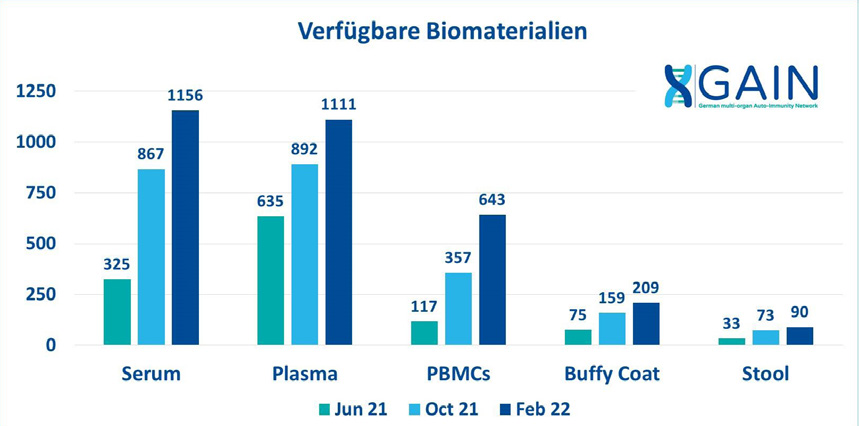
Currently, plasma, DNA (buffy coats), serum and living cells (PBMCs) are collected from whole blood for molecular characterization and subsequent post-genomic studies, as well as stool samples for microbiome analysis. From 2022, the collection will be expanded to include fixed PBMCs to answer specific immunological questions. The GAIN samples are available to all GAIN project partners, but also to the scientific community for research into immune diseases and can be requested via our Scientific Access Committee.