MR lung imaging
Lung diseases are widespread and can be a serious burden for those affected. At the same time, the diagnosis and assessment of the severity of lung diseases is made more difficult by the lack of sensitive diagnostic methods. Although computer tomography is very suitable for visualizing the structure of the lungs, it provides little information about lung function and also exposes patients to radiation.
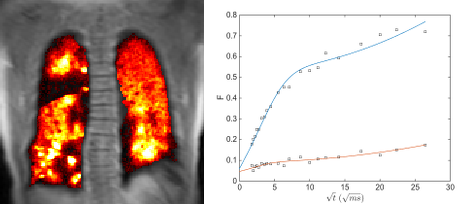
Alternative diagnostic options using lung imaging with magnetic resonance imaging (MRI) are the subject of active research and a specialty of Experimental Radiology at the Institute of Diagnostic and Interventional Radiology. Various approaches are being pursued that are based on the imaging of inhaled gases (perfluoropropane containing fluorine-19 or hyperpolarized xenon-129) or on the imaging of lung tissue containing hydrogen.
The aim of our research is the clinical translation of these novel techniques so that all patients can benefit from them in the future.
PREFUL
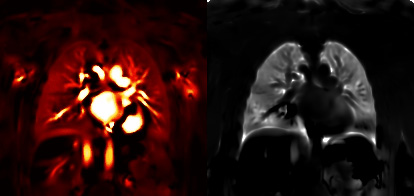
The PREFUL method can be used to visualize the ventilation and blood flow in the lungs in a time-resolved manner. This is a particularly patient-friendly imaging technique that does not require any contrast agents or breath-holds.
Fluorine-19
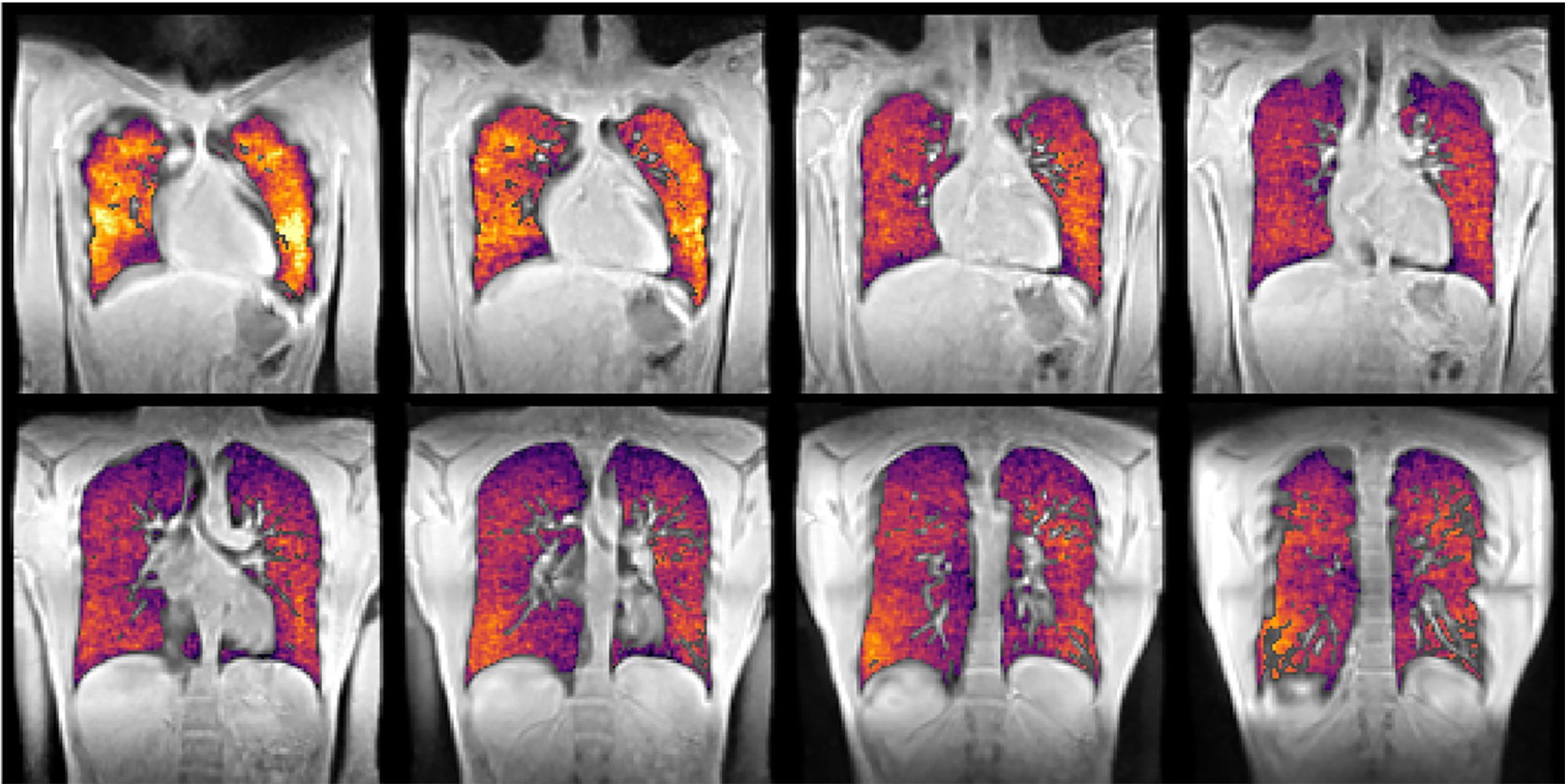
19F MR ventilation imaging of the lungs of a healthy volunteer using perfluoropropane. As perfluoropropane is very inert, it can be enriched with oxygen and inhaled over several minutes. Furthermore, it does not require any complex preparation such as hyperpolarization. Fluorine imaging is therefore a relatively inexpensive and uncomplicated method for determining regional lung function parameters. Current research is focusing on the establishment of new functional parameters and their clinical translation.