Pediatric radiology at the MHH
Welcome to the Pediatric Radiology Department!

The Center for Pediatrics and Adolescent Medicine at the MHH is a highly specialized children's hospital providing maximum care with numerous clinical focuses, including congenital heart defects, organ transplants, tumors, kidney, liver, intestinal and lung diseases. The surgical treatment of children and adolescents is carried out by the Clinical Department for Pediatric Surgery, which is also integrated into the Children's Hospital. Radiology, with its various imaging procedures, plays a key role in the diagnosis of illnesses. Pediatric radiology - as a branch of radiology - treats inpatient and outpatient children and adolescents, using all available imaging modalities. It is important to us to take the specific challenges of our young patients into account. The diagnostic procedures in pediatric radiology are adapted to the special spectrum of diseases, including congenital malformations or special infectious and tumor diseases, to the need for very careful radiation protection and to the respective maturity of the children.
Contact / Directions and appointments
X-rays are taken at any time and without prior appointment from Monday to Thursday between 8:00 and 14:30, Friday 8:00-13:00 - X-ray registration/room 2060. The pediatric radiology rooms (for X-rays, fluoroscopy, sonography) are located at the MHH in building K10 (pediatric clinic), level S0. see site plan
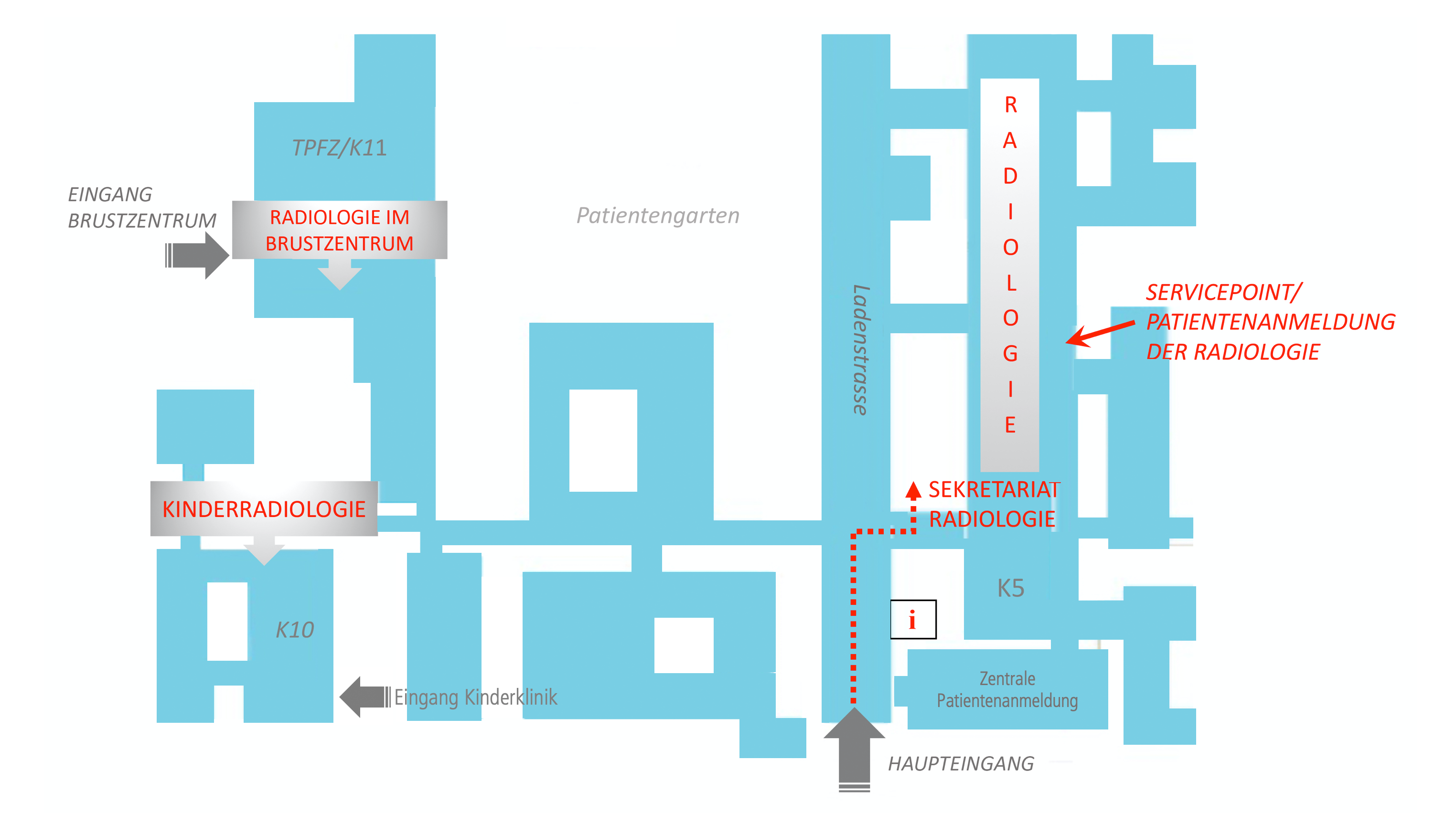
Bone density measurements, CT and MRI examinations are carried out at the Institute of Diagnostic and Interventional Radiology; the central patient registration desk for these examinations is located in building K5, level H0.
For other pediatric radiology examinations, please make an appointment:
- Pediatric Radiology office (Mon. to Fri. 9:00 am - 3:00 pm) Tel.: 0511-532-3019; Fax: 0511-532-83016
Ms. Tanja Gosewisch E-mail: gosewisch.tanja@mh-hannover.de or kinderradiologie@mh-hannover.de
- Registration for pediatric radiology (Mon. to Fri. 8:00 - 16:00) Tel .: 0511-532-3240 or 0176-1532-3240; Fax: 0511-532-8291
- Private consultation via the pediatric radiology office Tel.: 0511-532-3019
For medical emergencies outside of consultation hours, the emergency room of the pediatric clinic is available around the clock.
Pediatric radiology team
Head of Pediatric Radiology
-
Prof. Dr. med. Diane Renz
Office
- T. Gosewisch
Senior physician
- Dr. med. Carolin Huisinga
Specialists
- Dr. med. Amelie von Schneider-Egestorf
- Dr. med. Stefanie Paquet
For our young patients, we offer the entire spectrum of high-quality imaging diagnostics with modern technology, divided into the following different radiological modalities:
-
X-ray and fluoroscopy; both an X-ray and fluoroscopy unit are available in the pediatric clinic rooms.
-
Sonography (in the rooms of the children's clinic); the head of the pediatric radiology department is a trainer (level II radiology) of the German Society for Ultrasound in Medicine (DEGUM) and has DEGUM level I (pediatric sonography).
-
Bone density measurement (on the premises of the Institute of Diagnostic and Interventional Radiology) using a modern dual-energy X-ray absorptiometry (DXA) device.
-
Computer tomography; a modern, very fast 256-line computer tomograph (2 x 128 lines in "dual-source" technology with 2 X-ray tubes and 2 detectors) with optimized exposure of X-rays is available in the rooms of the Institute of Diagnostic and Interventional Radiology.
-
Magnetic resonance imaging with 1.5 and 3 Tesla devices in the rooms of the Institute of Diagnostic and Interventional Radiology.
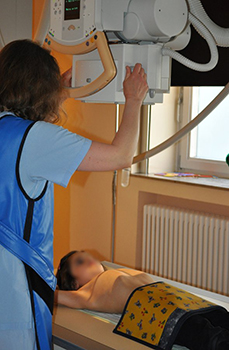
Taking X-ray images is similar to taking photographs. In contrast to visible light, however, X-rays can also penetrate opaque matter as they are more energetic. X-rays take their name from the German physicist Prof. Dr. Dr. Wilhelm Röntgen, who first demonstrated their effect in Würzburg in 1895. The imaging of different types of tissue on an X-ray film is due to the fact that the X-rays penetrate and are absorbed by the material in different ways. Nowadays, only modern digital imaging sources are used instead of X-ray films; thanks to constantly improving technology, radiation exposure has been reduced to a very low level.
Typical requirements for taking X-ray images in children and adolescents are the question of bone fractures or the imaging of the heart and lungs, for example in the case of possible pneumonia. A fluoroscopic examination differs from a conventional X-ray in that functional processes can be visualized using prolonged radiation, for example the act of swallowing or the transport of fluids through the stomach and intestines. Contrast agents can be used to make organs visible. Radiation exposure is generally higher with fluoroscopy images than with simple X-ray images. However, we use a careful, radiation-saving examination to minimize your child's exposure to radiation.
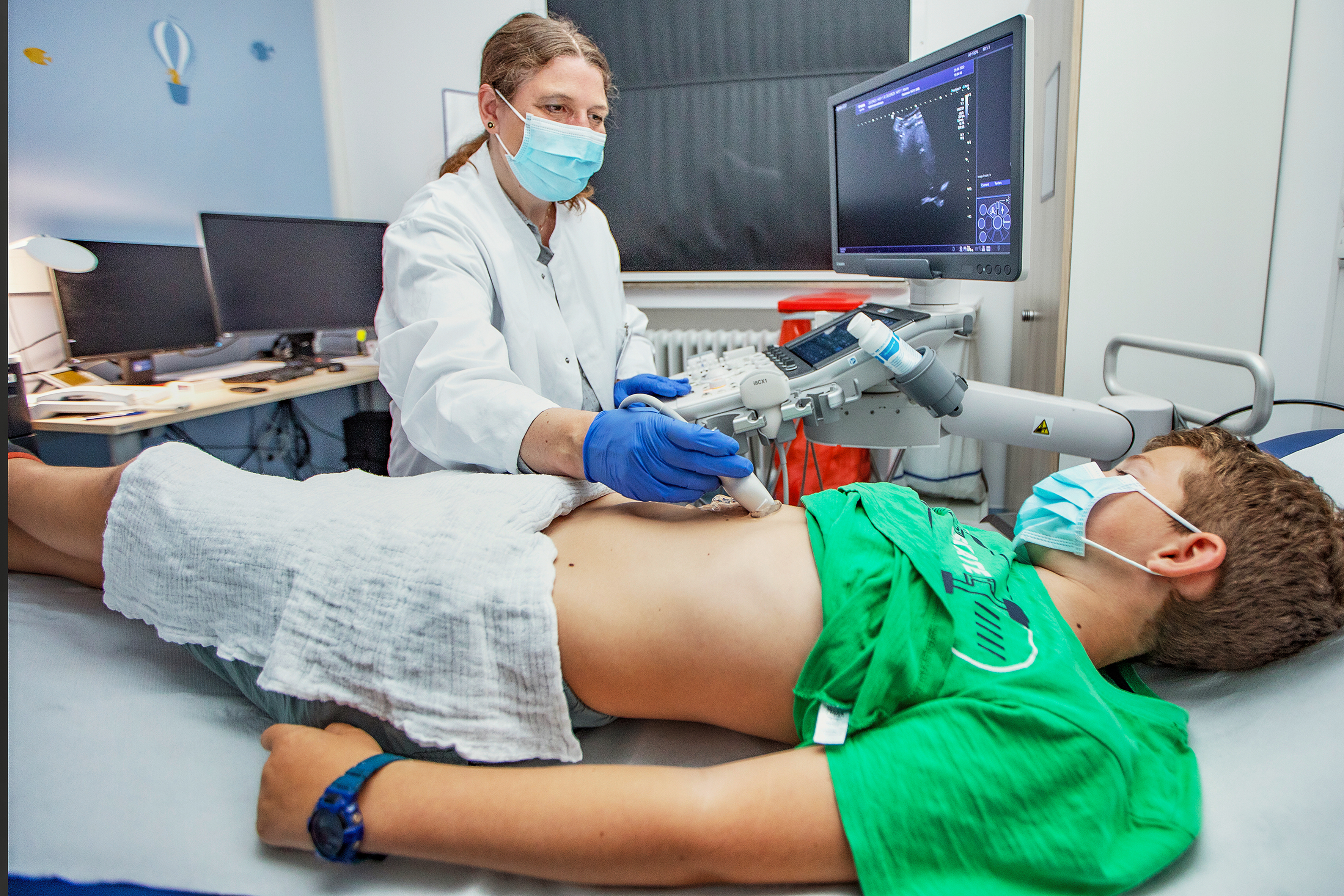
Sonography is based on high-frequency sound waves and does not require any X-rays to produce images. Ultrasound is also ideal for pediatric radiology, as no sedation or anesthesia is required. We have a wide range of transducers available for the numerous different medical issues. Typical applications of sonography in children and adolescents are the imaging of abdominal organs and the intestines, joints and soft tissue as well as the brain in infants. As a rule, no special preparation is required before a sonographic examination; your child does not need to be fasting. However, it is important that the urinary bladder is well filled for the examination of the sexual organs in girls. Certain pathologies can be visualized in more detail using ultrasound contrast medium; the indications and risks will be explained to you in a consultation.

As with X-ray and fluoroscopy examinations, X-rays are used in computed tomography (CT). Here, a beam of X-rays produces layer-by-layer images of a specific region of the body; the word "tomography" comes from the ancient Greek "tome" (to cut) and "graphein" (to write). Thanks to new technologies, radiation exposure has been significantly reduced in recent years and the examination time has often been cut to less than a second. Nevertheless, we use computed tomography with caution and carefully examine the medical issues before using a CT scan.
Common indications for a CT scan in children and adolescents include an emergency situation following an accident in which the child has suffered multiple injuries, detailed imaging of the lung tissue or therapeutic planning for a congenital heart defect. In order to better visualize vessels and organs, it may be necessary to administer a contrast agent containing iodine into a vein. Due to the risk of a contrast agent incident, we will check that your child has no thyroid or kidney dysfunction before administering the contrast agent. Patients do not need to be fasting before a planned CT scan without sedation/anesthesia. The indication and risks of a CT scan will be discussed with you in an informative consultation.
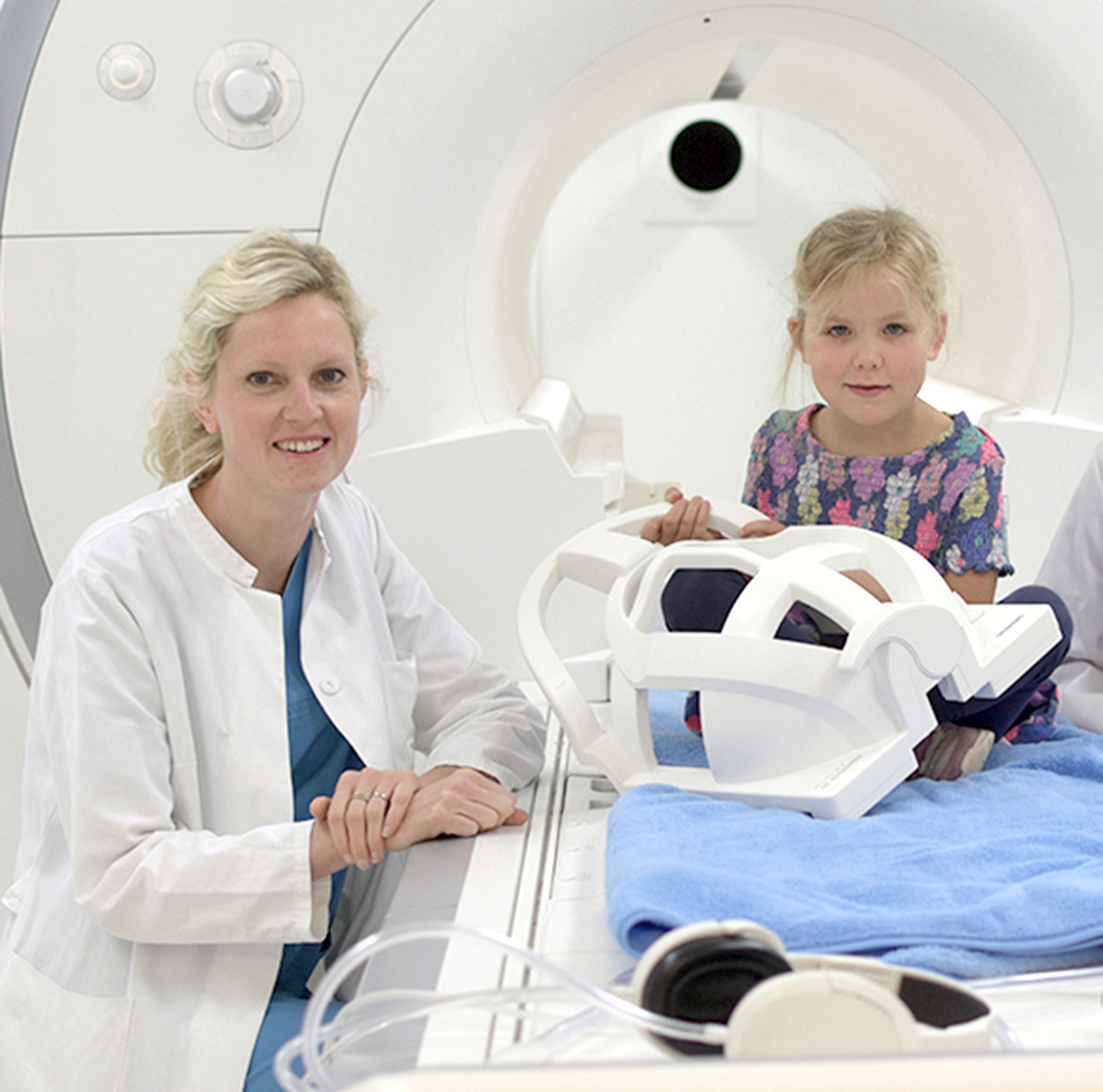
Like computed tomography, magnetic resonance imaging (MRI ) is a so-called cross-sectional imaging procedure in which thin slices of a specific body region are obtained. However, the MRI technique - also known as magnetic resonance imaging - is not based on X-rays, but on a strong magnetic field and the resulting excitation of protons in the human body. This produces images of many organs, including the joints, heart, brain, spine and abdominal organs, with excellent resolution and high contrast. The strength of the magnetic field is classified using the unit Tesla; common MRI devices have a magnet with a field strength of 1.5 or 3 Tesla.
Children do not need to be sober before an MRI examination - with the exception of any sedation or anesthesia required for the examination. By using MR contrast agents containing gadolinium, which are administered into a vein, certain pathologies, such as tumors, can be better detected and classified. Your child's kidney function will be checked before an MR contrast agent is administered. You will receive information about the indications for and risks of an MRI scan during a consultation. If your child does not require sedation or anesthesia, you are welcome to accompany your child during the MRI examination. Due to the strong magnetic field, which is always switched on, you and your child must remove all metal objects. Before the MRI examination, implanted foreign materials are carefully checked for their MRI compatibility.
Teaching and research in pediatric radiology
In addition to clinical patient care, teaching with the training of medical students and scientific research are important to us. Current research projects are based on the evaluation and optimization of CT and MRI examinations. If you have any suggestions or questions about teaching and science, e.g. if you are interested in a work shadowing/clinical traineeship or scientific cooperation, you can contact us at any time.