Bioinformatics (BM P 8)
Qualification objectives
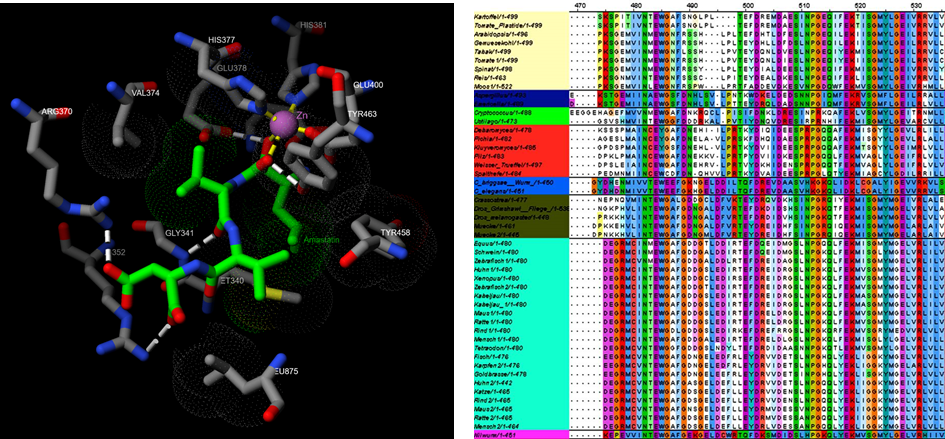
The module provides general knowledge of databases and internet-based resources for processing and analyzing the data accessible there. It provides an introduction to the algorithms used for this purpose. It serves to practice the molecular analysis of protein structures and their modeling.
Competencies
Students are familiar with the principles and basic algorithms of comparative sequence analysis and the databases in which primary sequences can be found. They can use Internet-based programs for sequence analysis to assemble unknown DNA sequences and determine the protein encoded on them. On the basis of evolution, they can classify the benefits and limits of structure and function prediction possibilities from primary sequences and create phylogenetic family trees. They can model an unknown protein structure using homologous models. They can explain this to their fellow students in an animated presentation. They know the algorithms for structure comparisons and the databases for structure classification.