Physiology / Pathophysiology (BM P 3)
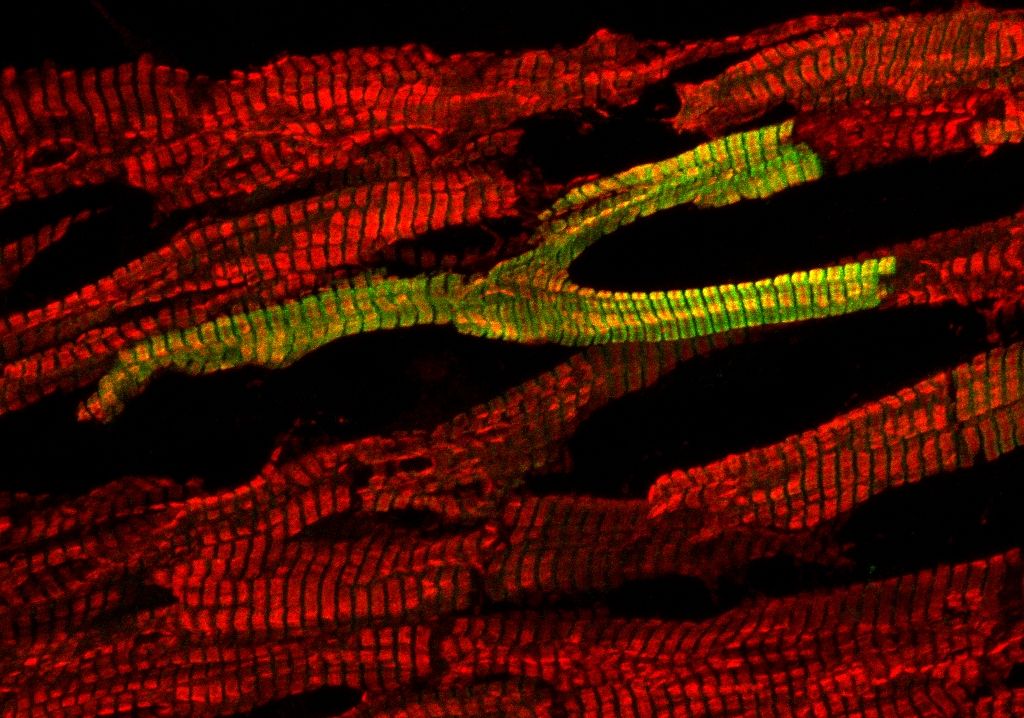
FREAK OR TEAMPLAYER? - In the human left ventricle we predominantly find cardiomyocytes which express only the slow β-myosin (red). Surprisingly, there are few cardiomyocytes, that express the fast α-myosin isoform (green) in close proximity to pure β-myosin expressing cardiomyocytes. How can such diverse cardiomyocytes functionally coexist in the myocardial network? (Finalist at the "Art of Science Image Contest of the Biophysical Society 2018"); Copyright: Holler, T. / Institut für Molekular-und Zellphysiologie / MHH

Qualification objectives
Students acquire basic and in-depth knowledge of the physiology and pathophysiology of the cell through to molecular physiology and selected chapters of organ and systems physiology. They are able to work on small physiological laboratory projects in groups (approx. 6 students each).

Competencies
Students have an understanding of physiological relationships and skills in linking pathophysiological deviations and the resulting symptoms typical of the disease. They are qualified to apply current physiological research methods in bioscientific fields of activity and to classify their results in the context of existing physiological knowledge.