Tumor Biology (BM WP 11)
Qualification objectives
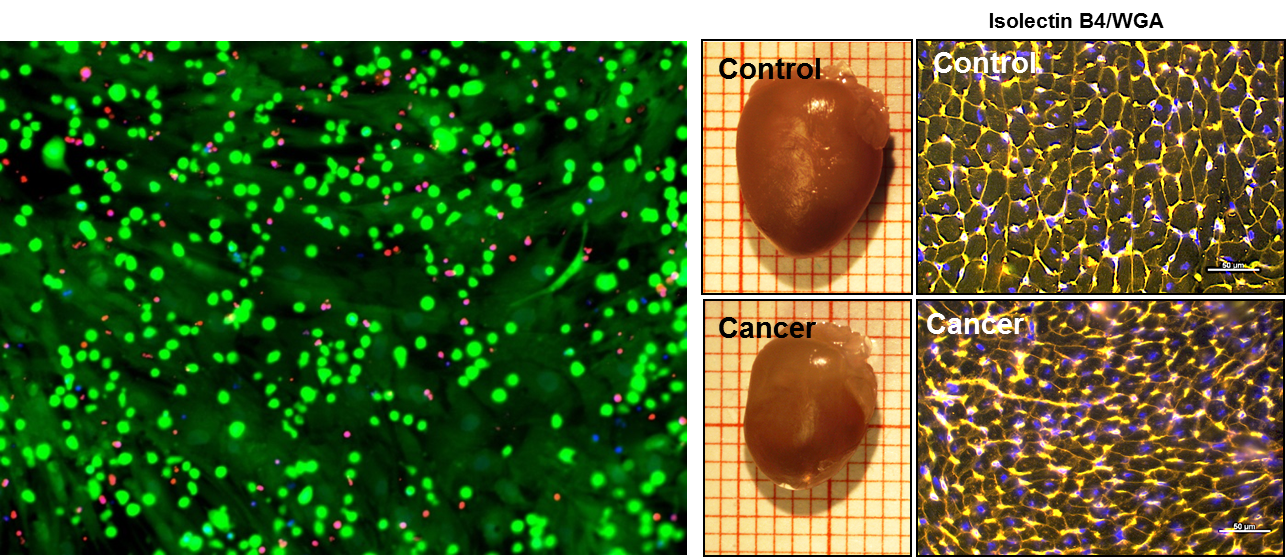
The module provides basic knowledge and a solid understanding of the molecular and cell biological mechanisms of tumor development and progression as well as general principles of molecular cell biology. Students will learn that the tumor in vivo is not an isolated system, but also a systemic disease that also affects other organs. It is also explained that the classic target of tumor therapy can also affect survival signals in normal cells and that this leads to massive side effects, particularly in the heart. Furthermore, pharmacological concepts of tumor therapy (e.g. cytostatics, small molecule inhibitors for targeted therapy, immunotherapy with antibodies and T-cells) are explained. The internship provides specific knowledge and practical experience in the field of molecular biology and cell biology.
Competencies
Lecture: After attending the lecture, students will be familiar with concepts of malignant transformation and the effect and interaction of oncogenes and tumor suppressor genes and their assignment to signal transduction pathways and cellular regulatory systems as well as metabolic regulation. They receive an introduction to cardiac physiology and intra- and intercellular communication systems. They also gain insights into translational research concepts. Students are also introduced to basic molecular techniques, in particular for the genetic modification of cells (gene transfer, RNA interference, CRISPR/CAS9).
Internship: After attending the internship, students will be able to transform cells and isolate RNA and proteins from tumor cells and perform assays for malignant transformation. They will also have knowledge of the genetic modification of cells (production of viral vectors and transduction of cells) and of functional gene analysis (RNA interference, CRISPR/CAS9, overexpression of oncogenes). They have insights into physiological measurements on the heart in vivo and into heart morphology via histology and immunohistochemistry and are familiar with microscopic analysis systems.