The director of the lower saxony center for severe burn injuries at MHH explains the risks involved and what to do in an emergency.
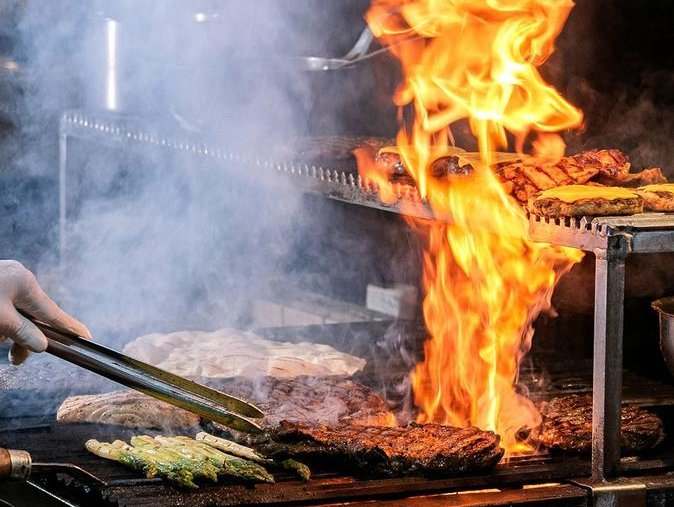
Warning: Risk of burns. To ensure safe barbecuing, please follow these rules. Copyright: pexels
For many people, there’s nothing better on a balmy summer evening than having a barbecue with friends or family. Cooking food over an open fire combines enjoyment and socializing. But barbecues also always come with risks. In Germany, there are about 4,000 barbecue accidents resulting in burn injuries every year. Many cases can be treated at a family doctor’s office. However, some injuries are so severe that those affected must be treated at specialized centres and suffer lifelong consequences.
Risk of injury
In barbecue accidents, the face, hands, and forearms are frequently affected. “Burns can leave permanent scars that both restrict mobility and impair physical appearance,” explains Dr. Anieto Enechukwu, senior physician at the Lower Saxony Center for Severe Burn Injuries at the Clinical Department of Plastic, Aesthetic, Hand and Reconstructive Surgery at Hannover Medical School (MHH). Deep burns often require multiple surgeries and skin grafts.
Carelessness with serious consequences
“A common cause of barbecue accidents is the combination of alcohol consumption and carelessness,” explains Dr. Enechukwu. This leads to basic safety rules being ignored. A typical scenario: A burning barbecue is being “moved” to another location. In the process, someone stumbles and falls into the glowing coals. Another cause is the use of liquid accelerants such as rubbing alcohol or gasoline. “This can lead to a deflagration and jet flames several meters high, which can damage not only the skin but also the eyes,” warns Dr. Enechukwu.
Follow the rules when grilling
By following certain safety rules, you can significantly reduce the risk of burn accidents and enjoy your barbecue evening. The Hanover Fire Department offers the following tips, among others:
- Grill only outdoors, keeping a safe distance from flammable materials.
- Do not barbecue in the woods or at the edge of the woods.
- Set up the grill so it cannot tip over.
- Use only approved barbecue lighters.
- Never pour gasoline, alcohol, or other flammable liquids onto the charcoal.
- Never leave a barbecue fire unattended.
- Keep children away from the fire.
- Extinguish the embers if the wind picks up or after you’re done grilling.
- Do not dump hot charcoal in trash cans, compost piles, or on lawns.
If, despite all precautions, a barbecue accident does occur, Dr. Enechukwu recommends the following measures:
- Cool minor burns immediately after the accident with cool tap water at 15 to 20 degrees Celsius.
- For more serious injuries or in the case of children, call emergency medical services at 112. Avoid prolonged cooling, as this can lead to hypothermia.
- Extinguish burning clothing, for example with a blanket or by following the “Stop, Drop, and Roll” principle: stop, lie down, and roll.
- Cover burns with a sterile dressing, such as a bandage from a car first-aid kit.
- Do not “treat” burn blisters yourself. Do not apply any home remedies such as flour, oil, or ointments.
Text: Tina Götting