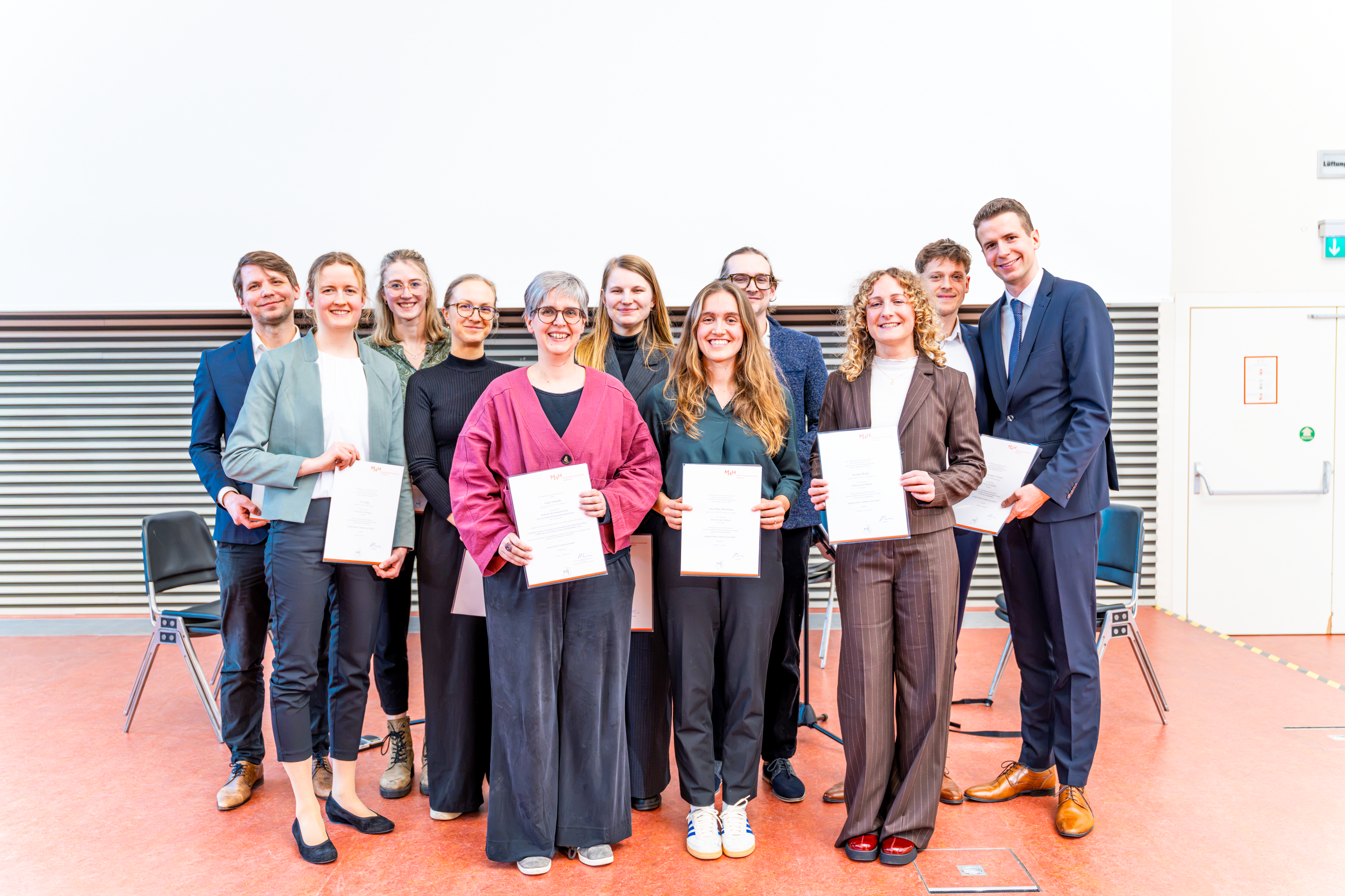
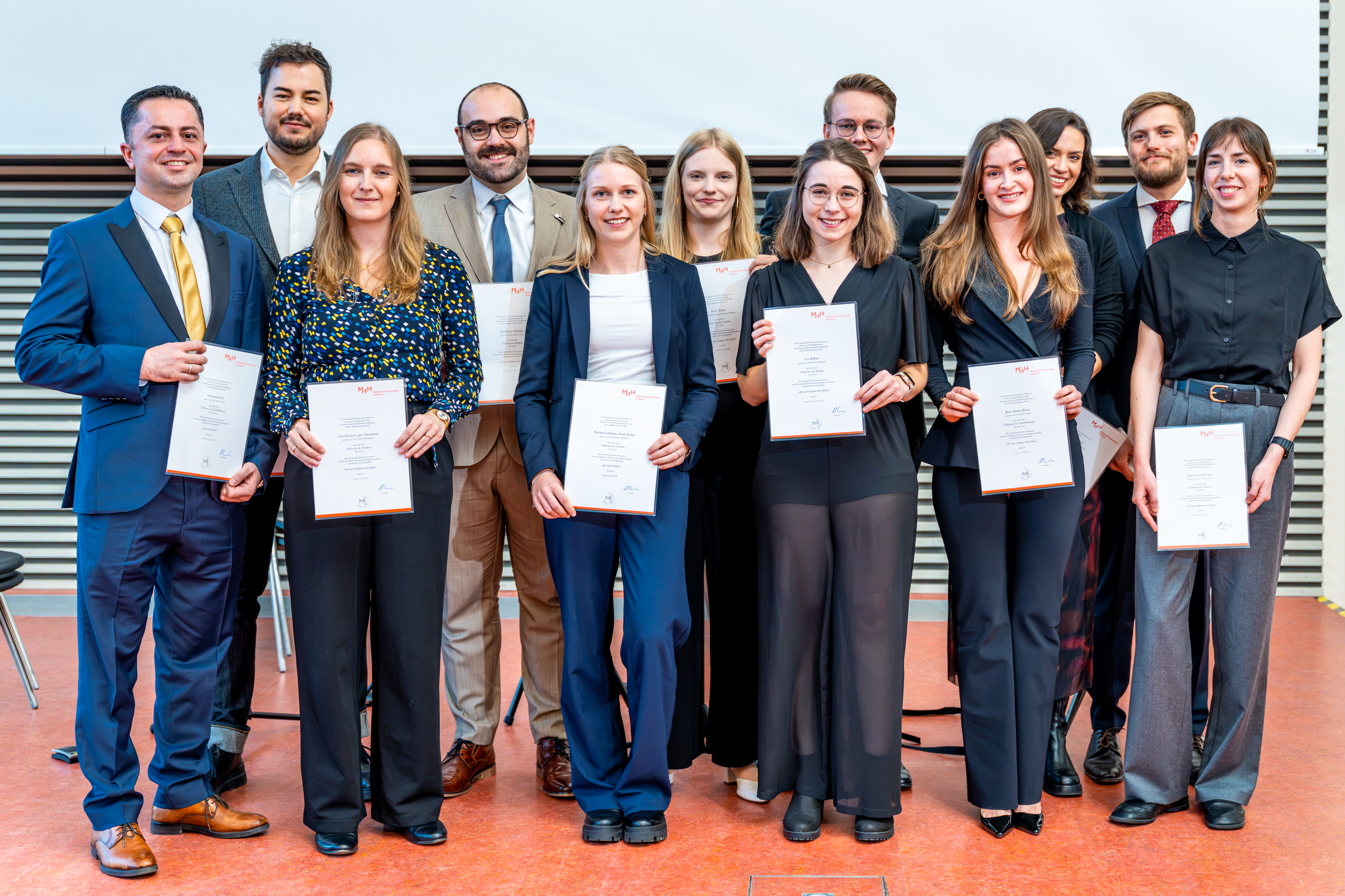
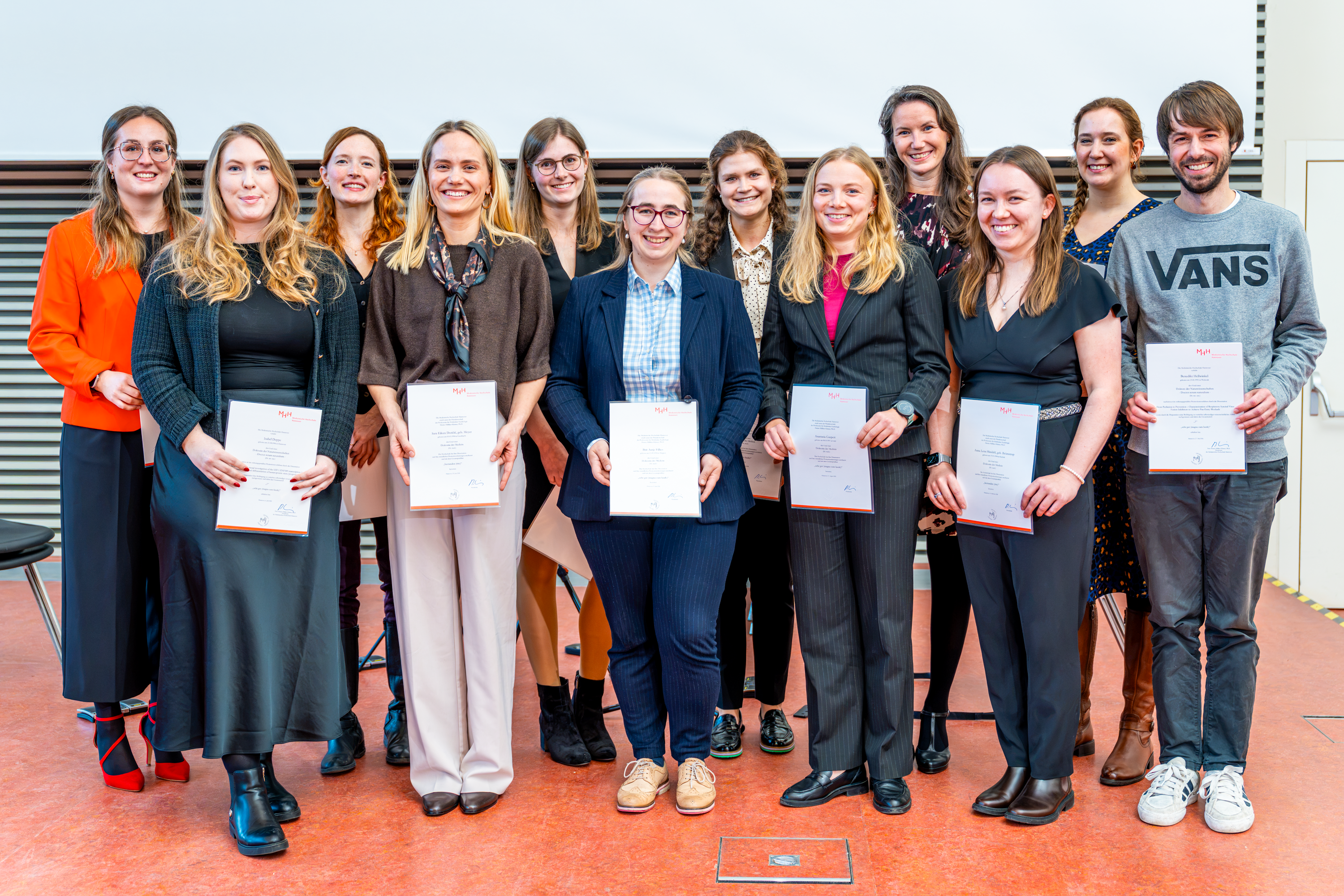
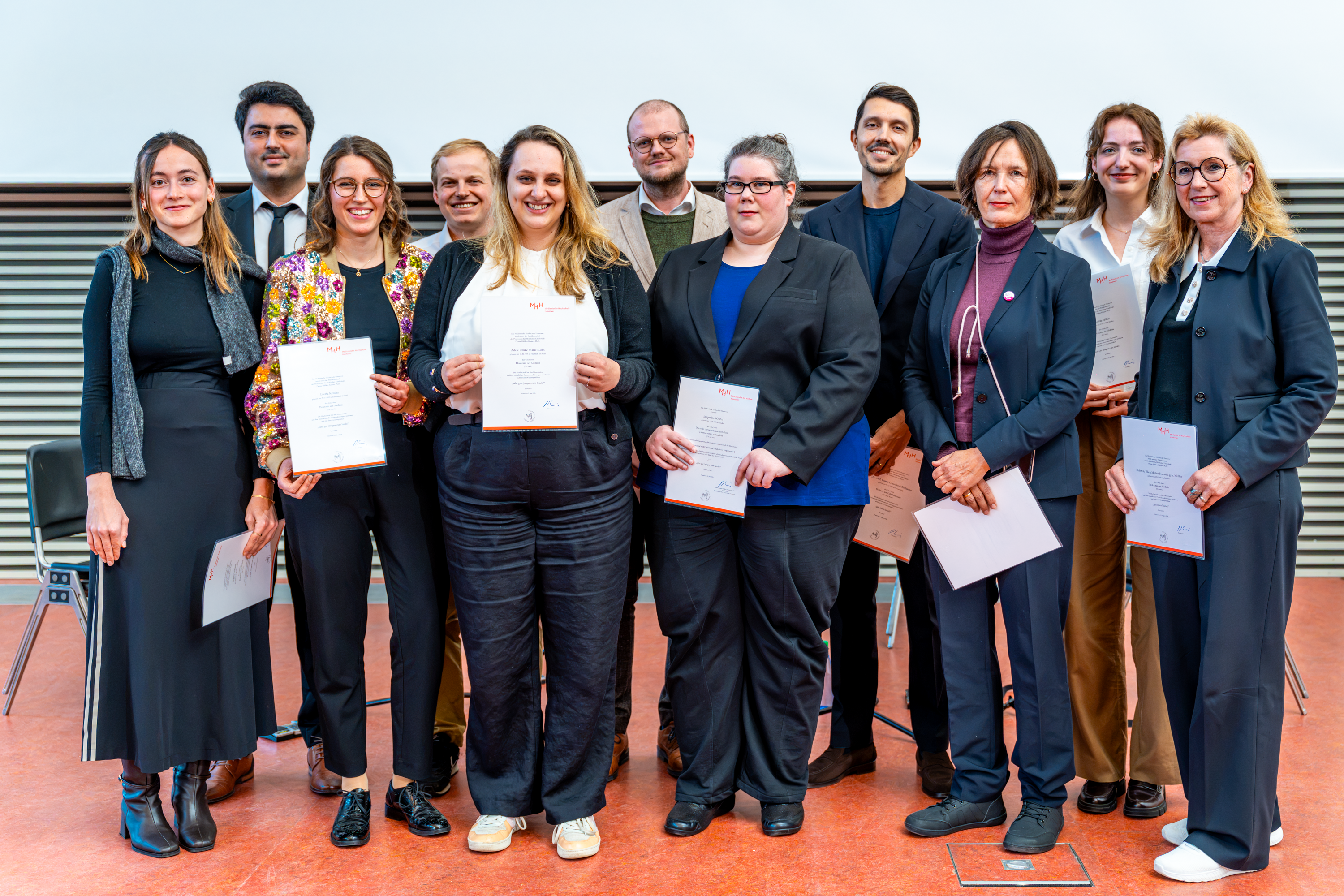
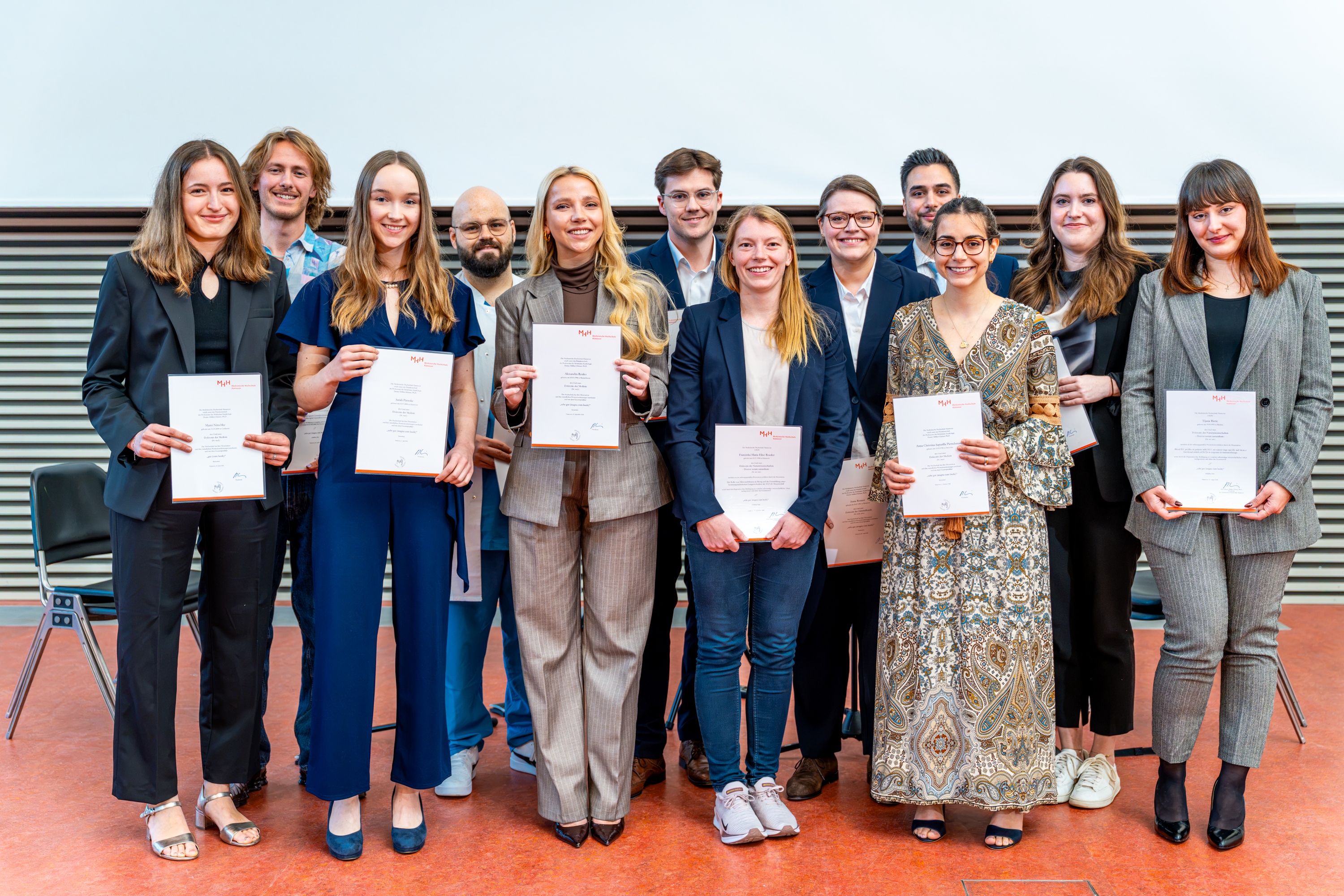
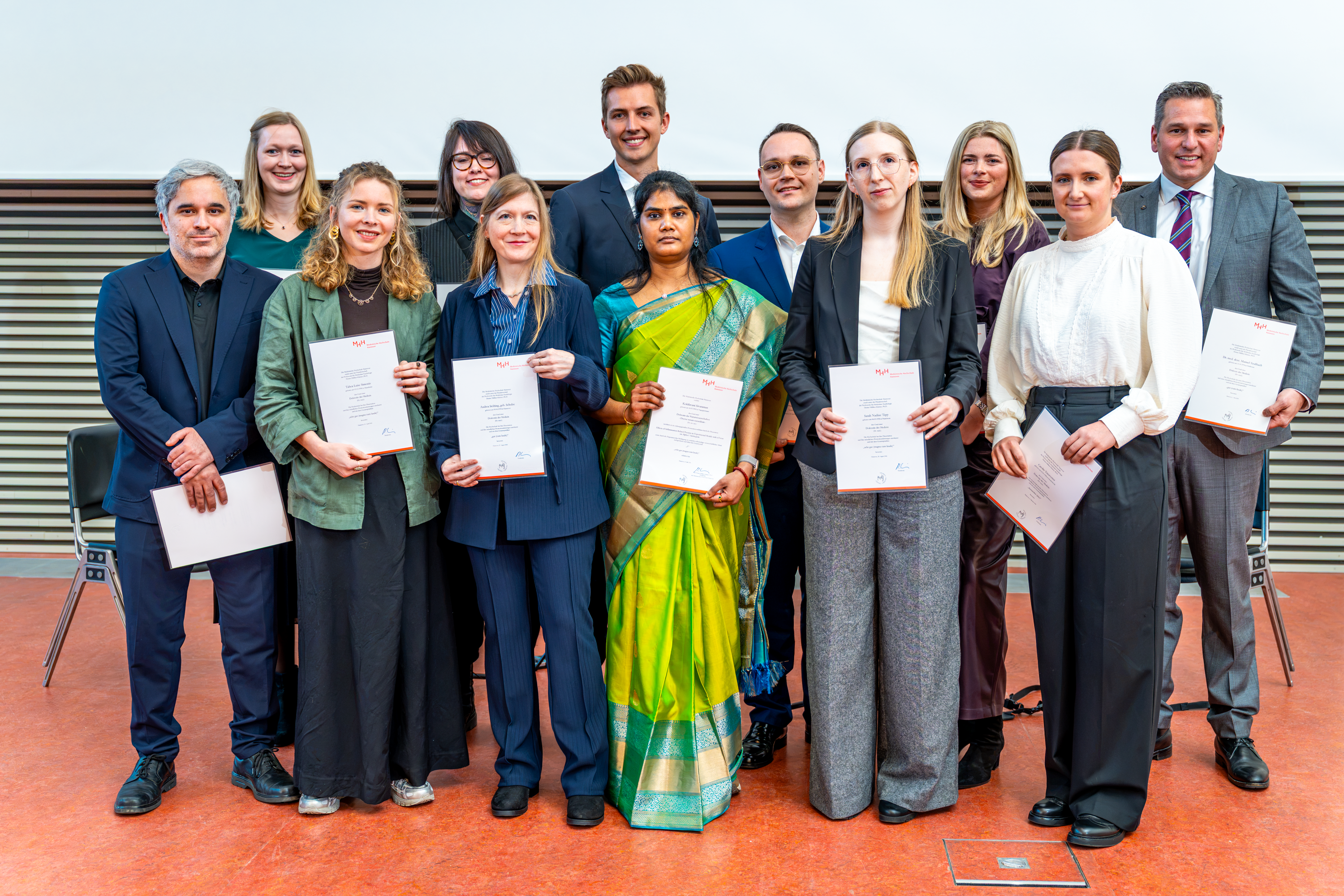
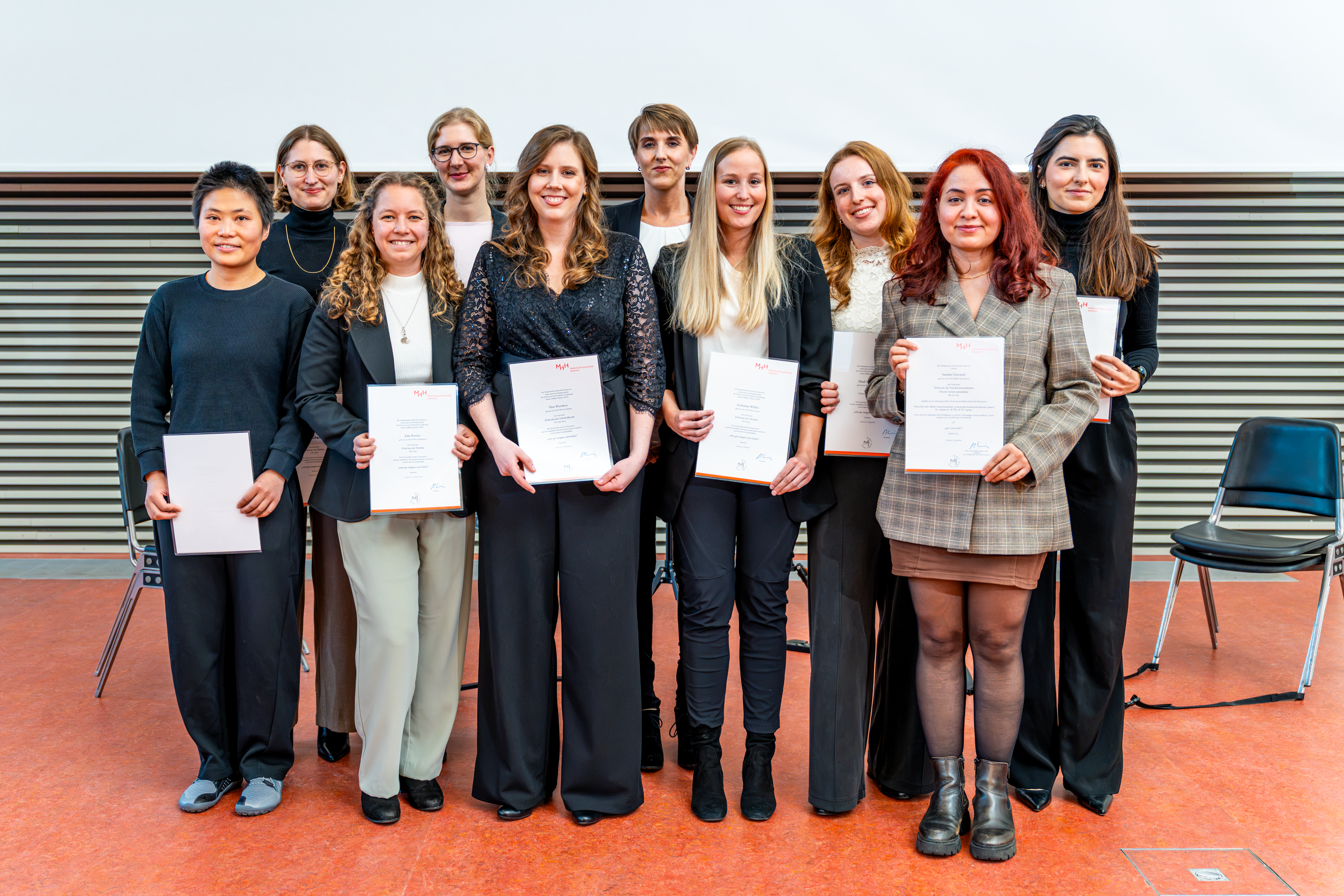
At the graduation ceremony, 90 women and 45 men received their diplomas. Two doctoral graduates also received an award.
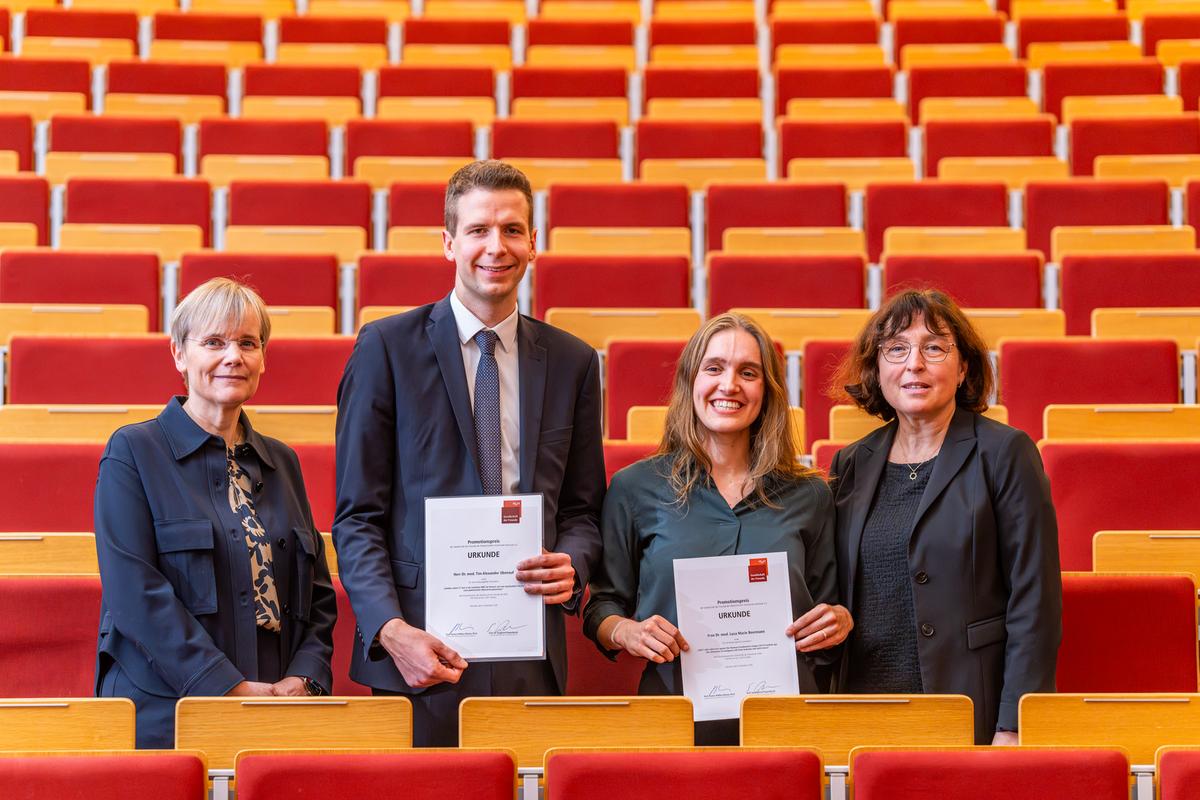
Delighted to receive their doctoral awards: Dr. Luca Marie Beermann and Dr. med. Tim Alexander Ubenauf with their doctoral advisors, Prof. Dr. Dr. Anette Melk (left) and Prof. Dr. Britta Eiz-Vesper (right). Copyright: André Schweigler/MHH
A total of 135 graduates have just successfully completed their doctorates at Hannover Medical School (MHH). All of the university’s academic disciplines were represented at the ceremonial awarding of doctoral degrees last Friday. Among the 90 female PhD students and 45 male PhD students were 65 female physicians and 36 male physicians, nine female dentists and four male dentists, eleven female scientists and two male scientists, five female human biologists and one male human biologist, as well as two PhD students in public health. A total of seven female PhD students and five male PhD students graduated with the highest distinction, summa cum laude (“with highest honors”).
“With your doctorate, you have reached an important milestone,” said MHH President Prof. Dr. Denise Hilfiker-Kleiner. “Behind this achievement lie many months—and for some, even years—of intensive work, scientific curiosity, and great perseverance. Science is not just about finding answers. It’s also about asking questions, challenging the status quo, weathering setbacks, and seeking new paths. That is exactly what you have demonstrated through your work. Your doctorate is therefore far more than just an academic title. Congratulations!”
The Gesellschaft der Freunde der MHH e. V. honored Dr. med. Luca Marie Beermann and Dr. med. Tim Alexander Ubenauf for their outstanding doctoral dissertations. The doctoral awards, each worth 2,500 euros, were presented by Prof. Dr. Siegfried Piepenbrock, Chair of the Gesellschaft der Freunde der MHH e. V., together with Prof. Dr. Meike Stiesch, Dean of Research and Transfer.
The doctoral celebration featured musical performances by members of the SALO Quartet: Marlene Fischer and Lotte Neick on violins, Caroline Wichmann on viola, and Amelie Raschke on cello, who performed works by FLINTA* female composers. At the reception that followed, the new doctoral graduates raised a toast to this significant milestone together with their families and friends.
Doctoral Award for New CAR-T Cell Therapy
Dr. Luca Marie Beermann wrote her dissertation, titled “CAR-Ts redirected against the Thomsen-Friedenreich antigen CD176 mediate specific elimination of malignant cells from leukemia and solid tumors,” in the Molecular Immunotherapy research group at the Institute of Transfusion Medicine and Transplant Engineering under the supervision of Prof. Dr. Britta Eiz-Vesper. In her thesis, she describes a new CAR-T cell therapy that offers a promising treatment option for various types of cancer.
In CAR-T cell therapy, patients’ immune cells are genetically modified to recognize and attack a specific marker on cancer cells. The PhD student investigated the sugar antigen CD176, also known as the Thomsen-Friedenreich antigen, as a potential target for this immunotherapy. CD176 is present in up to 90 percent of carcinomas and leukemias and is involved in tumor growth and metastasis. On healthy cells, it is usually masked by additional sugar chains—a crucial advantage, as this allows CAR-T cells to selectively recognize tumor cells while sparing healthy tissue.
To this end, Dr. Beermann developed two CD176-specific CAR-T cell constructs. In laboratory experiments, the modified immune cells recognized CD176-positive tumor cells from blood cancer and solid tumor models, activated themselves, released cell-killing signaling molecules, and efficiently killed the target cells. Cells lacking CD176 remained unaffected. However, when the molecule was artificially exposed on healthy cells, the CAR-T cells attacked these as well. The results thus demonstrate that the selectivity of the therapy relies largely on the natural masking of CD176 on healthy tissue.
Since CD176 plays a key role in tumor aggressiveness, it is less likely that cancer cells will lose the target molecule and thus evade the therapy. CD176-CAR-T cells could therefore be a promising treatment option for various types of cancer—with the potential to reduce side effects and prevent relapses.
The original paper by Dr. Luca Marie Beermann can be found here.
Doctoral Award for Improved Post-Kidney-Transplant Care
Dr. med. Tim Alexander Ubenauf completed his dissertation titled “Increased Native T1 Time in Cardiac MRI as an Indicator of Myocardial Fibrosis Following Paediatric Kidney Transplantation” as a KlinStrucMed PhD student in the Interdisciplinary Experimental Transplantation Medicine research group at the Department of Pediatric Nephrology, Liver, and Metabolic Diseases and Neuropediatrics under Prof. Dr. Dr. Anette Melk. In it, he demonstrates how abnormalities in the heart muscle can be detected via MRI in young patients following a kidney transplant.
Although life expectancy following a kidney transplant in childhood has increased in recent decades, it remains significantly lower than that of the general population. Cardiovascular diseases are among the most common causes of death following a kidney transplant. One possible underlying mechanism is changes in the heart muscle caused by increased deposition of connective tissue.
The goal of Dr. Ubenauf’s study was to investigate such changes in young patients following a pediatric kidney transplant using contrast-free magnetic resonance imaging (MRI). To this end, 46 children and young adults who had undergone a kidney transplant were compared with 46 healthy individuals of the same age and sex. The MRI scans showed evidence of increased connective tissue deposition in the heart muscle in nearly half of the transplant recipients. This was associated in particular with higher blood pressure.
The study’s findings demonstrate that contrast-free cardiac MRI can detect abnormalities in the heart muscle even in young patients following a kidney transplant. Good blood pressure control could help prevent or at least reduce further damage to the heart muscle.
The original study by Dr. Tim Alexander Ubenauf can be found here.
Text: Bettina Dunker