A team of experts from MHH performed the complex procedure.
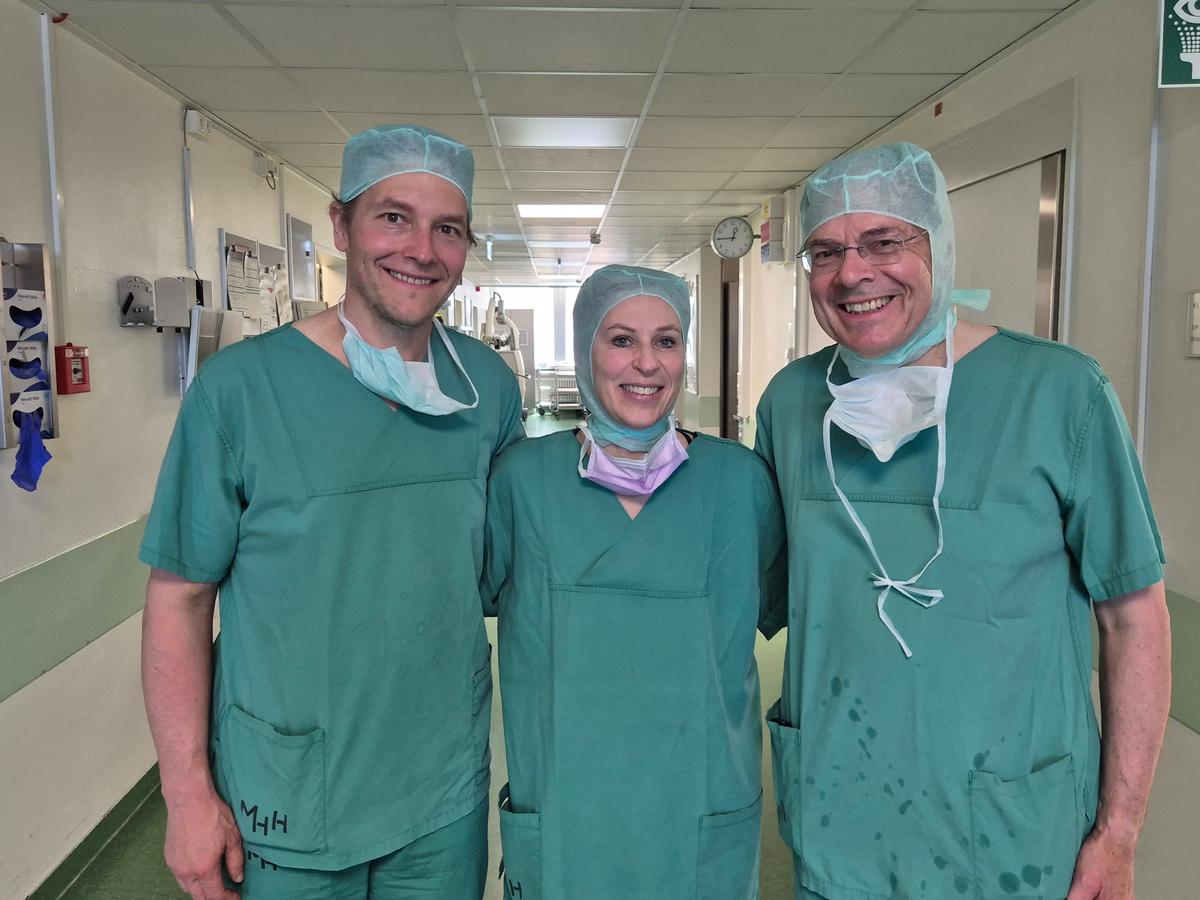
Successful surgical team: Prof. Dr. Rolf Salcher, Prof. Dr. Anke Leichtle, and Prof. Dr. Thomas Lenarz. Copyright: Daniela Beyer/MHH
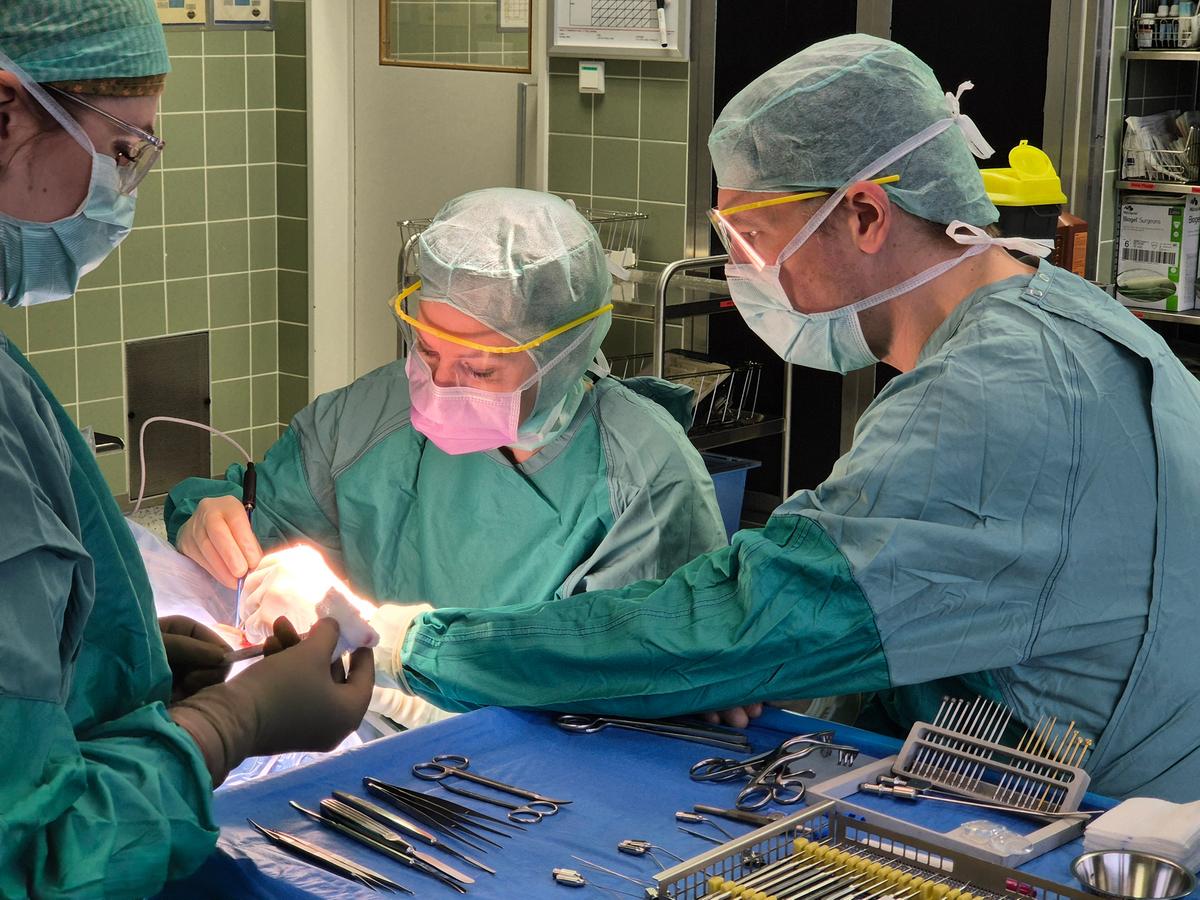
Concentration at the operating table: The implantation of an ABI is one of the most challenging procedures in hearing rehabilitation. Copyright: Daniela Beyer/MHH
The Hannover Medical School (MHH) has achieved an extraordinary milestone: A two-year-old girl received a second auditory brainstem implant (ABI) at the Clinical Department of Ear, Nose and Throat Medicine. The child now has brainstem implants in both ears—a procedure that is performed extremely rarely worldwide, even in adults.
The child was born without auditory nerves. For children with bilateral auditory nerve aplasia, sounds and speech cannot be transmitted to the brain through the usual pathway. Cochlear implants, which require an intact auditory nerve, are not an option in these cases. “For these children, an ABI often represents the only chance to perceive auditory impressions and develop speech,” explains Prof. Dr. Anke Leichtle, director of the ENT Clinic.
A Prerequisite for Better Sound Processing
Just over a year ago, the girl received her first brainstem implant at the MHH, which enabled her to learn to say her first words, such as the names of family members. With the second side now implanted, another important step in her development has been taken. Just as with natural hearing or bilateral cochlear implants, both sides together create the conditions for improved spatial hearing and more nuanced processing of sounds and voices.
Surgery Performed Only at Highly Specialized Centres
The procedure is one of the most challenging surgeries in modern hearing rehabilitation. Auditory brainstem implants are implanted at only a few highly specialized centres worldwide. Bilateral implantation in such a young child is an exceptional case even by international standards—and underscores the MHH’s special expertise in this field.
The composition of the surgical team also held special symbolic significance: Professor Leichtle, who has been director of the MHH ENT Clinical Department since May 2026, Prof. Dr. Rolf Salcher, former acting clinical department director, and Prof. Dr. Thomas Lenarz—who shaped the Clinical Department for more than three decades and played a decisive role in the international development of implantable hearing systems—performed the surgery together. Experience, continuity, and the future came together in this joint procedure.
An Important Step for the Child’s Development
“Children with absent auditory nerves are among the most challenging patients in hearing rehabilitation. The bilateral implantation that has now been completed opens up further possibilities for this child’s hearing and speech development,” explains Professor Leichtle. Professor Lenarz adds: “Fitting children with brainstem implants requires not only the highest level of surgical expertise but also long-term interdisciplinary care. It is all the more gratifying when we can accompany a child’s development over several years and now make this important next step possible.”
Moving Moments
Things became particularly moving just two days after the surgery—unusually early for a brainstem implant procedure. During the so-called test tone, the implant was activated for the first time. To outsiders, these are initially just technical procedures: impedance measurements, initial cautious electrical stimuli, and focused glances at monitors and data. But for everyone in the room, these moments mean so much more. Because suddenly, it’s no longer just about medicine and technology. It’s about whether a child might be able to perceive auditory impressions for the first time through this method. The tension was palpable. Every small movement, every glance, every change was closely observed. And indeed, the girl was already showing initial reactions that could indicate she was hearing. These early signals are not yet certain and do not allow for definitive conclusions—but in moments like these, even small reactions become something special: tentative signs of hope.
Initial Fitting of the Implant
Now attention turns to the next important step: the initial fitting of the implant in the coming days. That is where the real journey begins—with many more appointments, adjustments, and intensive hearing and speech therapy to make the most of the possibilities offered by bilateral hearing.
MHH Is Among the Leading Facilities or Institutions
MHH is one of the world’s leading centres for implantable hearing systems and has decades of experience in treating complex hearing disorders. The successful bilateral ABI fitting for this young child demonstrates once again what modern medicine can achieve: new opportunities—and perhaps many first moments of hearing.
Text: Daniela Beyer