In the guide ‘Help with Heat in Care Homes’, a team of experts from the MHH provides practical advice on caring for older people.
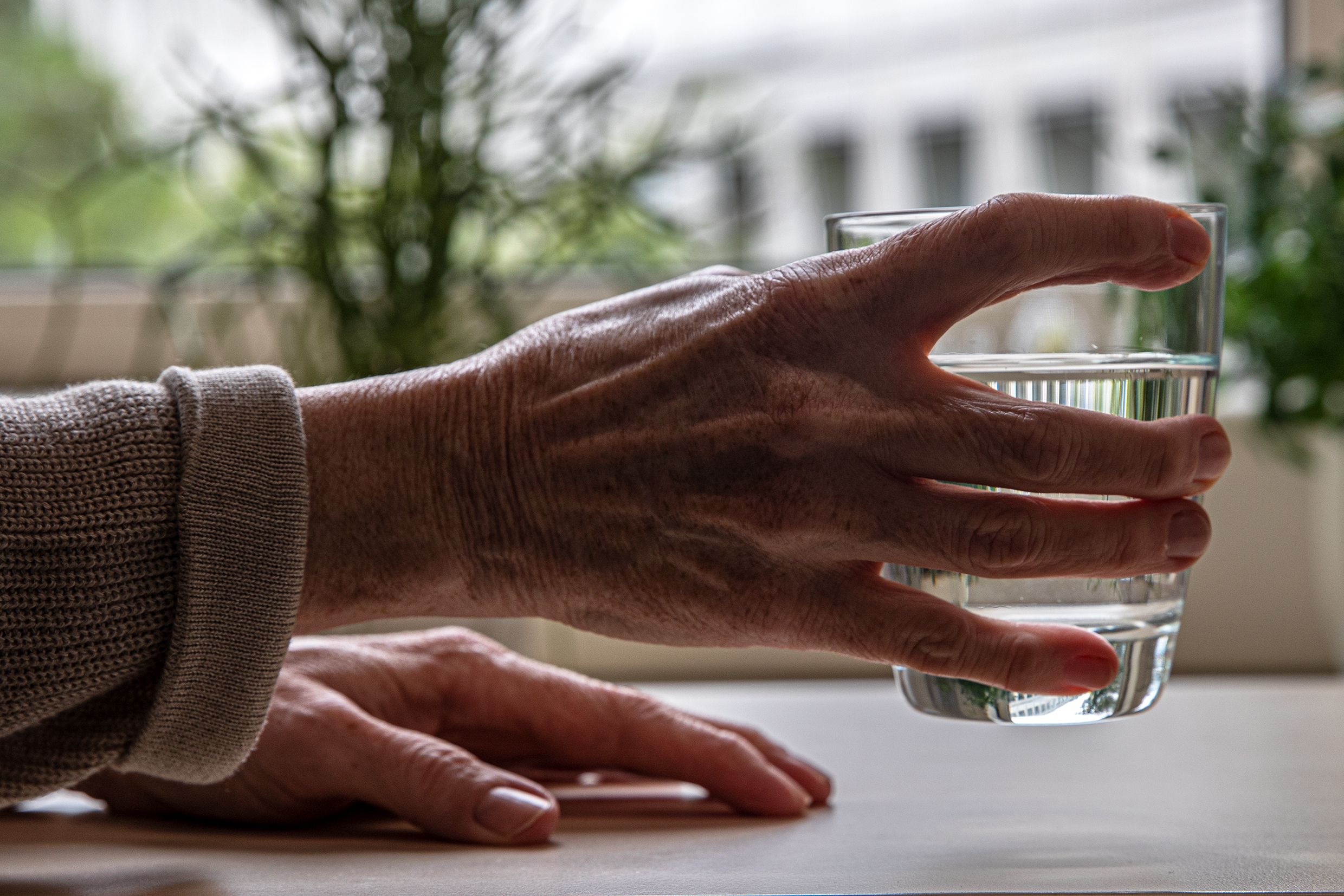
Important in hot weather: staying hydrated. Suitable drinks include water and spritzer. Copyright: Karin Kaiser/MHH
Hot summer days can quickly become a danger for older people. Heatwaves are now among the greatest climate-related health risks in Germany. “Extremely high temperatures can be very dangerous, particularly for older people,” explains Prof. Dr Nils Schneider, Director of the Institute of General Medicine and Palliative Medicine at Hanover Medical School (MHH). To protect these vulnerable individuals, he has developed the guide “Help with Heat in Care Homes” in collaboration with a team of experts from the fields of general practice and geriatrics.
Avoiding health risks
As people age, the human body becomes less able to regulate its temperature. Sweat production decreases, blood vessels react more slowly and the performance of the heart and circulatory system declines. Older people and those with pre-existing conditions face an increased risk of falls, dehydration, confusion and circulatory collapse or cardiac arrest. The guide contains many practical tips on how to avoid or reduce health risks. Among other things, it addresses the symptoms of dehydration, as well as fluid intake and monitoring. It also highlights what needs to be taken into account for patients with specific medical conditions, as well as regarding the administration and dosage of medicines such as diuretics, antihypertensives and neuroleptics.
Many simple measures
“Care home staff have many practical ways of reducing health risks caused by heat,” notes Prof. Dr Olaf Krause, a geriatrician and head of the expert team. “However, there are also very simple measures that can be taken to protect older people – even in their own homes.” These measures include:
- Blinds/curtains in the rooms
- Fans in the rooms
- Handheld fans to direct a flow of air towards the face
- Adjusting meals (e.g. cold soup instead of hot soup)
- Drinking plenty of fluids (two litres a day, mineral water, sparkling water)
- Light, breathable clothing
- Thinner duvet
- Cooling the skin with a damp flannel (e.g. on the forehead)
- Avoiding direct sunlight; remembering to use sun protection and wear a hat when outdoors
Anyone interested can download and print the guide “Help with Heat in Care Homes” here free of charge.
Text: Tina Götting