The new director of the MHH Orthodontics Department is focusing on AI-supported diagnostics and improving patients’ quality of life.
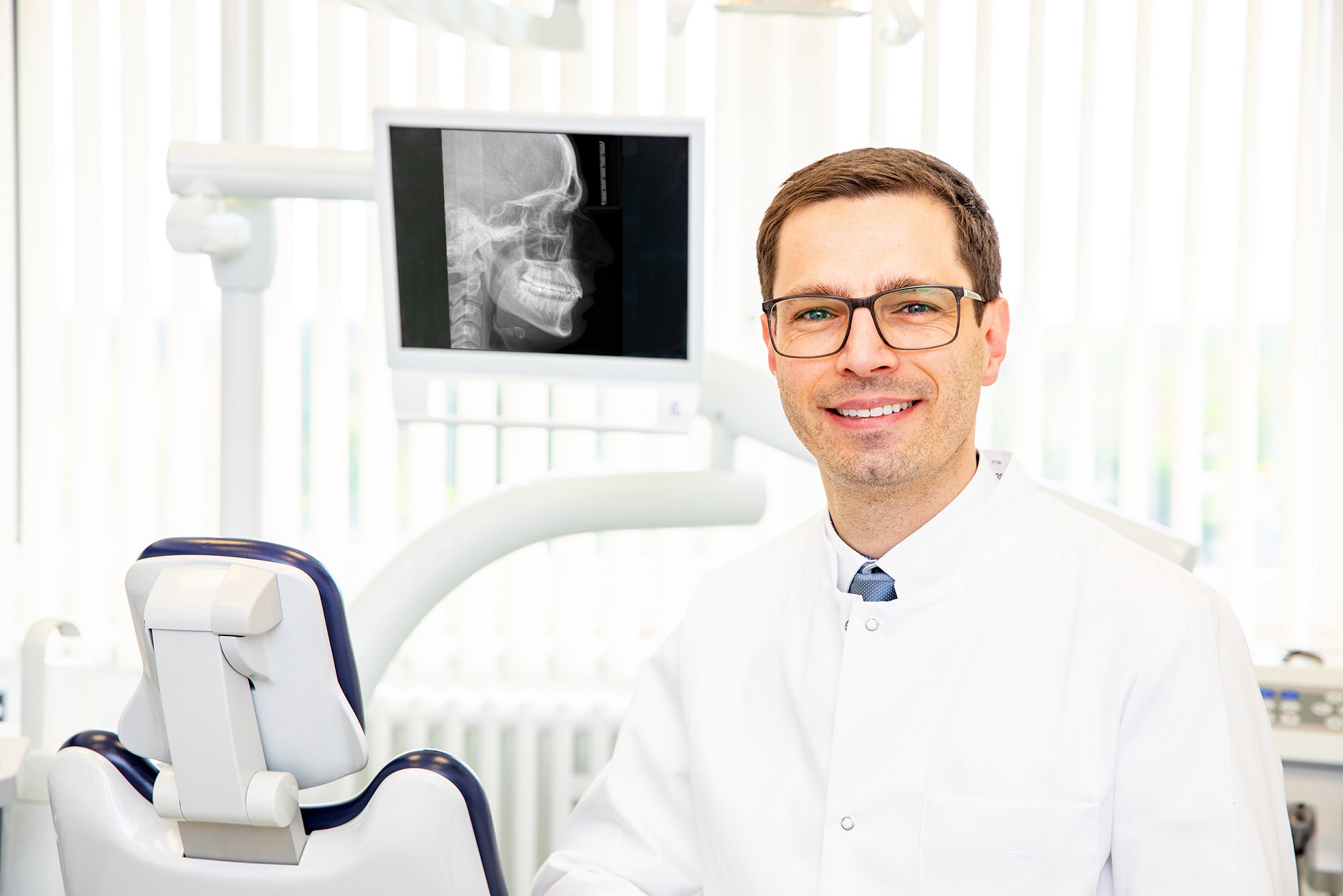
Hanover was at the top of Prof. Dr. Felix Kunz’s list. “The Clinical Department of Orthodontics at MHH enjoys an excellent reputation among professional associations,” explains the 38-year-old. But that wasn’t the only reason he decided to move from Würzburg to MHH. His family is also enthusiastic about the city and its high quality of life. Since March of this year, Professor Kunz has been the new director of the Clinical Department of Orthodontics, succeeding Prof. Dr. Rainer Schwestka-Polly, who has retired.
An early career aspiration
Professor Kunz knew early on what he wanted to be. “As a child, I underwent extensive orthodontic treatment myself, which I found to be a very positive experience. At the same time, I’ve always enjoyed tinkering and working with my hands,” he recalls. “The combination of medicine and precise manual work fascinated me from an early age.” So in 2006, he began studying dentistry at the University of Würzburg with the goal of becoming an orthodontist. He completed his studies in 2011, earned his doctorate, and began his residency to become a specialist in orthodontics at the University Hospital of Würzburg. In 2016, he became a senior physician at the university’s Orthodontic Clinic, and four years later, he completed his habilitation.
Orthodontics is more than just straight teeth
“Modern orthodontics means far more than just straight teeth,” says Professor Kunz. “It is particularly about improving function, preventing long-term health problems, and thereby enhancing our patients’ quality of life.” He finds the long-term nature of the field particularly appealing: “You often accompany people over many years and can provide them with benefits—aesthetically, functionally, and in terms of health—that last a lifetime.” Modern orthodontics no longer treats exclusively children and adolescents. “The age distribution has changed significantly,” explains Professor Kunz. “Today, we treat patients of all age groups
Modern research focuses
The new clinic director’s primary research focus is artificial intelligence (AI) in orthodontic diagnostics. Together with colleagues from Würzburg, Professor Kunz was among the first researchers to enable the fully automated evaluation of so-called lateral cephalometric X-rays using AI. The analysis of these X-rays, which forms the basis of orthodontic diagnosis and treatment planning, was previously performed primarily by hand—a time-consuming and potentially error-prone process. In contrast, the AI-based methods developed by the research group enable a fast, standardized, and highly precise analysis. For this research, the research group was awarded the Arnold Biber Prize by the German Society of Orthodontics in 2019. Another focus is on investigating the relationship between dental and jaw malocclusions and patients’ subjectively perceived quality of life. Professor Kunz intends to further expand both of these research areas at the MHH while also initiating new interdisciplinary projects. “The MHH offers exceptionally good conditions for this,” he says. He finds the close collaboration—both within the Centre for Dental, Oral, and Maxillofacial Medicine and with other medical Departments at the university—particularly appealing. “It is precisely at the interfaces between dentistry and human medicine that particularly exciting questions often arise.”
The team at the Clinical Department of Orthodontics and the entire Centre for Dental, Oral, and Maxillofacial Medicine were instrumental in ensuring a successful start at the MHH: “The openness, collegial atmosphere, and tremendous support within the ZMK impressed me right from the start. I felt welcome immediately,” says Professor Kunz. This summer, his wife will also move to Hanover with their daughter and son.
Text: Tina Götting