Although the current coronavirus variant penetrates human cells more efficiently, the existing vaccine remains effective.
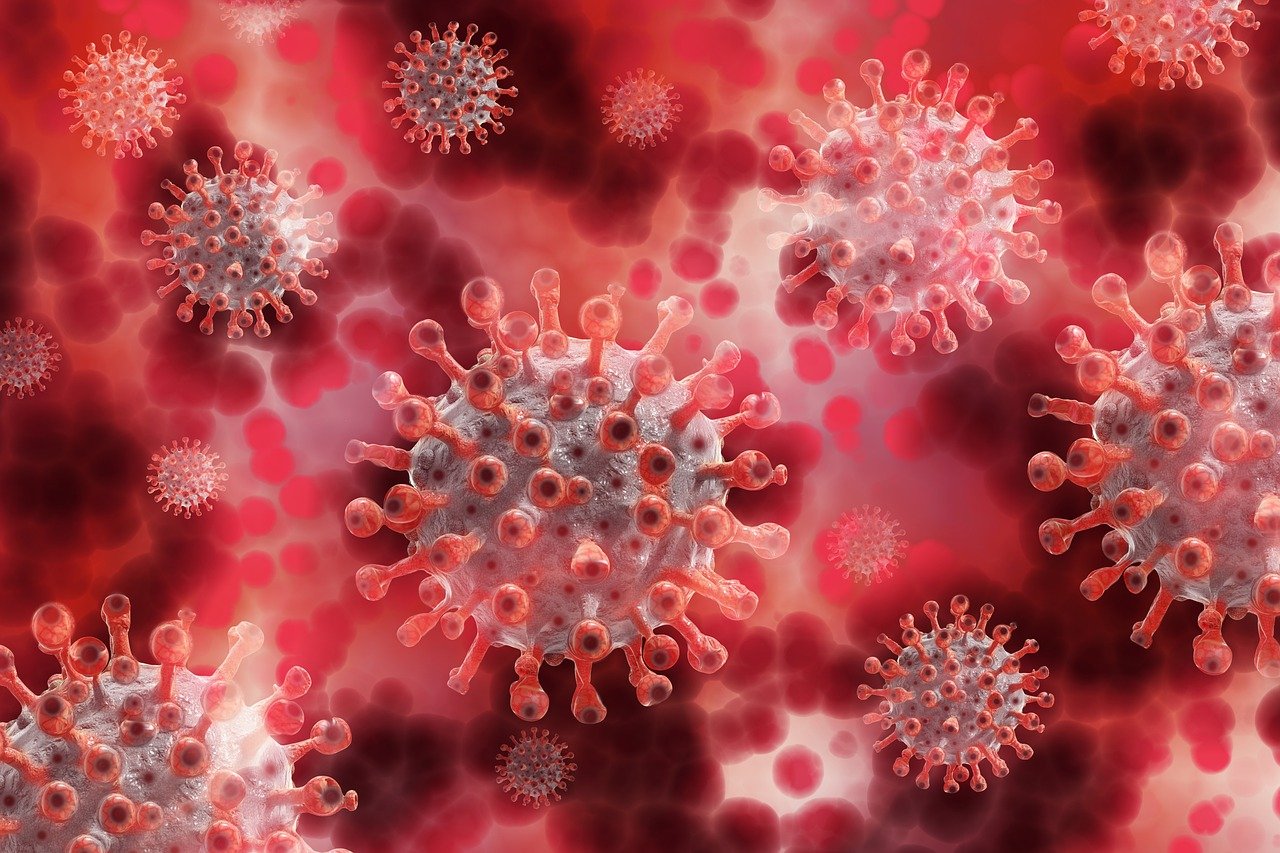
Constantly changing: the SARS-CoV-2 coronavirus. Image source: Pixabay
The number of COVID-19 infections is currently high. Since May, the new SARS-CoV-2 variant PJ.2.1 has been spreading worldwide and has now reached Germany as well. But how well is the population protected against it? A research team led by Prof. Dr. Georg Behrens, senior physician at the Clinical Department of Rheumatology and Immunology at Hannover Medical School (MHH), in collaboration with the Department of Infection Biology at the German Primate Center, investigated how efficiently PJ.2.1 can penetrate human cells. The researchers also determined how effective the current booster vaccine is against the new variant. The results show that while PJ.2.1 binds more strongly to the ACE2 receptor—which the virus uses as a gateway into human cells—the new variant can still penetrate cells that produce only small amounts of ACE2. However, despite these changes, the new variant was effectively neutralized by antibodies produced following vaccination with the current booster vaccine, which is tailored to the predecessor variant XFG. The results have been published in the journals *Journal of Infection* and *The Lancet Infectious Diseases*.
Mutations in the spike protein
A defining characteristic of SARS-CoV-2 is that it constantly mutates. This leads to the repeated emergence of new viral variants, allowing the virus to partially evade the immune response. Often, such variants differ from their predecessors by only a few mutations in the so-called spike protein on the viral envelope. These mutations can alter binding sites for antibodies or influence binding to the ACE2 receptor, which the virus uses to enter human cells. In addition, variants may also emerge that are characterized by an unusually large number of mutations. Such so-called saltation variants—which include PJ.2.1—can develop during the course of prolonged infections. This gives the virus the opportunity, over an extended period, to replicate within the body of an infected person and gradually undergo significant changes.
Booster shots are less effective in children
The research team expects PJ.2.1 to spread in Germany as well. With infection rates remaining high overall, the variant has been detected in all age groups. There is currently no evidence of more severe disease progression or new symptoms compared to other SARS-CoV-2 variants. “We are pleased to present the world’s first data following vaccination with the new XFG COVID-19 vaccine,” says Professor Behrens. “Our results indicate that both recommended COVID-19 vaccines—the LP.8.1 and the XFG COVID-19 vaccines—are very effective at increasing the levels of neutralizing antibodies against currently circulating virus variants and should improve protection. This is important for everyone for whom the Standing Committee on Vaccination recommends such a booster shot this season.” However, neither the vaccine used last season nor the one currently available elicits a strong antibody response against the BA.3.2 variant. Since BA.3.2 is primarily detected in children, the researchers believe it should be examined whether an additional component tailored to this variant could be included in future COVID-19 vaccines.
Text: Administrative Unit for Communications
The original publication “Humoral immunity after mRNA SARS-CoV-2 XFG vaccination” from the journal *The Lancet Infectious Diseases* can be found here.
The original publication “Epidemiology and virological characteristics of the emerging SARS-CoV-2 variant PJ.2.”1 from the journal “Journal of Infection” can be found here.
Further information on the updated COVID-19 vaccination recommendations from the Standing Committee on Vaccination (STIKO) can be found here.