BaKlimON Project: Three universities in Hanover are investigating the effects on humans, animals, and plants.
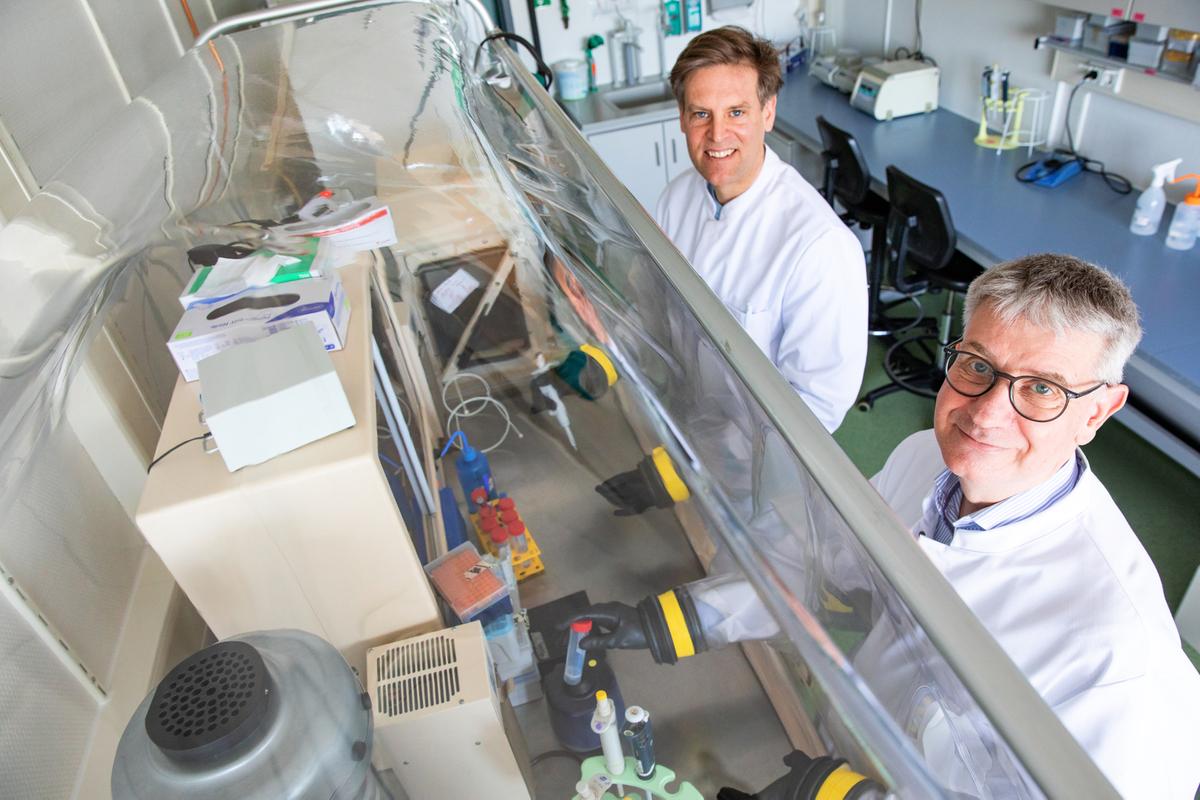
In a laboratory at the MHH Institute of Medical Microbiology and Hospital Hygiene: Prof. Dr. Dirk Schlüter (right) and associate professor Dr. Marius Vital stand at an oxygen-free laboratory bench. It allows for the simulation of the inside of the intestine, where bacteria live. Copyright: Karin Kaiser/MHH
Copyright: LUH/MHH/TiHo
Rising temperatures, drought, or flooding not only alter ecosystems—they also affect the world of bacteria. A new research consortium comprising three universities in Hanover is investigating how microorganisms adapt to climate change and what consequences this could have for humans, animals, and plants. The three-year project “Bacterial Climate Resilience in One Health” (BaKlimON) begins on July 1, 2026.
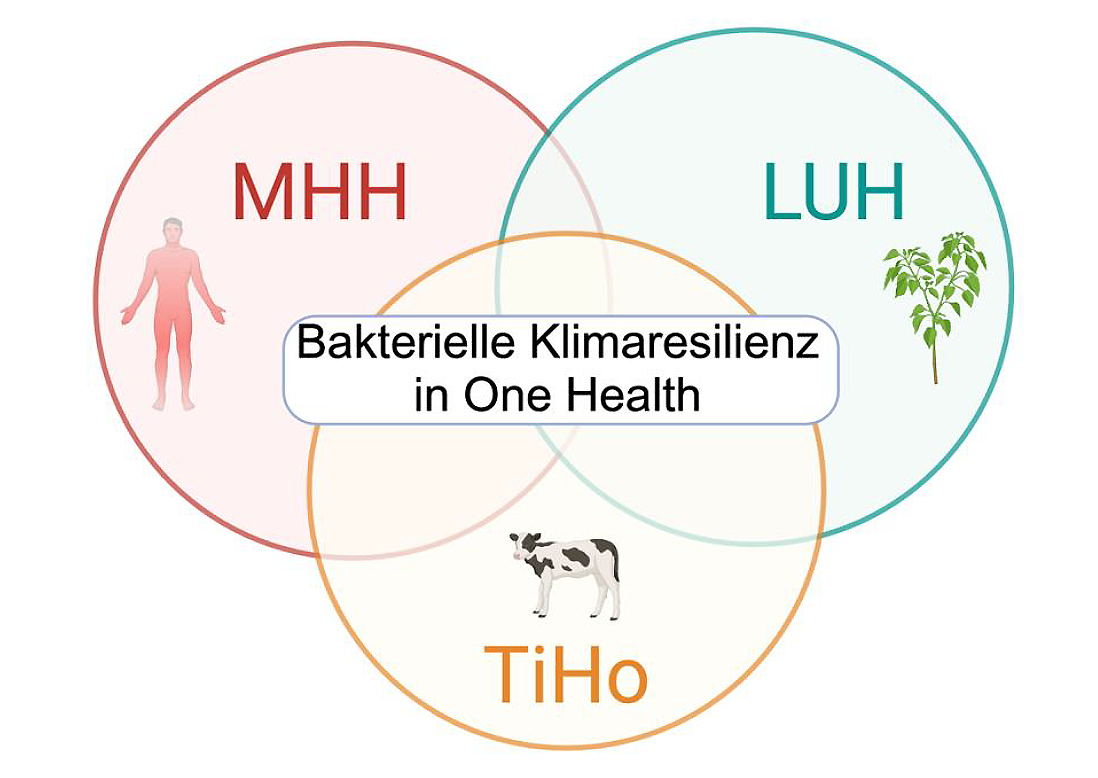
Researchers from Leibniz University Hannover (LUH), Hannover Medical School (MHH), and the Hannover University of Veterinary Medicine (TiHo) are pooling their microbiological expertise in BaKlimON. The project is supported by the Lower Saxony Ministry of Science and Culture and the Volkswagen Foundation with 3.2 million euros as part of the “zukunft.niedersachsen” research funding program. Prof. Dr. Natalia Tschowri from the LUH Institute of Microbiology coordinates BaKlimON. Together with Prof. Dr. Dirk Schlüter from the MHH Institute of Medical Microbiology and Hospital Hygiene and Prof. Dr. Ralph Goethe from the TiHo Institute of Microbiology, she forms the leadership team.
A one health approach for a connected world
Bacteria are everywhere: in the soil, in plants and animals, as well as in the human body. They play a central role in nutrient cycles and our health, but can also cause infectious diseases. As temperature and humidity change due to climate change, so do the living conditions for bacteria. “We still know surprisingly little about how bacteria respond to climate change. In the BaKlimON consortium, we are investigating whether this gives rise to new risks or perhaps even new opportunities,” says Professor Tschowri.
“BaKlimON follows the ‘One Health’ approach, which views the health of humans, animals, and the environment as closely interconnected: changes in plants or animals can also have an impact on humans,” adds Professor Schlüter.
Effects on soils, plants, animals, and humans
“The focus is on two key climate factors—‘temperature stress’ and ‘water stress’—and their significant influence on oxygen availability, osmolarity, and the concentration of toxins such as heavy metals and antibiotics on microbial communities and bacterial adaptation mechanisms,” adds Professor Goethe.
The consortium comprises 13 projects—five at Leibniz University Hannover, five at Hannover Medical School, and three at the University of Veterinary Medicine Hannover Foundation.
At Leibniz University Hannover, researchers are focusing on microbial communities and the environmental burden posed by potentially pathogenic microorganisms under climate stress. The focus here is on how soil and plant bacteria respond to drought or flooding.
The team at Hannover Medical School is investigating how changing temperature and humidity conditions affect the human microbiome, infection mechanisms, and antibiotic resistance. Their research also focuses on known pathogens such as Salmonella, Listeria, and Escherichia coli. For example, the researchers are investigating whether humans come into contact with pathogens more frequently when bacterial communities in the environment shift due to climate change.
At the University of Veterinary Medicine Hannover Foundation, scientists are pursuing the One Health approach and investigating how climate change affects infectious agents in humans and animals. They are particularly interested in the effects on pathogenicity as well as the emergence and spread of antibiotic resistance. The focus is on clinically significant veterinary and human medicine pathogens such as staphylococci, Enterobacter, and nontuberculous mycobacteria. The researchers are specifically investigating climate-induced molecular changes that may influence their pathogenic properties and transmission routes.
A strong network in the research hub of Hanover
BaKlimON brings together the microbiological expertise of Hanover’s three major universities and creates a platform for interdisciplinary collaboration. In the future, the network is also set to be integrated into the Lower Saxony Climate Research Centre.
By linking human, animal, and environmental microbiology, questions can be investigated that have rarely been considered together until now. Another focus is on supporting the next generation of scientists. Young researchers are to be trained in a structured program that prepares them for international research careers. Workshops, symposia, and collaborations with graduate schools are intended to strengthen exchange across disciplinary and institutional boundaries.
Text: Bettina Bandel