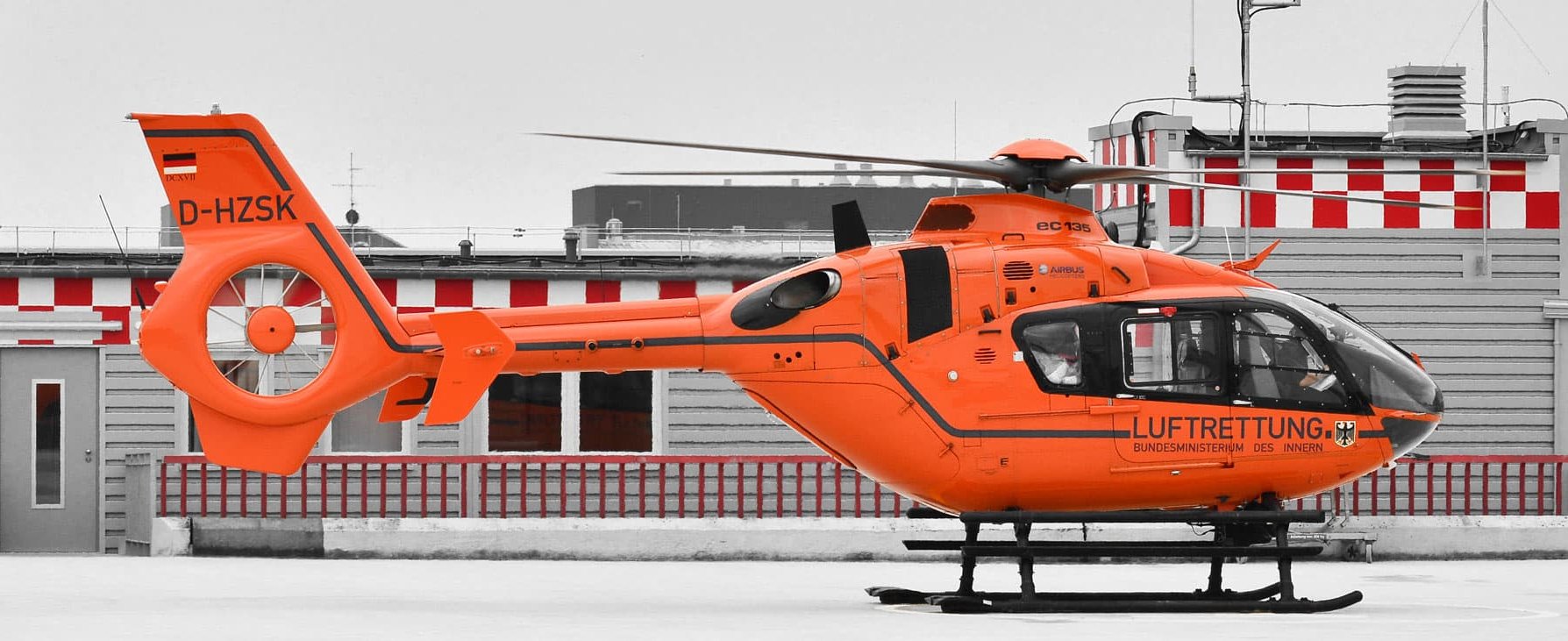
Rescue helicopter Christoph 4
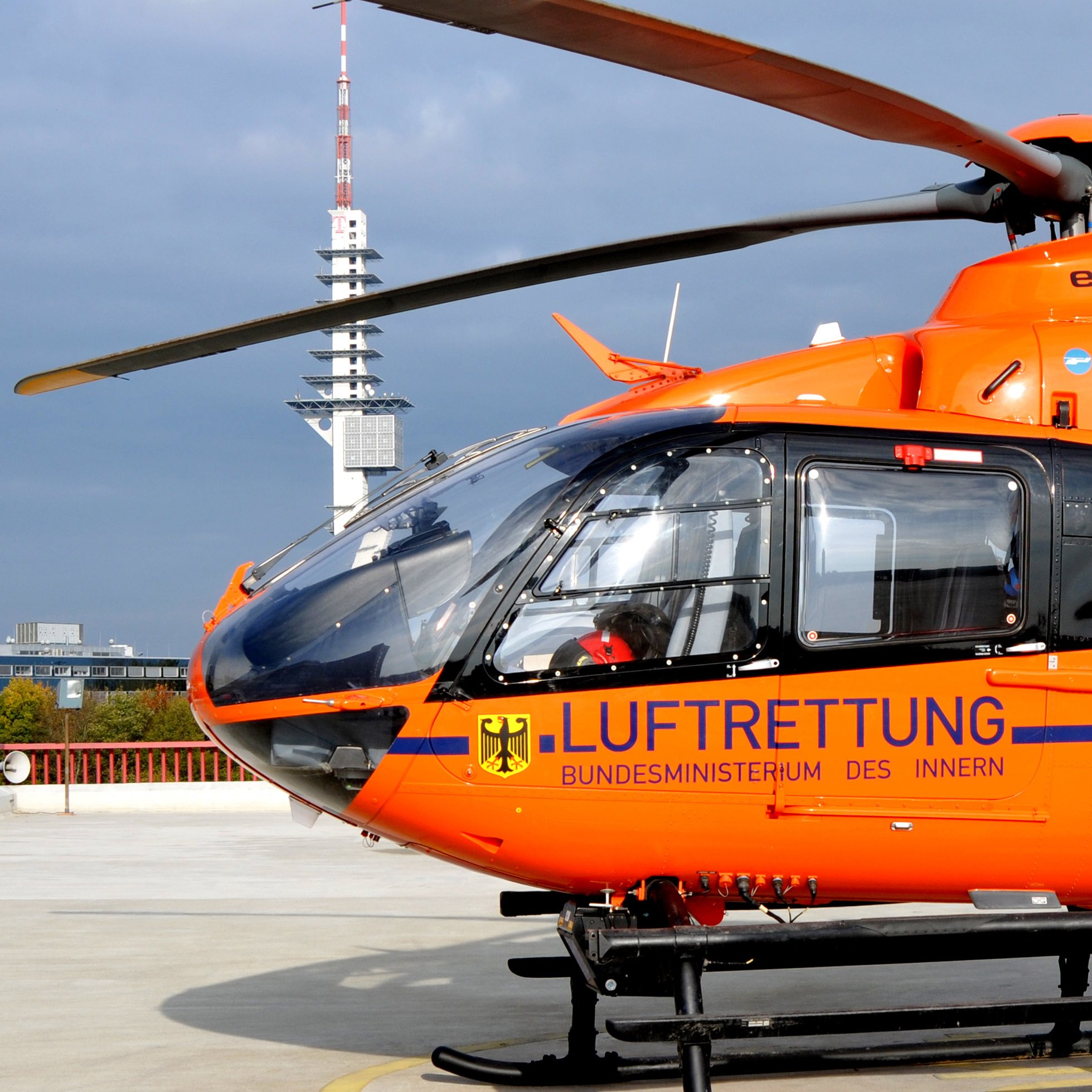
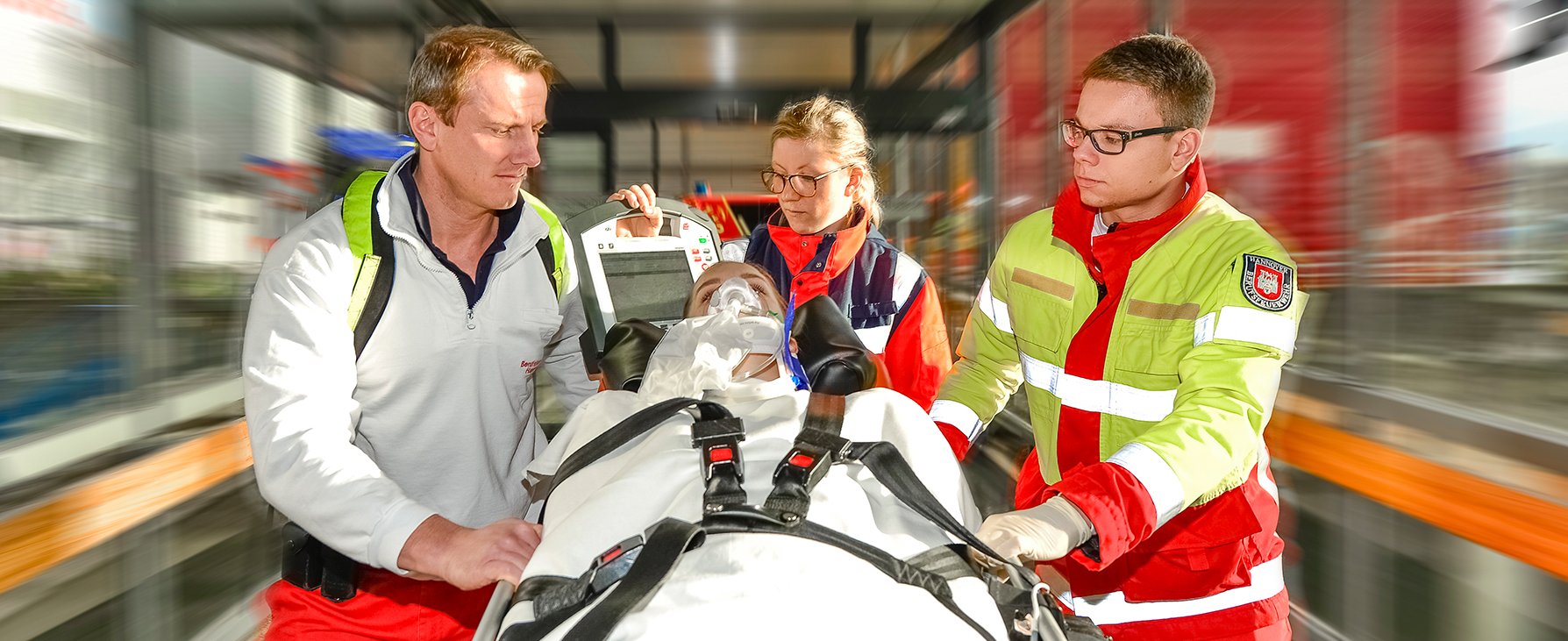
The rescue helicopter Christoph 4 has been stationed at Hannover Medical School since October 2, 1972 and is one of 12 civil defense helicopters in Germany. The crew of the helicopter consists of three people: Pilot, emergency paramedic and emergency physician. The air rescue base is operated by the state of Lower Saxony, represented by the Ministry of the Interior and Sport. The helicopter is operated by Johanniter-Unfall-Hilfe e.V., which provides the station's emergency paramedics (TC-HEMS) and is responsible for the entire operational process. The highly experienced emergency physicians all come from the Trauma Surgery Department at Hannover Medical School. The helicopter is flown by pilots from the Federal Police Air Wing North from the Gifhorn base.
Christoph 4 is one of the busiest rescue helicopters in Germany. Its task is to bring the emergency physician to a patient and, if necessary, to transport them quickly to a suitable hospital. Treatment includes all types of medical emergencies: internal and neurological, such as heart attacks and strokes, traumatological, such as traffic or household accidents, as well as pediatric emergencies.
The helicopter is in operation from sunrise to sunset and has a core mission radius of approx. 50 km at a maximum speed of 259 km/h. The alarm is raised by the Hanover emergency control center as required.
Emergency ambulance (NEF)
In the early days of emergency medicine, it was common practice to transport patients to the nearest practice or hospital for medical consultation as quickly as possible using a suitable means of transport. As early as the end of the 18th century, the first rescue ordinances were established in the individual German states, in which saving lives was declared to be the duty of every citizen.
By the end of the 19th century, most major German cities had an organized ambulance system, whereby emergency patients were transported to the physician. It was not until 1938 that the Heidelberg surgeon Prof. Kirschner postulated that it was not the patient who should come to the physician, but rather the physician who should come to the patient. However, it was not until the 1950s that the use of emergency physicians in the ambulance service was successfully tested for the first time in Germany and implemented nationwide. The so-called "rendezvous system" became established in Germany, in which the emergency ambulance (NEF) and an ambulance (RTW) meet at the scene of the emergency.
The advantage of separating the ambulance and emergency physician is that the emergency physician is available more quickly for less serious emergencies without the need for physician-accompanied transport. In addition, the area to be covered by an emergency physician is significantly larger due to the greater flexibility.
In Germany, the federal states and local authorities are responsible for organizing the rescue service. As the responsible body for the rescue service, the state capital of Hanover is therefore responsible for ensuring that the population is provided with a comprehensive and needs-based rescue service at all times. The organization of the rescue service in the city area is carried out by employees of the professional fire department as part of the city administration. The relevant rescue services are alerted by a central control center of the Hanover fire department by calling 112. Depending on the clinical picture or severity of the injury, a decision is made as to whether an ambulance is sufficient or whether an ambulance manned by an emergency physician is required.
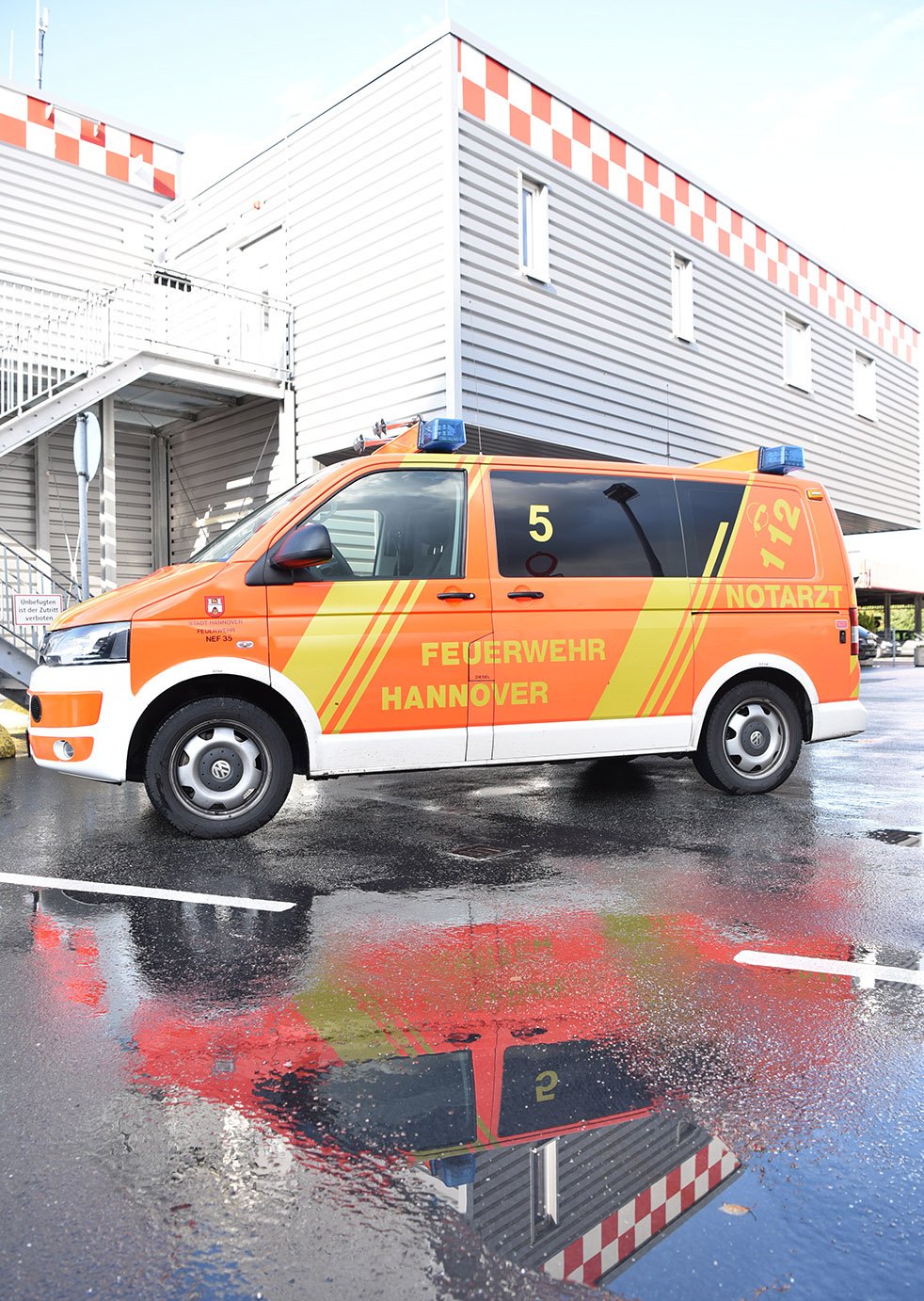
There are a total of five emergency ambulances in Hanover, each manned by a physician and an emergency paramedic from the Hanover fire department. The emergency ambulances are stationed at various hospitals, which are strategically distributed throughout the city. Emergency ambulance 5 has been manned by staff from the Department of Trauma Surgery at the MHH since it was founded. The vehicle is equipped according to the latest guidelines for emergency medicine and carries a ventilator, an ECG monitor and an extensive selection of emergency medication. As part of the trauma surgery specialist training at the MHH, each trainee must occupy the emergency medicine vehicle for at least six months after receiving appropriate instruction, completing supervised practice runs and passing the Emergency Medicine examination. As a rule, a two-shift model is used on weekdays, while 24-hour duty at weekends has proved successful. Between shifts, the physicians from the Trauma Surgery Department work in other areas such as the emergency department. Students at the MHH also enjoy the unique opportunity to accompany journeys on the NEF 5 as part of an internship and to look over the emergency physician's shoulder during operations.
The number of NEF missions has risen continuously since it was founded. Currently, around 3600 missions are carried out each year. The reasons for call-outs range from A for apoplexy (stroke) to Z for cyanosis (low oxygen supply) and cover the entire spectrum of emergency medicine. The majority of calls are for internal and neurological cases. Due to the location of NEF 5 in the urban area, serious accidents with polytrauma patients make up a much smaller proportion of the patient population. In addition to primary emergency operations, the transportation of critically ill patients who have already received treatment between individual hospitals is another area of responsibility for NEF 5. In addition to highly qualified personnel, these intensive care transfers require a high level of technical equipment, which is provided by the ambulances and emergency ambulances of the Hanover Fire Department.
Information
Medical management team for RTH Christoph 04 and NEF 5 ambulances
PD Dr. med. Christian Macke
Dr. med. Bastian Ringe
Dr. med. Axel Gänsslen
Dr. med. Vesta Brauckmann
Head of the HEMS-TC team
Philip Rohmann
Marc Lüpkemann
Station pilots
Kai Hennemuth
Andreas Röxe
Head of NEF
Fire and rescue station 5
Contact
uch.leitungrettungsmittel@mh-hannover.de