Andrology
Andrology encompasses all areas of medicine and the natural sciences that deal with the reproductive functions of men under physiological (normal) and pathological (diseased) conditions.
Andrology is literally derived from the Greek "andros" - man and "logos" - teaching and is referred to as "men's medicine".
In our specialist consultation for andrology, we provide information and advice on
- Fertility disorders (infertility)
- Erectile dysfunction, including libido, ejaculation and cohabitation disorders as well as penile deviation (curvature of the penis)
- Disorders of hormone production
We would be happy to advise you personally in our andrology consultation. You can make an appointment by calling 0511 / 532 3647.
Further information
A couple is described as infertile if, despite a desire to have children, conception does not occur after one year of regular and unprotected sexual intercourse. This can be caused by both the man and the woman. In Germany, every 6th marriage is unintentionally childless. An andrological disorder is the cause in around 30% of couples. In the case of severe fertility problems, artificial insemination can be performed, which is always an interdisciplinary collaboration between andrology and gynaecology:
- IUI = Intrauterine insemination as a simple procedure for mild disorders
- IVF = In-vitro fertilization, especially for female fertility disorders
- ICSI = Intracytoplasmic sperm injection, especially for male fertility disorders
Various factors such as infections, hormonal imbalances, malformations, tumors, genetic diseases or previous operations can affect a man's ability to conceive. As part of our special consultation, we try to clarify the possible causes of an inability to conceive and, if possible, to treat them.
If no sperm can be found in the ejaculate, it is possible to surgically extract germ cells from the testicles (TESE) or epididymis (MESA). The subsequent cryopreservation of the surgically obtained sperm and further artificial insemination (ICSI) is carried out at the Fertility Center of the Women's Clinic at Hannover Medical School.
Sterilization (vasectomy) can be carried out for permanent male contraception when the desire to have children is complete. The procedure is performed on an outpatient basis under local anesthesia.
Erectile dysfunction is a constant and recurring inability to achieve and/or maintain an erection sufficient for sexual intercourse.
It can be caused by diseases of the blood vessels (33 %), diabetes mellitus (25 %), spinal cord injuries/diseases (11 %), pelvic surgery (10 %), medication (8 %), drugs (7 %) or hormonal disorders (6 %) (Stief et. al, Springer Verlag). The occurrence of erectile dysfunction can also be a first indication of other underlying disorders, e.g. coronary heart disease.
Depending on the cause and severity of the erectile dysfunction, different treatment options may be considered:
- If testosterone deficiency is proven, substitution therapy in the form of gel or injections
- PDE-5 inhibitors
- Rods with the active ingredient alprostadil for use in the urethra
- Cavernous body injection therapy (SKIT)
- Vacuum pump erection aid
- After failure of all conservative therapy attempts, implantation of a cavernous body prosthesis
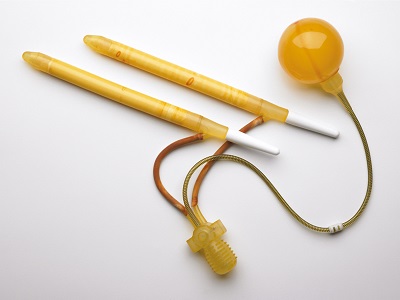
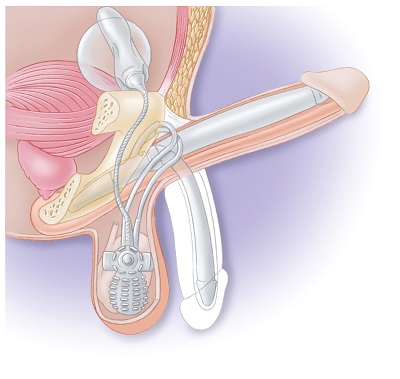
Ejaculatio praecox describes the inability to delay ejaculation long enough for sexual intercourse to be satisfactory for both partners. Various treatment options are available to patients: Sex therapy (e.g. start-stop technique, squeeze technique) or drug therapy can be used.
A deficiency of the male sex hormone (testosterone) can lead to serious disorders of well-being and various bodily functions. These include osteoporosis, impaired cognitive function, mood swings, loss of libido and erectile dysfunction. A testosterone deficiency can occur at any age and can have various causes. If there is no desire to have children, drug-based testosterone therapy in the form of gel or injections can be used not only to improve quality of life, but also to prevent serious consequential damage (e.g. bone fractures). If there is a desire to have children, other drug therapy options are available.
Penile deviation can be congenital or acquired (induratio penis plastica) and, if curved by more than 30 degrees, can make sexual intercourse impossible and have a considerable cosmetic impact on the patient. After conservative medical treatment has failed, surgical correction of the penile deviation can be performed.
Every 500th to 600th man is affected by Klinefelter syndrome, an abnormality of the sex chromosomes with the chromosome set 47,XXY. The cause is a disorder in the maturation division of the germ cells of the parents, whereby the additional X chromosome frequently originates equally from the father or the mother. Only 25 - 30 % of all Klinefelter patients are discovered during their lifetime, as the degree of severity can vary greatly. Patients can have both severe signs of testosterone deficiency and normal male sexual characteristics.
The constant features are significantly smaller testicles and infertility in 97% of patients. Klinefelter syndrome is the most common genetic cause of male infertility. Often, but not always, there are reduced testosterone levels, increased body length, relatively long legs, breast enlargement and a female fat distribution. In addition, disorders of verbal and social skills are observed, whereby learning deficits can be compensated for by early support.
Depending on the concomitant diseases (e.g. diabetes mellitus), life expectancy may also be limited. Early diagnosis and timely treatment are therefore important in order to prevent late effects.
Testicular tissue extraction (testicular sperm extraction = TESE) can be performed to realize the desire to have children. If sperm is found in the tissue, it can be frozen (cryopreservation) and used for artificial insemination (ICSI). The best chances of success in terms of sperm yield are achieved with the microsurgical technique (M-TESE) and in the time window between the onset of puberty and early adulthood. Any testosterone therapy that has already been started should be paused at least 3 months before the operation or any future testosterone therapy required should only be initiated after the operation.