Background
Hannover Medical School (MHH) is the largest Transplant Centre in Germany. Between 350 and 400 organs are transplanted at the MHH every year. In 2021, for example, 147 kidneys, 89 livers, 81 lungs, 15 hearts and 5 pancreases were transplanted.
In order to maintain the function of transplanted kidneys for as long as possible, comprehensive care and aftercare in close cooperation between GPs, nephrologists, hospitals and transplant centers is crucial. Aftercare includes the individual adjustment of immunosuppressive therapy, regular monitoring of transplant function and the timely detection of acute organ rejection and possible infections. In long-term follow-up care, prevention, early detection and treatment of these typical comorbidities on the one hand and monitoring of transplant function and immunosuppressive medication on the other are essential for maintaining transplant function and ensuring the survival of transplant recipients. Various aspects of this follow-up care after transplantation are part of GP care - however, the follow-up care of organ transplant recipients is not an everyday task for GPs. Accordingly, there is a lack of experience, routine and specific knowledge about the aftercare of transplant patients. Unclear responsibilities, insufficient cooperation and communications between GPs and specialists can also lead to barriers in care.
It is unclear what experiences and expectations transplant centers have of follow-up care by general practitioners and vice versa. The experiences and expectations of the affected patients towards the GPs are equally unclear.
Aims
The main objective of this exploratory study is a multi-perspective needs analysis regarding the role of general practitioners in the aftercare of kidney transplant patients. The study aims to
- capture and describe the experiences, expectations and wishes of kidney transplant patients and physicians of the kidney transplant outpatient clinic of the MHH.
- to record and analyze the experiences, challenges and needs of general practitioners in order to ensure appropriate follow-up care for kidney transplant patients.
- to determine to what extent and in which areas general practitioners perceive uncertainties and would like further training with regard to follow-up care for kidney transplant patients.
Methods
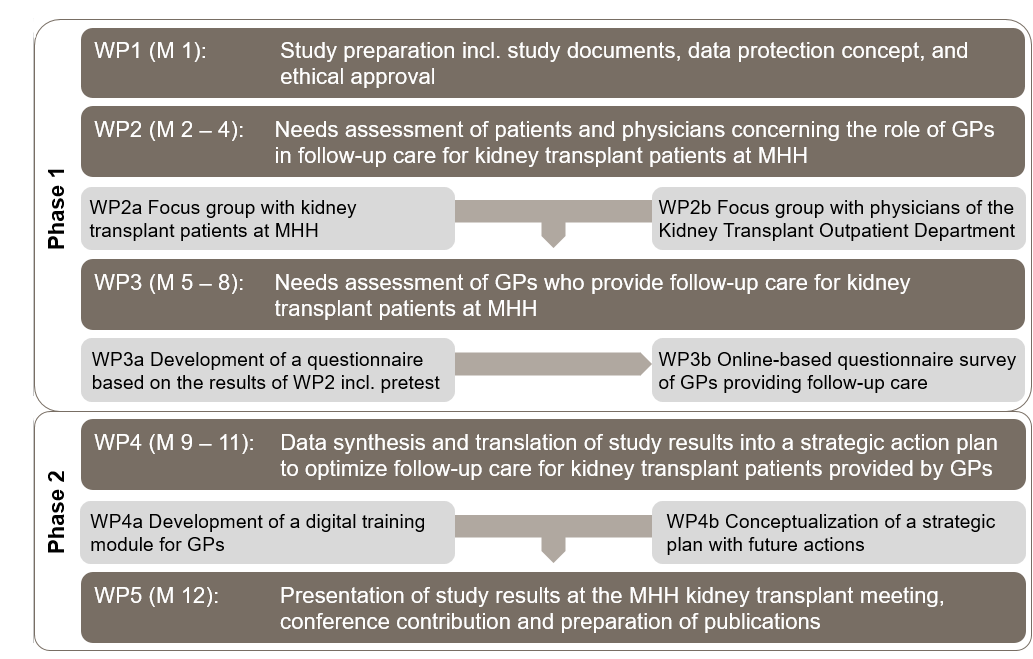
Due to the exploratory nature of this project, we opted for a mixed-methods design in which established qualitative and quantitative methods of health services research are used. The study comprises 5 different work packages.
Relevance of the expected results
The Galileo KTx project will raise awareness of the different perspectives of those affected and promote a better understanding of existing needs. The results of the study will thus provide an evidence base for further optimization of the structures and processes in the aftercare of kidney transplant patients at the MHH, especially with regard to cooperation and communications between the Transplant Centre of the MHH and the transplant patients' family physicians.
Funding
The project is funded by the Transplant Centre of the MHH for the 12-month period from 01.03.2023-29.02.2024.