HIOPP-3
Appropriate and safe medication for nursing home residents with the help of an interprofessional toolbox (AMTS toolbox)
What is the HIOPP-3 study?
The HIOPP-3-iTBX study entitled "Appropriate and safe medication for nursing home residents with the help of an interprofessional toolbox (AMTS toolbox)" is an intervention study from the HIOPP research network. HIOPP stands for "General Practitioner Initiative for the Optimization of Patient Safety in Polypharmacy". The focus is therefore on the medication of elderly nursing home residents (HBW), which is often considered critical.
The study is being conducted by several institutes of general medicine, supported by the Department of Clinical Pharmacology (Witten-Herdecke University) and four state chambers of pharmacists, among others.
Current
The preparation and evaluation of the study data has been completed. The first results were presented at the World Congress of General Practitioners (WONCA) in Berlin in December 2020. The main publication on the HIOPP-3-iTBX study has been submitted to the Deutsches Ärzteblatt International for publication and is currently being reviewed.
Background
Polypharmacy is often defined as taking ≥ 5 long-term medications and is mostly found among nursing home residents (HBW). Polypharmacy promotes the use of potentially inadequate medication in old age (PIM) and thus contributes to an increased hospitalization rate. The frequent prescription of neuroleptics also poses a high risk of danger, e.g. due to falls.
One factor that favors PIM and neuroleptic prescribing in nursing homes is the lack of cooperation between the professions involved in medication management (physicians, nursing staff and pharmacists). This is where the HIOPP-3 study comes in.
What is the aim of the study?
The aim is to use an interprofessional intervention with different approaches to
- to achieve improved and more efficient medication therapy safety (AMTS) by reducing the number of nursing home residents (HBW) with potentially inadequate medication (PIM) and/or neuroleptics, and
- to achieve a sustainable optimization of the medication process by raising awareness of the issue of polypharmacy and improving cooperation between nursing staff, home care pharmacists and general practitioners.
To this end, a cluster-randomized intervention study will be conducted, i.e. randomization will take place at home level. Half of the participating homes will serve as control homes, while the intervention will take place in the other half of the homes. Homes at the study locations (Hanover, Rostock, Düsseldorf, Tübingen) can participate. The participating home residents must be 65 years or older, live in long-term care and consent to the study themselves or via a caregiver. A certain number of medications is not an inclusion criterion. A total of 760 HBWs in 32 homes are to be included in the study.

Publications
Here you will find an overview of our newsletters, congress contributions and publications
- Newsletter Dec. 2017 (PDF)
- Newsletter Dec. 2018 (PDF)
- Newsletter Dec. 2019 (PDF)
- Poster DEGAM Sep. 2017 (PDF)
- Poster DGGG Sep. 2018 (PDF)
- Study protocol BMC Geriatrics 2019 (PDF)
- Publication list 2017-2019 (PDF)
- Poster DEGAM Sep. 2019 (PDF)
- Publication on recruitment "Lessions learned" in the ZEFQ (2020): Kirsch C, Doyle I, Krause O, Junius-Walker U, Wiese B, Thürmann P, Sparenberg L, Wollny A, Fuchs A, Wilm S, Joos S, Stolz R, Haumann H. ''Lessons learned'' - Challenges in the recruitment process in the cluster-randomized nursing home study ''HIOPP-3 iTBX''. Z Evid Fortbild Qual Gesundhwes 2020; 156-157: 24-32.
- Publication on potentially inadequate medication in nursing home residents (2021):Weinand S, Thürman PA, Dröge P, Koetsenruijter J, Klora M, Grobe TG. Potentially inadequate medication in nursing home residents: An analysis of risk factors using nationwide SHI routine data of the AOK for the year 2017. Healthcare 2021 (ahead of print); DOI: 10.1055/a-1335-4512
The consortium
The consortium consists of the consortium lead Hannover, the other survey sites Rostock, Düsseldorf and Tübingen as well as the University of Witten/Herdecke (pharmacology), the University of Jena (health economics), the WIdO and the aQua Institute.
Consortium management Hanover
The Hannover study site is both the consortium lead and the survey site.
Funding
The study is funded by the Innovation Fund of the Joint Federal Committee (funding code: 01VSF16017); the funding period is from May 2017 to the end of July 2020.
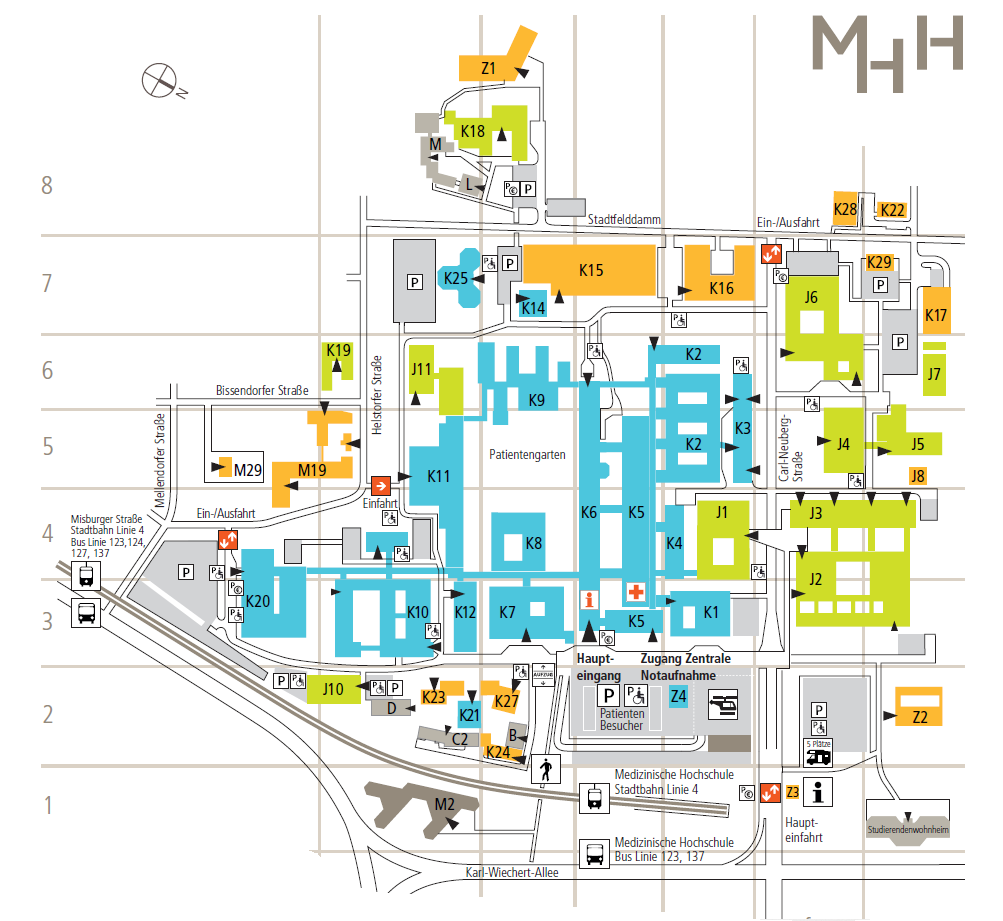
HIOPP-3 - Contact at the Hannover site
HIOPP-3 - Team:
PD Dr. Olaf Krause (project leader)
Birgitt Wiese (deputy project manager)
E-mail: hiopp3@mh-hannover.de
Address
Hannover Medical School
Institute ofGeneral Medicine and Palliative Medicine
Carl-Neuberg-Strasse 1
30625 Hanover
Consortium partners
Study location Düsseldorf
Contact:
Project management: Dipl.-Psych. Angela Fuchs
E-mail: angela.fuchs@med.uni-duesseldorf.de
Project supervisor: Prof. Dr. med. Stefan Wilm
http://www.uniklinik-duesseldorf.de/allgemeinmedizin
Study location Rostock
Contact:
Lisa Sparenberg
E-mail: lisa.sparenberg@med.uni-rostock.de
https://allgemeinmedizin.med.uni-rostock.de/
Study site Tübingen
Contact:
Regina Stolz
E-mail: regina.stolz@med.uni-tuebingen.de
https://www.medizin.uni-tuebingen.de/Zuweiser/Institute/Allgemeinmedizin.html
Instituteof Clinical Pharmacology Witten/Herdecke
Contact:
Dr. Simone Bernard
E-mail: simone.bernard@uni-wh.de
https://www.uni-wh.de/gesundheit/department-fuer-humanmedizin/lehrstuehle-institute-und-zentren/lehrstuhl-fuer-klinische-pharmakologie/
Health Economics Jena
Contact:
Dr. Antje Freytag
E-mail: antje.freytag@med.uni-jena.de
https://www.uniklinikum-jena.de/allgemeinmedizin/Forschung.html
aQua Institute Göttingen
Contact:
Dr. med. Thomas G. Grobe, MPH
E-mail: thomas.grobe@aqua-institut.de
https://www.aqua-institut.de/
WIdO Berlin
Contact:
Christian Günster
E-mail: c hristian.guenster@wido.bv.aok.de
www.wido.de
Cooperation partners State Chambers of Pharmacists
State Chambers of Pharmacists of Lower Saxony
https://www.apothekerkammer-niedersachsen.de/
Mecklenburg-Western Pomerania
https://akmv.de/
North Rhine
https://www.aknr.de/
Baden-Württemberg
Cooperation partner Change Management
Contact:
Prof. Dr. Dr. Ulrike Junius-Walker