Background
Of the approximately 4.7 million people in Germany who care for a relative, many live at a distance from that relative. Caring for a terminally ill or dying person who lives far away is associated with specific challenges and burdens. In the German context, there is a research gap with regard to the specific experiences and needs of relatives caring for a distant person at the end of life.

Objectives
The study is explicitly aimed at caring relatives, as they often put their own needs on the back burner when supporting their loved ones. The overarching aim is to record the special features of end-of-life care at a distance in Germany and to show how distance influences end-of-life care. The needs of caring relatives are to be identified. The key questions are:
- How do relatives experience their care for a distant relative at the end of life?
- What specific (support) needs do these relatives have and what support do they want for themselves and for their seriously ill relative?
The study will (i) describe the characteristics of end-of-life care at a distance and (ii) provide recommendations for support measures for caring relatives.
Methods
The explorative qualitative study is guided by an inductive logic and is based on one-off, semi-structured interviews. The qualitative approach is suitable for investigating the little-researched phenomenon of care at a distance at the end of life. In order to capture the diversity of care experiences, the recruitment of study participants is diversity-oriented. In addition, relatives of patients with life-limiting illnesses are included in both the early and late stages of their illness. The study is divided into five phases:
- Preparation and pretest,
- Data collection and primary analysis,
- data analysis and interpretation,
- Advisory Board Workshop and
- conclusions and recommendations.
Relevance of the expected results
The knowledge generated will inform society about the involvement of and support for relatives of patients living at a distance at the end of life. The study is of central importance as more and more family members are living apart. This current trend is likely to intensify in the future, challenging traditional models of family care and raising new care issues that need to be addressed from a social and health policy perspective.
Funding
The research project is funded by the German Research Foundation (project number 449568227) with a grant in kind in the Department of Public Health, Medical Care Research and Social Medicine.

LoCatE brochure with recommendations for action
The recommendations developed on the basis of the empirical data collected in the LoCatE project were published by the LoCatE project group in cooperation with the German Society for Palliative Medicine in the brochure "Caring for a seriously ill person over a physical distance: recommendations for psychosocial support measures" (pdf). The recommendations are aimed at professional and voluntary caregivers in outpatient and inpatient palliative care and hospice work.
Publications
Herbst FA, Schneider N, Stiel S. Long-distance caregiving at the end of life: A protocol for an exploratory qualitative study in Germany. BMC Palliative Care. 2022; 21: 69 (BMC Pall Care)
Herbst FA, Schneider N, Stiel S. Recommendations for psychosocial support for long-distance caregivers of terminally ill patients. J Pain Symptom Manag 2024; DOI: 10.1016/j.jpainsymman.2024.10.020 (PubMed)
Herbst FA, Schneider N, Stiel S. Between two worlds. Caring for relatives at a distance. Nursing relatives 2022; 1: 20-21 (Nursing relatives)
Herbst FA, Stiel S. "Has Anyone Been There Now?": An Interview Study on the Support Experiences and Unmet Needs of Informal Long-Distance Caregivers for Patients at the End of Life. Omega-J. Death Dying 2024; DOI: 10.1177/00302228241243110 (PubMed)
Herbst FA, Stiel S. Long-distance caregiving for a person at the end of life: Recommendations for psychosocial support measures. Hospizdialog North Rhine-Westphalia. 2024; 100:12-16. (Hospizdialog NRW)
Herbst FA, Ülgüt R, Stiel S, Schneider N. Caring for a seriously ill person over a physical distance. Recommendations for psychosocial support measures for long distance caregivers. Publisher: LoCatE project group of the Institute ofGeneral Medicine and Palliative Medicine at Hannover Medical School & German Society for Palliative Medicine e.V. 2023. ISBN no. 978-3-00-076207-9 (pdf)
Ülgüt R, Stiel S, Herbst FA. Experiences and support needs of informal long-distance caregivers at the end of life: A scoping review. BMJ Open. 2023;13:e068175 (BMJ Open)
LoCatE project group at the Institute ofGeneral Medicine and Palliative Medicine at Hannover Medical School in cooperation with the German Society for Palliative Medicine (Deutsche Gesellschaft für Palliativmedizin e. V.) Recommendations for psychosocial support measures for long-distance caregivers over a physical distance for a seriously ill person. InfoDienst Migration. 2023; 4: 50 (BZgA)
LoCatE - Contact
PD Dr. Franziska Herbst (Project Manager)
LoCatE - Project Office
Phone: +49 511 532-4991
Address
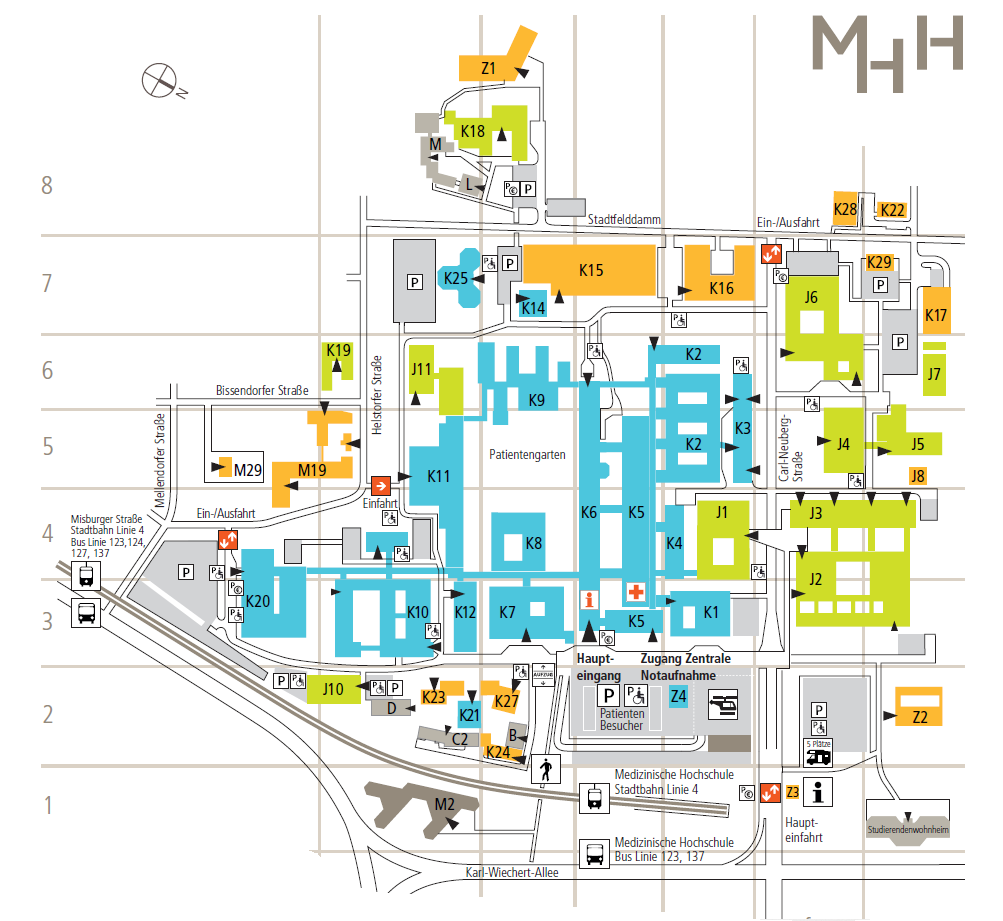
Hannover Medical School
Institute ofGeneral Medicine and Palliative Medicine
Carl-Neuberg-Strasse 1
30625 Hanover