VR-TALKS
Virtual Reality Communication Tool for Application and Evaluation with Key Stakeholders and Students
Background
Delivering bad news is an unavoidable and yet very difficult challenge for physicians in their daily work. Many medical students and physicians would like to see greater awareness and training on this topic. The VR-TALKS project aims to introduce an innovative teaching method in the form of virtual reality modules at medical schools to address this issue.
Objectives
The main goal of the project is to introduce VR into medical teaching modules that teach Communications between healthcare providers and patients. VR technology is mainly used to practice the delivery of bad news and the resulting interactions. The VR technology will enable students to evaluate and comment on reactions, suggest improvements or other approaches, and describe and analyze the patient's behavior and experience as well as their own.
Survey of teaching staff
To ensure the relevance and potential of this training tool, we would like to investigate the willingness of teaching staff to incorporate such technology into their teaching practice. In addition, we are interested in hearing your insights on possible facilitators and barriers to the successful introduction of virtual reality in study or training. The survey, which is being led by Leiden University, can be found here.
Project website
Detailed information on the project process and how to participate can be found at www.vr-talks.com.
Funding
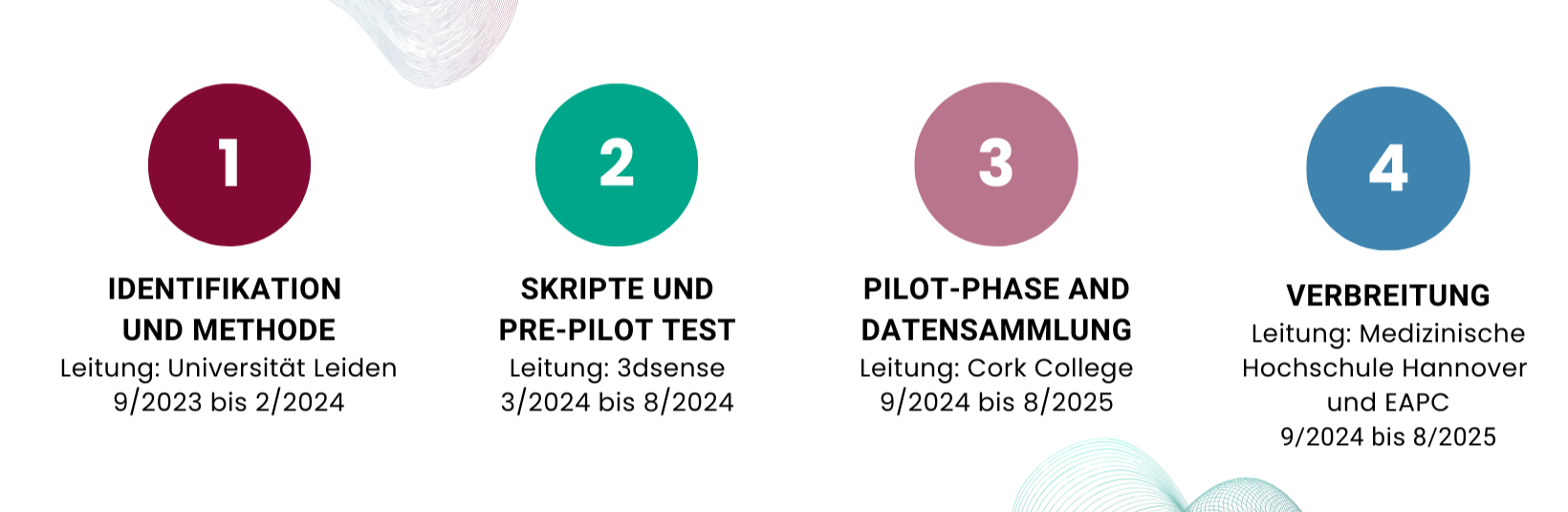
The project is funded from 01.09.2023 to 31.08.2025 (24 months) by the ERASMUS+ program and is organized by the Center for International Educational Cooperation of the Czech Republic "Dům zahraniční spolupráce" (DZS).
Project partners
Under the consortium leadership of 3dsense s.r.o., the Hannover Medical School is a cooperation partner in the project. Other cooperation partners are Charles University Prague, Leiden University, University College Cork, Universidade Catolica Portuguesa, Ludwig-Maximilians-Universität München and the European Association of Palliative Care.
Publications
- Aleksandrina Skvortsova A, Stiel S, Afshar K, Röwer HAA, Bausewein C, Hartigan I, Saab MM, Martins Pereira S,Hernández-Marrero P, Hrdlička J, Wild J, Rusinová K, Loučka M, Hrdličková L, Zielina M, Payne C, Van Vliet LM. Acceptability of virtual reality for training health professions students in serious illness communication: A cross-sectional study with educators. PEC Innovation. 2025;7:100411. https://doi.org/10.1016/j.pecinn.2025.100411.
VR-TALKS Team
Prof. Dr. Dr. Stephanie Stiel (Project Manager)
- Phone: +49 511 532-4548
PD Dr. Kambiz Afshar (Deputy Project Manager)
- Phone: +49 511 532-5855
Dr. phil. Malte Klemmt (Research Assistant)
- Phone: +49 511 532-4376
Address
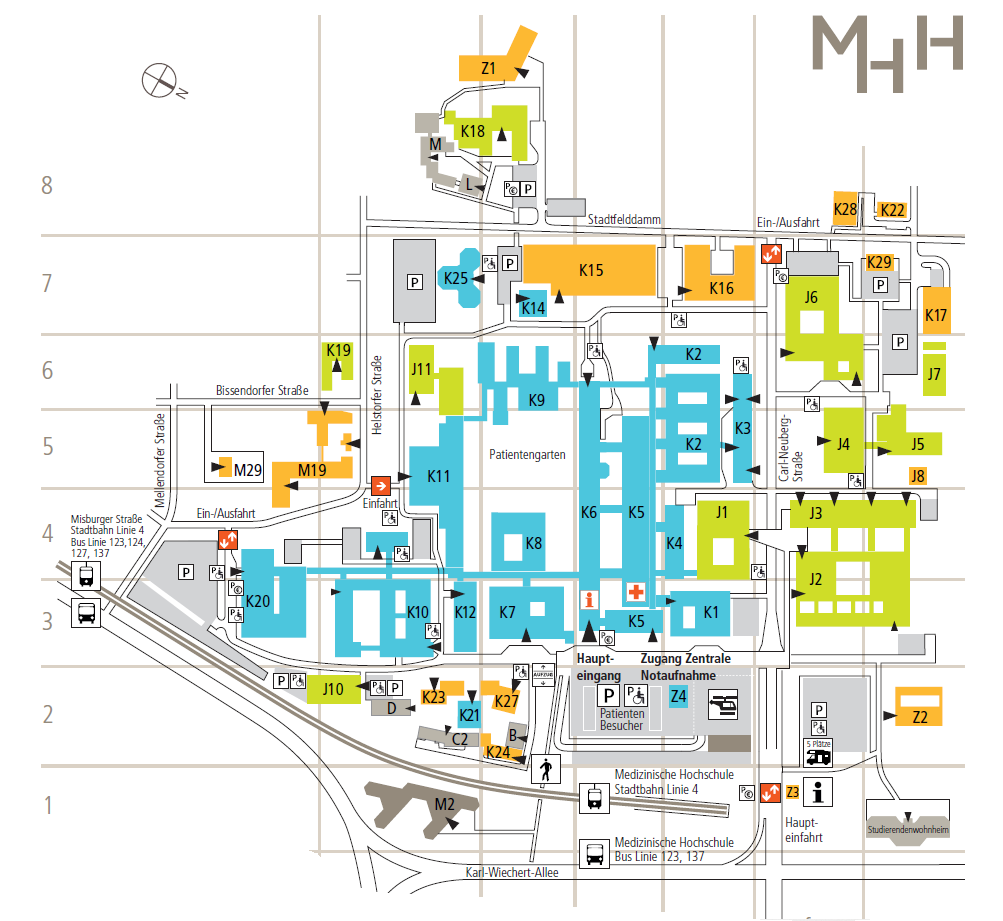
Hannover Medical School
Institute ofGeneral Medicine and Palliative Medicine
Carl-Neuberg-Straße 1
30625 Hanover