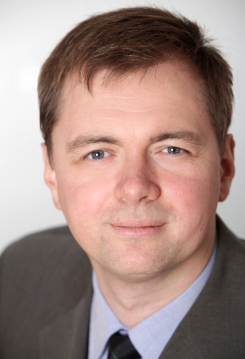
Prof. Dr. Roman Fedorov
Institute for Biophysical Chemistry, OE4350
Hannover Medical School
Carl-Neuberg-Straße 1
30625 Hannover
Office: Building I4, Floor S0, Room 1032
Phone: +49 511 532 3705
Fax: +49 511 532 5966
E-mail: fedorov.roman@mh-hannover.de
Research Focus
In our group, we study the molecular and allosteric mechanisms that regulate enzymatic catalysis in fundamental biological processes and human disease, with the ultimate goal of developing innovative therapeutic strategies. Over the years, our research has encompassed structural and mechanistic investigations of protein biosynthesis, nitric oxide-mediated cellular signaling, PAS-domain signaling, DNA replication, sulfotransferase catalysis, enzymatic carbohydrate biosynthesis, and innate immune activation.
Currently, our research is focused on the structural, mechanistic, and regulatory principles of enzymes involved in infection, immunity, and inflammatory diseases, which represent major research priorities at Hannover Medical School. We combine structural biology, biophysics, biochemistry, computational biology, artificial intelligence, and medicinal chemistry to uncover how these enzymes function at the atomic level and how their activities are controlled in healthy and diseased cells.
A central objective of our work is the rational design of novel immunomodulatory and anti-infective agents that selectively modulate innate immune pathways and reduce the risk of resistance development. To achieve this, we develop and apply next-generation structure-based drug design approaches, computational methods for mechanism-guided ligand discovery, and innovative strategies for targeting allosteric regulatory networks.
In addition, we explore emerging concepts in quantum biology, investigating how quantum-mechanical effects contribute to biomolecular function, enzymatic catalysis, and immune signaling. By integrating quantum chemistry, structural biology, and advanced computational modeling, we aim to develop new methodologies to understand biological mechanisms and accelerate therapeutic discovery.
Through these interdisciplinary efforts, our mission is to advance the molecular understanding of infection and immunity, develop innovative drug-discovery technologies, and translate fundamental mechanistic insights into new therapeutic opportunities.