Microsurgery
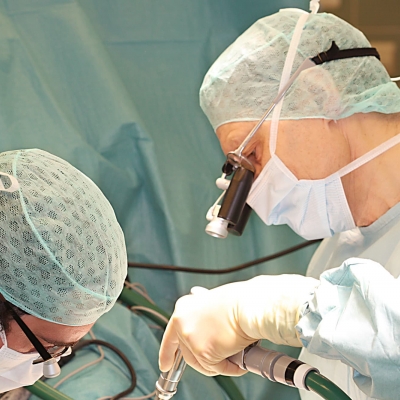
Vascular and nerve microsurgery is an extremely important surgical technique in plastic and reconstructive surgery. Using a special microscope that magnifies the surgical field more than 40 times, plastic surgeons can restore even the finest anatomical structures.
In addition to plastic-reconstructive surgery, applications exist primarily in hand surgery and nerve surgery.
In this way, transplants of the body's own tissue can be carried out in defective areas, e.g. as a result of accidents or tumor operations, thus achieving extensive restoration.
Typical examples are
- Reconstruction or transplantation of nerves and muscles in cases of paralysis of the face (facial nerve palsy), the brachial plexus and other localizations
- Reconstruction or transplantation of lymphatic vessels or lymph node packages for lymphoedema
- Transplantation of autologous tissue from the lower abdominal region to reconstruct the female breast
- Transplantation of autologous tissue from the trunk to the lower leg or arm for large defects
Microsurgical expertise must be acquired over years of training and requires a great deal of patience, physical fitness and constant training. For this reason, the procedures are only performed in specialized Clinical Departments with the aim of achieving the best possible success rate for patients.