Spider Silk Laboratory
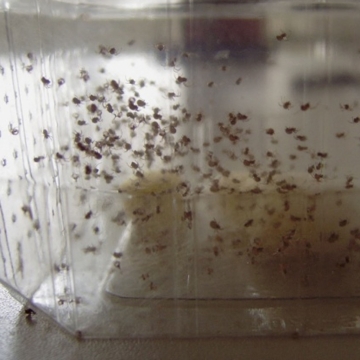
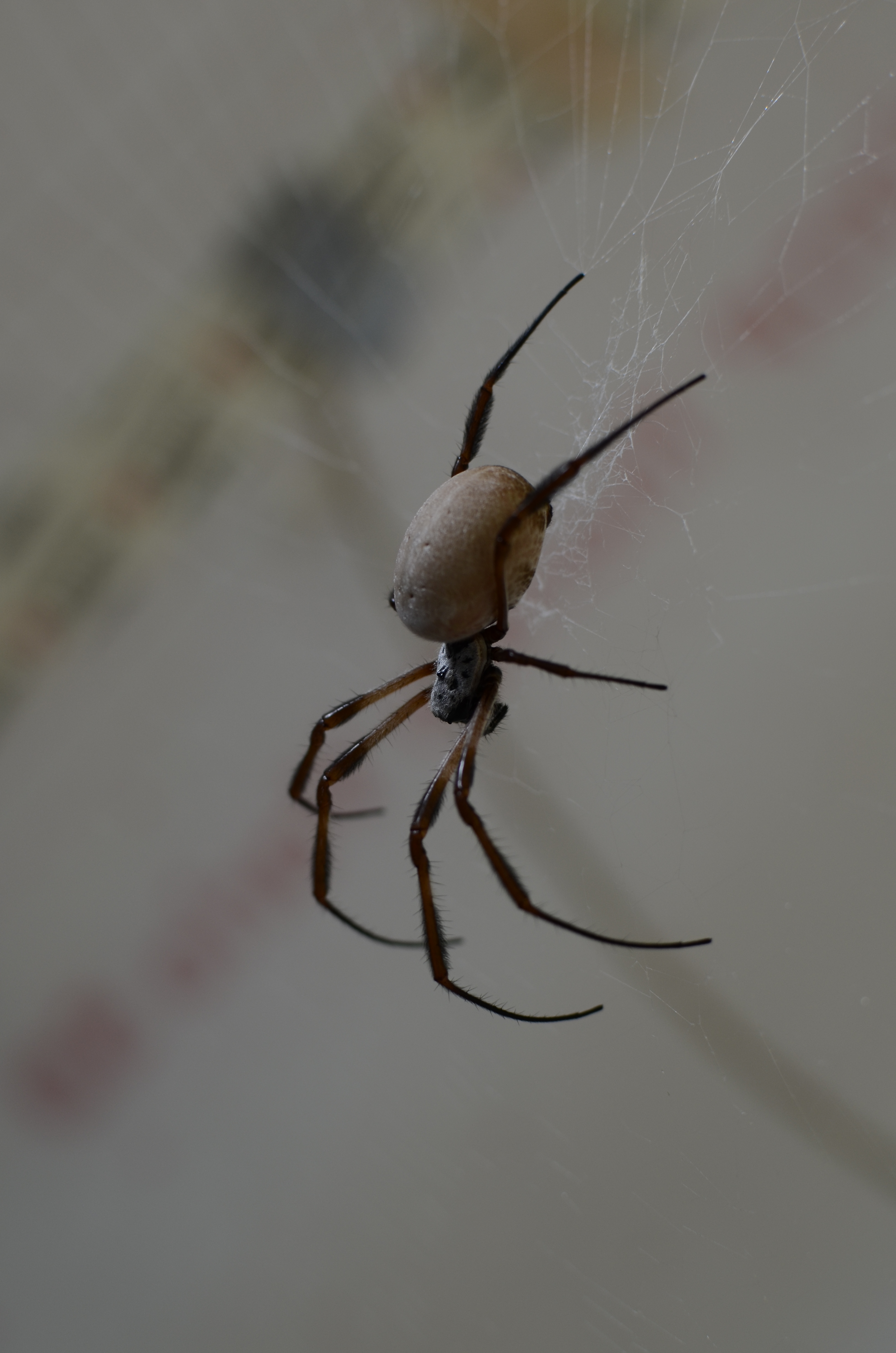
Spider silk, known for its special mechanical properties such as extreme elasticity and tear resistance, offers a wide range of applications in the medical field. In recent years, the Spider Silk Laboratory has been working intensively on the use of spider silk in the field of regenerative medicine. Good biocompatibility has been observed in various models. The material is also completely biodegradable in the body and can be used as a biomatrix (structure for colonization with body cells). Numerous application techniques and medical products have been and are being developed. For example, silk has already been successfully used to reconstruct peripheral nerve defects. An interposition of spider silk acts as a guide rail and placeholder for the regenerating nerve fibers. Tissue culture (including skin, cartilage and tendons) on spider silk has also been carried out successfully. The spider silk used is produced by wheel web spiders(Nephila edulis) from our own breeding. Obtaining the silk is painless for the animals and does not harm them.
Regeneration of peripheral nerves with spider silk
Nerves of the peripheral system can regenerate under certain conditions. However, long-term defects pose a major challenge. The implantation of an autologous donor nerve provides the regrowing injured nerve with an orientation aid. However, this method results in a further defect at the donor site. The consequences can range from numbness to motor deficits. The formation of neuromas in the defect area is also a known problem. Animal studies have shown that an interposition of spider silk leads to a recovery of motor and sensory functions. The silk enables a directed regrowth of the axons in the defect area, and the immigration of Schwann cells also enables remyelination. The histological evaluation demonstrated complete axonal regeneration over the entire defect length of 6 cm in the sheep model. Remyelination led to a measurable improvement in nerve conduction velocity. There were no inflammatory reactions or rejections. The use of spider silk thus represents an alternative to the transplantation of autologous (the body's own) nerve tissue and has been patented. Information on the existing patent can be found on the Ascenion GmbH website: https://www.ascenion.de/en/technology-offers/biocompatible-nerve-guidance-conduit-for-neuroregeneration-6087
Suture material
Using a miniature reep beater specially constructed for this purpose, spider silk can be beaten into tiny ropes that can be used as microsurgical sutures. Studies investigating the morphology (texture) and biomechanics of the beaten sutures have shown that the spider silk suture material is 2 ½ times more tear-resistant than nylon - currently the gold standard in peripheral nerve surgery - and exhibits significantly more favorable elasticity behavior.
Tissue engineering and wound treatment
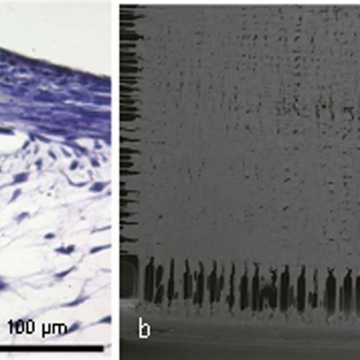
The choice of the right matrix (structure for colonization with cells) is a decisive factor in successful tissue engineering (tissue culture in the laboratory). On the one hand, the matrix should be biodegradable (degradable in the body), on the other hand, the material should have a certain mechanical strength. Spider silk offers both. In addition, the silk shows good cell adhesion (growth of cells). At the same time, the silk can act as a guiding structure for directed cell growth.
Various processing techniques such as cross-linking individual tiny spider silk threads or interweaving the threads can be used to produce individually shaped matrices for different applications. These are not only suitable for tissue engineering, e.g. for the cultivation of artificial skin or elastic cartilage, but also for the production of material for wound treatment.
Honors and awards
Robert Bosch Prize School Meets Science with the project School and Research - Spider Silk in Medicine (Bionics) 2012 - 2nd place
Special prize from the Hochschul-Impuls initiative to identify and implement sustainable ideas from universities in the Hannover region 2007 for the project "Tissue engineering with spider silk for the reconstruction of peripheral nerves"
Innovation Award German University Medicine 2007 with the project "Tissue engineering of biocompatible nerve implants with spider silk as carrier material and venules as sheath material for the reconstruction of peripheral nerves in humans".
Publications of our research groups
Liebsch C, Fliess M, Kuhbier JW, Vogt PM, Strauss S (2020). Nephila edulis - breeding and care under laboratory conditions. Dev Genes Evol 230(2):203-211.
Dastagir K, Dastagir N, Limbourg A, Reimers K, Strauss S, Vogt PM (2020). In vitro construction of artificial blood vessels using spider silk as a supporting matrix. J Mech Behav Biomed Mater 101, 103436.
Liebsch C, Bucan V, Menger B, Köhne F, Waldmann KH, Vaslaitis D, Vogt PM, Strauss S, Kuhbier JW (2018). Preliminary investigations of spider silk in wounds in vivo - Implications for an innovative wound dressing. Burns 44(7):1829-1838.
Kuhbier JW, Coger V, Mueller J, Liebsch C, Schlottmann F, Bucan V, Vogt PM, Strauss S (2017). Influence of direct or indirect contact for the cytotoxicity and blood compatibility of spider silk. Journal of Materials Science: Materials in Medicine, 28(8), 127.
Steins A, Dik P, Müller WH, Vervoort SJ, Reimers K, Kuhbier JW, Vogt PM, van Apeldoorn AA, Coffer PJ, Schepers, K (2015). In vitro evaluation of spider silk meshes as a potential biomaterial for bladder reconstruction. PloS one, 10(12), e0145240.
Schäfer-Nolte F, Hennecke K, Reimers K, Schnabel R, Allmeling C, Vogt PM, Kuhbier JW, Mirastschijski U (2014). Biomechanics and biocompatibility of woven spider silk meshes during remodeling in a rodent fascia replacement Model. Annals of surgery 259(4), 781-792.
Roloff F, Strauß S, Vogt PM, Bicker G, Radtke C (2014). Spider Silk as Guiding Biomaterial for Human Model Neurons. BioMed Research International doi: 10.1155/2014/906819.
Strauß S, Reimers K, Allmeling C, Kuhbier JW, Radtke C, Schäfer-Nolte F, Wendt H, Vogt PM (2013). Spider Silk - A Versatile Biomaterial for Tissue Engineering and Medical Applications. Biomedical Engineering/Biomedical Technology.
Hennecke K, Redeker J, Kuhbier JW, Strauss S, Allmeling C, Kasper C, Reimers K, Vogt PM (2013). Bundles of Spider Silk, Braided Into Sutures, Resist Basic Cyclic Tests: Potential Use for Flexor Tendon Repair. PloS One 8(4), e61100.
Radtke C, Allmeling C, Waldmann KH, Reimers K, Thies K Schenk HC, Hillmer A, Guggenheim M, Brandes G, Vogt PM (2011). Spider Silk Constructs Enhance Axonal Regeneration and Remyelination in Long Nerve Defects in Sheep. PLoS One 25;6(2):e16990.
Kuhbier JW, Reimers K, Kasper C, Allmeling C, Hillmer A, Menger B, Vogt PM, Radtke C (2011). First Investigation of Spider Silk as a Braided Microsurgical Suture. J Biomed Mat Res Part B 97(2):381-7.
Wendt H, Hillmer A, Reimers K, Kuhbier JW, Schäfer-Nolte F, Allmeling C, Kasper C, Vogt PM (2011). Artificial Skin--Culturing of Different Skin Cell Lines for Generating an Artificial Skin Substitute on Cross-Weaved Spider Silk Fibers. PLoS ONE 6(7): e21833.
Kuhbier JW, Allmeling C, Reimers K, Hillmer A, Kasper C, Menger B, Brandes G, Guggenheim M, Vogt PM (2010). Interactions Between Spider Silk and cells--NIH/3T3 Fibroblasts Seeded on Miniature Weaving Frames. PLoS One 5(8):e12032.
Allmeling C, Jokuszies A, Reimers K, Kall S, Choi CY, Brandes G, Kasper C, Scheper T, Guggenheim M, Vogt PM (2008). Spider Silk Fibres in Artificial Nerve Constructs Promote Peripheral Nerve Regeneration. Cell Prolif 41(3):408-20.
Allmeling C, Jokuszies A, Reimers K, Kall S, Vogt PM (2006). Use of Spider Silk Fibres as an Innovative Material in a Biocompatible Artificial Nerve Conduit. Cell Mol Med 10(3): 770-777.
Contact person
Laboratory head
Dr. rer. nar. Sarah Strauß
Phone: 0511 532 - 8863
Strauss.Sarah(at)mh-hannover.de
Head of husbandry and breeding
Christina Liebsch
Phone: 0511 532 - 8863
Liebsch.Christina(at)mh-hannover.de