Endodontology and dental traumatology
Treatment of diseases of the dental nerve and dental injuries
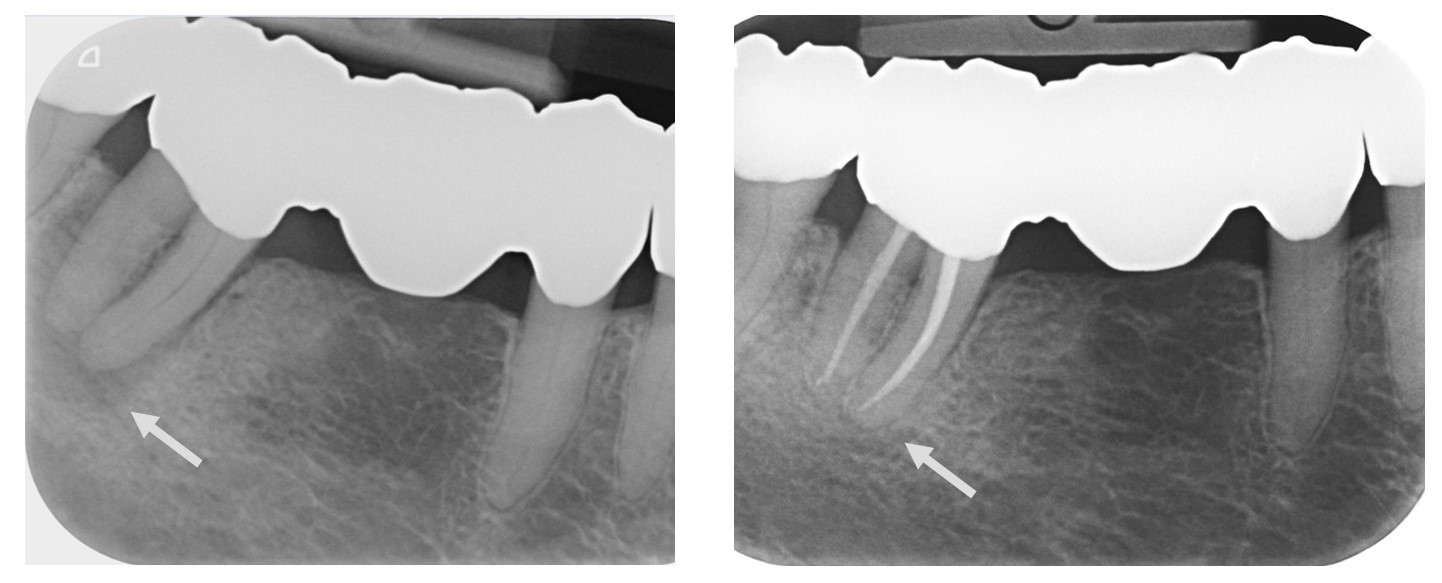
Our teeth are not dead tools that merely help to grind food. They are much more than that: teeth can sense changes in temperature and pressure as well as pain and transmit this information to the brain. These abilities and other properties of the teeth are determined by the periodontium and the dental pulp. The dental pulp consists of connective tissue in which sensitive nerve fibers, blood and lymph vessels and various cells are embedded. If the pulp is damaged by external stimuli, such as tooth decay or tooth trauma, it initially reacts with local inflammation. If the stimulus is removed early and the inflammation is limited to a small area, this is reversible so that the pulp can fully recover. However, if large parts of the pulp are inflamed or even already dead, root canal treatment must usually be carried out in order to preserve the tooth.
I need ...
The aim of root canal treatment is to remove the infected tissue almost completely. To do this, the nerve space of the affected tooth is first opened and inflamed tissue is removed. The nerve space consists of a part inside the crown of the tooth and a part inside the root of the tooth (root canal). The root canals are explored and measured with very fine files. It is very important that the entire nerve space is reached and cleaned up to the tip of the root. This is done by widening (preparing) the root canals, usually with machine-driven files, and thoroughly disinfecting them with special rinsing liquids. Once the root canal has been prepared, either a medication can be introduced into the root canal system to further reduce germs and the tooth can be sealed saliva-tight with a temporary filling or the root canal can be filled in the same session. This is intended to seal the root canals tightly towards the root tip and prevent renewed bacterial colonization of the tooth. It usually consists of two different filling materials and is adapted precisely to the length of the root canal. Once the root canal has been filled, the tooth is sealed with a tight plastic filling. In order to ensure long-term success and prevent the treated tooth from breaking (fracturing), it is sometimes necessary to restore the tooth with a partial crown or crown, especially if the tooth is already severely damaged. Plastic fillings are also sufficient for smaller defects.
Even if a root canal filling has been carried out correctly, it can happen in some cases that the tooth does not stop hurting or starts to cause discomfort again after a certain period of time. There can be several reasons for this. Firstly, due to the complex root canal system, it is sometimes not possible to completely remove all bacteria within the tooth despite thorough cleaning and disinfection. Secondly, it can happen that the root canal system is recolonized with bacteria due to a carious lesion or a leaking filling or crown, for example. Inflammation may then occur again and need to be treated. Sometimes these inflammations do not cause any symptoms and are discovered during a routine check-up. Even in these cases, treatment is usually necessary.
If possible, the existing root canal filling should be removed and replaced (revision treatment). Removing the root canal filling is time-consuming and both the patient and the dentist must be patient. Once the root canal filling has been removed from the canal system, the further course of treatment is similar to the root canal treatment that has already been carried out on the tooth. However, the entire treatment is associated with increased time and technical effort, especially if there are complications from the initial treatment of the tooth (e.g. perforations of the root, broken instruments, existing root posts).
Whether a revision treatment makes sense should be decided individually with the dentist depending on the situation.
Traumatic injuries to the teeth, for example due to a fall, impact or blow, are divided into tooth fractures and changes in position or location (dislocations). Every injury to the teeth should be promptly clarified by a dentist and, above all, documented.
Tooth fractures that are limited to the crown can be treated by reattaching the tooth fragment or with a plastic filling, depending on how large the broken piece (fragment) of the tooth is. If the tooth fracture is so extensive that the nerve cavity has been opened and the dental nerve (pulp) is exposed, special haste is required. The longer the opened tooth nerve is exposed to the oral cavity, the more bacteria can penetrate the nerve tissue. To prevent bacteria from entering the nerve cavity, it is necessary to clean the opening site and seal the nerve space tightly. If the tooth has been loosened in its bony tooth socket during the trauma and its position has also changed, the traumatized tooth should be returned to its original position (repositioned) and connected (splinted) to the adjacent teeth using a local anaesthetic to eliminate pain. In very severe cases, a tooth may be completely detached from the bony tooth socket (avulsion). In this case, it is very important to store the knocked-out tooth, as there are cells on the root surface that must survive in order to allow the tooth to heal (regenerate). A tooth rescue box is the best storage option; you can get these from pharmacies, for example, but many swimming pools and schools now also have such boxes - it is best to ask for them. However, if you do not have these to hand, it is advisable to temporarily store the tooth in cold UHT milk. Dry storage leads to irreversible damage to the cells in question and later to considerable complications. With optimal storage, the tooth can be reinserted into the tooth socket (replantation) and splinted to the adjacent teeth. Success depends largely on close follow-up care.
Your dentist will discuss the exact procedure with you.