
To the online condolence book
Prof. Dr. Michael P.Manns (1951-2025)
Physician, scientist, networker - but above all a very special person, mentor, motivator, visionary!
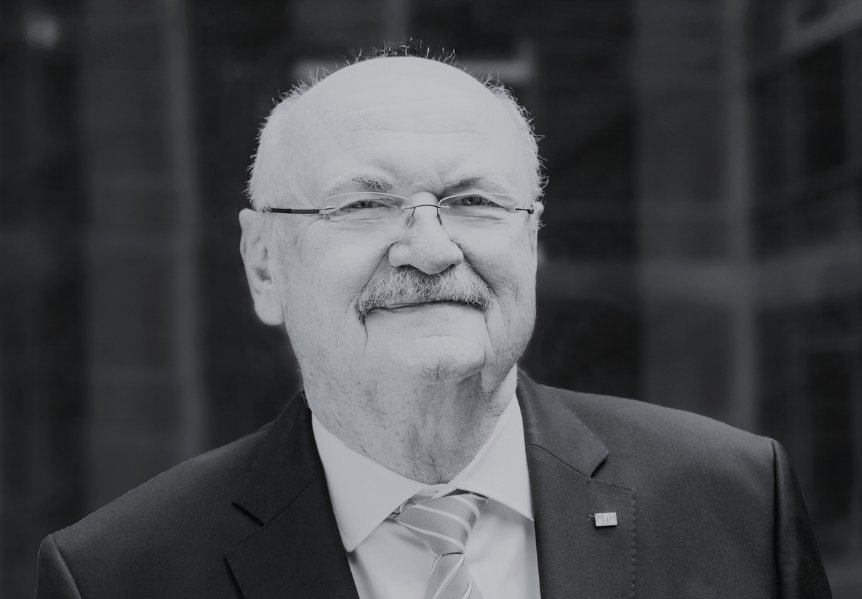
(English version below)
On August 15, 2025, Prof. Dr. Dr. Michael P. died at the age of 73.Manns, an outstanding personality who had a decisive influence on the field of gastroenterology and hepatology for decades.
On October 1, 1991, at the age of less than 40, Michael Manns became Director of the then Clinical Department of Gastroenterology and Hepatology and Professor at Hannover Medical School. That was his first "call". Over the next few decades, there were repeated attempts to poach Michael Manns from other universities. Fortunately, the MHH managed to keep him each time. By March 31, 2020, Michael Manns had undoubtedly established one of Germany's leading gastroenterology Clinical Departments, including a very well-equipped endoscopy unit and a large ultrasound unit. In addition to the strong hepatology and intestinal outpatient clinic, the Clinical Department also includes gastroenterological oncology, hepatological transplant medicine, nutritional medicine, a very well-positioned endocrinology and diabetology department, a special lipidology outpatient clinic and, in cooperation with the pneumology and nephrology departments, internal intensive care medicine and infectiology. Another special feature are the large study units, which serve both investigator-initiated studies and numerous phase 2, 3 and 4 industrial studies in the fields of hepatology, chronic inflammatory bowel disease and oncology. Michael Manns has created a dynamic atmosphere that is creative and promotes scientific thinking. This is not the only reason why our Clinical Department - measured in terms of LOM based on publications and third-party funding - has been the strongest research department at the MHH for many years.
Michael Manns studied medicine in Mainz and Vienna. Together with his mentor Karl-Hermann Meyer zum Büschenfelde, he went to the Charlottenberg Clinic in Berlin from 1977-1981. Over the next few years, he then completed his clinical training under "MzB" in Mainz, where he held a C2 professorship from 1986. A research stay in La Jolla/San Diego at the Autoimmune Disease Center of the Scripps Clinic was scientifically decisive for him, where he generated significant research results on the autoantigen of LKM-1 autoantibodies in patients with autoimmune hepatitis. He published this work at a high level and laid the foundation for his outstanding reputation in the field of autoimmune liver diseases. Michael Manns coordinated various AIH guidelines and also played a decisive role in the American guidelines. Michael Manns was first author of the only large randomized study on AIH for many years, which compared standard prednisolone therapy with budesonide and was published in 2010. He also had a special interest in another serious immune disease of the liver: primary sclerosing cholangitis (PSC). Michael Manns' statement that PSC is the "black box of hepatology" is legendary. Supporting the PSC International Study Group was very important to him. And Michael Manns is the last author of the first positive phase 3 study on norursodeoxycholic acid in PSC, which Michael Trauner from Vienna recently presented at the EASL Congress in Amsterdam in May 2025.
Michael Manns is of course also associated with the impressive developments in therapies for viral hepatitis. In the 1990s, Michael Manns' team investigated the first antiviral drugs against hepatitis B, particularly in the context of organ transplants. He then played a major role in studies that established the highly personalized treatment of hepatitis C based on viral genotypes, host genetics (IL28b genotypes), viral kinetics after treatment was started and other factors such as cirrhosis status, gender and age by 2014. The phase 3 registration study on PEG-IFNa-2b in combination with ribavirin in hepatitis C was published in the Lancet in 2001 with Michael Manns as first author and has been cited more than 8300 times to date! The worldwide standard therapy for acute hepatitis C was also established from Hanover over almost two decades, with a total of five investigator-initiated studies by the Competence Network Hepatitis, which initially investigated various interferons and then direct antiviral substances in acute hepatitis C and were published in the NEJM and Lancet Infectious Diseases, among others. In his role as Chairman of the Board of the German Liver Foundation, Michael Manns also supported the establishment of the globally recognized German Hepatitis C Registry, which is managed by the Leberstiftungs-GmbH and in which more than 18,000 patients have been included. More than 40 original publications have emerged from this registry to date. Finally, Michael Manns' role in the international networks and studies on hepatitis delta must be acknowledged. The HIDIT-1 (NEJM 2011) and HIDIT-2 (Lancet ID 2019) studies of the HepNet Study House were by far the largest randomized studies on this rare viral infection of the liver for almost two decades and laid the foundation for international treatment standards. The Hepatitis Delta International Network (HDIN), founded by Michael Manns, Cihan Yurdaydin and Heiner Wedemeyer, is the world's leading discussion forum on hepatitis D with more than 25 meetings. If you enter the keywords Manns M and hepatitis B, C or D in PubMed, you will find an incredible 720 publications!
In addition to autoimmune and viral liver disease, Michael Manns has been very active in gastrointestinal oncology, particularly hepatobiliary tumors and transplantation medicine. He was spokesperson of a clinical research group (KFO119) and deputy spokesperson of two Transregio-SFBs (TRR77 and TRR209) on HCC. After Rudolf Pichlmayr's death in 1997, he took over as spokesperson of the Collaborative Research Centre 265 "Immune Reactions and Pathomechanisms after Organ Transplantation" and from 2007 onwards he was spokesperson of the CRC 738 "Optimization of Conventional and Innovative Transplants" for three funding periods.
A major component of the special international visibility of German hepatology was the establishment of the BMBF-funded Competence Network Hepatitis (Hep-Net) in 2002, whose initiator and spokesperson was Michael Manns. Horizontal and vertical networking was the basis of the network. Joint studies by colleagues in private practice and university centers with the involvement of standard care hospitals are still the philosophy of Hep-Net today. The German Liver Foundation then emerged from this. Michael Manns has been its chairman since 2006. The annual Hep-Net Symposium of the German Liver Foundation has a firmly established place in German hepatology and is a must-attend event for many colleagues.
Michael Manns was already established in infectiology through Hep-Net and viral hepatitis. Accordingly, he also played an important role in the establishment of the German Center for Infection Research (DZIF), where he acted as spokesperson for the "TTU Hepatitis" for many years. Under his leadership, decisive impetus was given to research into novel therapeutic concepts and biomarkers for viral hepatitis. His commitment played a key role in ensuring that the DZIF is recognized internationally as a leading research network in infectiology. "Many people talk about translational research, we do it," was another succinct statement by Prof. Manns, which aptly summed up his attitude towards science and the Clinical Department.
Just how important translational infection research was to him was demonstrated by the fact that he accepted the position of Clinical Director of the Helmholtz Center for Infection Research in 2015. There, he was instrumental in driving forward the development of personalized medicine for infectious diseases, a concept that was already established in oncology but was still uncharted territory in infectiology. He laid the foundation for this new field of research with the establishment of the Centre for Individualised Infection Medicine (CiiM), of which he was the founding director. His legacy at CiiM is now being carried on by the two directors Yang Li and Markus Cornberg.
Combining clinical expertise with excellent scientific training was a major concern for Michael Manns. He motivated many of his students to complete a PostDoc, ideally abroad. This mentorship was extremely successful: more than 10 national and international professorships in the fields of gastroenterology, oncology or virology have their roots in Hanover. In addition, numerous chief physician positions and many successful gastroenterology specialty practices have been filled by students of Michael Manns. The "Manns School" is undoubtedly legendary in Germany.
Michael Manns was involved in a wide range of scientific committees, such as the Scientific Advisory Board of the Robert Koch Institute, supervisory boards of various national and international foundations and university medical centers, medical structure commissions and European research institutions. He was a member of renowned academies such as the Leopoldina, the Academy of Sciences and Literature in Mainz and the Göttingen Academy. For German gastroenterology, however, it is particularly noteworthy that he served the DGVS as secretary from 1992 to 2000 during a decisive period of change and led it into the new millennium. The first joint congress of gastroenterologists and surgeons, which Michael Manns organized as DGVS conference president together with surgeon Heinz Buhr in Hanover in 2006 and which decisively advanced visceral medicine, was visionary. The German Liver Society, the GASL, was also particularly close to his heart. The first GASL conference in Mainz in 1985 with President Meyer zum Büschenfelde was largely organized by Michael Manns. He was then secretary of the GASL from 1989 to 1991. Over the next decades, he almost always took part in the GASL annual conferences and in 2012, as President, he organized the GASL conference in Hanover with great success. However, Michael Manns saw himself not only as a gastroenterologist and hepatologist, he was also an internist with great conviction! In 2014, he was DGIM President and organized an impressive congress in Wiesbaden.
Internationally, Michael Manns was visible at various levels for more than four decades. He is seen as a "giant of hepatology" in the USA, Asia, South America, Africa, Australia and Europe. Among other things, he was active in the Scientific Committee of the European Liver Association EASL in the 1990s. He was the first European to give the Leon Schiff State of the Art Lecture at the American Liver Congress in October 2000. He has had many editorial roles in the leading liver journals. He was a member of the Steering Committee of the European research network VirGIL from 2005 to 2009 and was President of United European Gastroenterology from 2016 to 2017. Most recently, he was Co-Chair of the EASL Lancet Liver Commission, which impressively highlighted the greatly underestimated importance of liver diseases in Europe and worldwide.
It is not possible to list the many prizes, honors and awards for Prof. Manns here. They began in 1985 with the Boehringer Ingelheim Prize from the University of Mainz, followed by honorary membership of the DGVS in 2021 and, most recently, the Grand Cross of Merit of the Order of Merit of the State of Lower Saxony, which was awarded to him in April 2025 by the then Minister President Stephan Weil.
In addition to all his scientific and organizational achievements, Michael Manns was above all a passionate physician. Many patients sought him out personally, far beyond Hanover. He always took his time, listened and treated everyone with exceptional empathy. This unique combination of medical excellence and human closeness had a lasting impact on his medical work.
All of this is already an incredible life's work. But Michael Manns wanted to do even more. In 2019, he became President of Germany's only medical university at the time - Hannover Medical School. He led the MHH through some truly turbulent times, with the coronavirus pandemic and the planning of a completely new university hospital being just a few of the challenges. He demonstrated great skill and a successful vision in shaping the generational change in the Clinical Departments and Institutes at MHH.
With Michael Manns, we are losing an absolute personality. What a physician, scientist, networker - but above all a very special person, mentor, motivator, visionary!
Heiner Wedemeyer and Markus Cornberg
Hanover, August 2025
Prof. Dr. Michael P. Manns (1951-2025)
Physician, Scientist, Networker - but above all, a truly exceptional person, mentor, motivator, and visionary!
On August 15, 2025, at the age of 73, Prof. Dr. Michael P. Manns passed away. He was an outstanding figure who shaped the field of gastroenterology and hepatology decisively over several decades.
On October 1, 1991, at not even 40 years old, Michael Manns became Director of the then Clinic for Gastroenterology and Hepatology and Professor at the Medical School of Hannover (MHH). Over the following decades, there were repeated attempts by other universities to recruit him. Fortunately, MHH always succeeded in retaining him. Until March 31, 2020, Michael Manns undoubtedly built one of Germany's leading gastroenterology departments, including a state-of-the-art endoscopy and a large ultrasound unit. Alongside a strong focus on hepatology and outpatient care for bowel diseases, the clinic also specialized in gastroenterological oncology, hepatological transplant medicine, nutritional medicine, a well-established endocrinology and diabetology unit, a special lipid clinic, and - in cooperation with pulmonology and nephrology - the internal intensive care and infectious disease units. Another hallmark was the extensive clinical study programs, encompassing investigator-initiated trials as well as numerous phase 2, 3, and 4 industry studies in hepatology, chronic inflammatory bowel disease, and GI-oncology. Michael Manns fostered a dynamic atmosphere that encouraged creativity and scientific thinking. For these reasons and more, our department has been the most research-intensive at MHH for many years, measured by publication output and third-party funding.
Michael Manns studied medicine in Mainz and Vienna. From 1977 to 1981, he trained under his mentor Karl-Hermann Meyer zum Büschenfelde at the Klinikum Charlottenburg in Berlin. He completed his clinical training with Professor Meyer zum Büschenfelde back in Mainz, where from 1986 he held a C2 professorship. A pivotal moment in his scientific career was a research stay at the Autoimmune Disease Center of the Scripps Clinic in La Jolla, San Diego, where he made key discoveries on the autoantigen of LKM-1 autoantibodies in patients with autoimmune hepatitis. These highly regarded publications laid the foundation for his outstanding reputation in autoimmune liver diseases. Michael Manns coordinated several AIH guidelines and contributed significantly to American guidelines as well. He was first author of the only large randomized study on AIH for many years, comparing prednisolone standard therapy with budesonide, published in 2010. He also had a special interest in another serious immune liver disease: primary sclerosing cholangitis (PSC). His famous description of PSC as the "black box of hepatology" reflects his deep commitment. Supporting the PSC International Study Group was very important to him. He was last author of the first positive phase 3 study on norursodeoxycholic acid in PSC, recently presented by Michael Trauner from Vienna at the EASL Congress in May 2025 in Amsterdam.
Michael Manns is naturally also associated with the impressive development of therapies against viral hepatitis. In the 1990s, his team studied the first antiviral drugs for hepatitis B, especially in the context of organ transplantation. He contributed greatly to studies that until 2014 established highly personalized hepatitis C therapies, based on viral genotypes, host genetics (IL28b genotypes), viral kinetics after treatment initiation, and other factors such as cirrhosis status, gender, and age. The phase 3 approval study of PEG-IFNα-2b combined with ribavirin for hepatitis C, published in 2001 in The Lancet with Michael Manns as first author, has been cited more than 8,300 times! From Hannover, the worldwide standard therapy for acute hepatitis C was also established over nearly two decades, with five investigator-initiated studies by the Hepatitis Competence Network Hep-Net exploring various interferons and directly acting antiviral agents, published in the NEJM and The Lancet Infectious Diseases. Furthermore, Michael Manns, as Chairman of the German Liver Foundation, supported the establishment of the globally renowned German Hepatitis C-Registry, which has enrolled over 18,000 patients and has already produced more than 40 original publications. Finally, his role in international networks and studies on hepatitis delta must be acknowledged. The HIDIT-1(NEJM, 2011) and HIDIT-2(Lancet Infectious Diseases, 2019) studies, conducted over nearly two decades by the HepNet-Study House, were by far the largest randomized trials for this rare viral liver infection and laid the groundwork for international therapy standards. The Hepatitis Delta International Network (HDIN), founded by Michael Manns, Cihan Yurdaydin, and Heiner Wedemeyer, remains the world's leading forum on hepatitis D, with over 25 meetings to date. The overall remarkable contributions of Michael Manns to the viral hepatitis field is also reflected by a simple PubMed search: "Manns M" and hepatitis B, C, or D yields an incredible 720 publications!
Besides autoimmune and viral liver diseases, gastrointestinal oncology - especially hepatobiliary tumors - and transplant medicine were very important to Michael Manns. He was spokesperson for a clinical research group (KFO119) and deputy spokesperson of two transregional collaborative research centers (TRR77 and TRR209) focused on hepatocellular carcinoma (HCC). After the death of Rudolf Pichlmayr in 1997, he took over as spokesperson of the collaborative research center (SFB) 265 "Immune reactions and pathomechanisms after organ transplantation," and from 2007, he led the SFB 738 "Optimization of conventional and innovative transplants" through three funding periods.
A major factor in the international visibility of German hepatology was the establishment in 2002 of the BMBF-funded Competence Network Hepatitis (Hep-Net), initiated and chaired by Michael Manns. Horizontal and vertical networking formed the foundation of the network. Collaborative studies involving private practitioners, university centers, and regular care hospitals remain the philosophy of Hep-Net today. From this, the German Liver Foundation emerged. Since 2006, Michael Manns served as its chairman. The annual Hep-Net symposium of the German Liver Foundation has become a fixed and essential event in German hepatology.
Through Hep-Net and his work on viral hepatitis, Michael Manns was also established in infectious disease research. Accordingly, he played a key role in founding the German Center for Infection Research (DZIF), serving for many years as spokesperson for the "TTU Hepatitis" unit. Under his leadership, crucial advances were made in novel therapy concepts and biomarker research for viral hepatitis. His commitment helped position the DZIF internationally as a leading research network in infectious diseases. "Many talk about translational research; we do it," was another characteristic phrase of Prof. Manns, encapsulating his philosophy of science and clinical care.
His dedication to translational infectious disease research was reflected in his acceptance in 2015 of the position of Clinical Director at the Helmholtz Centre for Infection Research. There, he significantly advanced personalized medicine for infectious diseases - a concept well established in oncology but still new in infectiology. By founding the Center for Individualized Infection Medicine (CiiM), where he was founding director, he laid the foundation for this new field. His legacy at CiiM continues today through directors Yang Li and Markus Cornberg.
Combining clinical expertise with excellent scientific training was a great concern for Michael Manns. He motivated many of his fellows to pursue postdoctoral research, ideally abroad. This mentorship was remarkably successful: over ten national and international chairs in gastroenterology, oncology, or virology trace their roots to Hannover. Numerous chief physician positions and many successful specialized gastroenterology practices are also held by his protégés. The "Manns School" is undoubtedly legendary in Germany.
Michael Manns was engaged in numerous scientific committees, including the scientific advisory board of the Robert Koch Institute, supervisory boards of various national and international foundations and university hospitals, medical structure commissions, and European research institutions. He was a member of prestigious academies such as the Leopoldina, the Academy of Sciences and Literature Mainz, and the Göttingen Academy. For German gastroenterology, it is especially important to highlight that he served as secretary of the DGVS (German Society for Gastroenterology, Digestive and Metabolic Diseases) during a crucial transitional period from 1992 to 2000, leading it into the new millennium. Visionary was the first joint congress of gastroenterologists and surgeons, which Michael Manns co-chaired with surgeon Heinz Buhr in Hannover in 2006, decisively advancing visceral medicine. The German Liver Society (GASL) was also close to his heart. He played a major role in organizing the first GASL meeting in Mainz in 1985 with President Meyer zum Büschenfelde, served as GASL secretary from 1989 to 1991, regularly attended annual GASL meetings over the decades, and successfully organized the 2012 GASL meeting as president in Hannover. Michael Manns did not see himself solely as a gastroenterologist and hepatologist; he was also, with great conviction, an internist. In 2014, he was president of the German Society of Internal Medicine (DGIM) and organized an impressive congress in Wiesbaden.
Internationally, Michael Manns was visible on many levels for over four decades. He is regarded as a "giant of hepatology" in the USA, Asia, South America, Africa, Australia, and Europe. In the 1990s, he was active on the Scientific Committee of the European Association for the Study of the Liver (EASL). He was the first European to deliver the Leon Schiff State-of-the-Art Lecture at the American Liver Congress in October 2000. He held many editorial roles at leading liver journals. From 2005 to 2009, he was a member of the steering committee of the European research consortium VirGIL. For European gastroenterology, he served as president of United European Gastroenterology from 2016 to 2017. Most recently, he valued his role as co-chair of the EASL-Lancet-Liver Commission, which highlighted the vastly underestimated significance of liver diseases in Europe and worldwide.
It is impossible here to list all of Prof. Manns' awards, honors, and recognitions. They began in 1985 with the Boehringer Ingelheim Prize from the University of Mainz, continued with honorary membership of the DGVS in 2021, and most recently included the Grand Cross of the Order of Merit of the State of Lower Saxony, awarded in April 2025 by then Minister-President Stephan Weil.
Beyond all his scientific and organizational achievements, Michael Manns was above all a passionate physician. Many patients sought him out personally from far beyond Hanover. He always took the time to listen and met everyone with extraordinary empathy. This unique combination of medical excellence and human closeness deeply shaped his medical practice.
All of this already constitutes an incredible legacy. Yet Michael Manns still aimed to shape even more. In 2019, he became president of the only German medical university at the time - the Medical School Hannover. He guided MHH through truly turbulent times, including the COVID-19 pandemic and the planning of a complete rebuild of a university hospital, among other challenges. He demonstrated great skill and vision in managing the generational transition within MHH's clinics and institutes.
With Michael Manns, we lose an absolute personality. What a physician, scientist, networker - but above all, what a truly special person, mentor, motivator, and visionary!
Heiner Wedemeyer and Markus Cornberg
Hannover, August 2025