New treatment pathways in thoracic surgery: How safe are lung operations in times of the pandemic?
In the context of the current COVID-19 pandemic, the German Interdisciplinary Association for Intensive Care and Emergency Medicine (DIVI) has been recording the intensive care capacities available in Germany in a structured manner as part of a register together with the Robert Koch Institute (RKI) since April 20, 2020. With a total of around 28,000 low-care, 25,500 high-care and 750 ECMO places available, it is clear that existing intensive care capacities are increasingly becoming a bottleneck in patient care. Coupled with an impressive shortage of intensive care staff - Prof. Jannsens, President of the DIVI, currently speaks of a shortage of 3,500 - 4,000 specialists - there is an increasing postponement of even longer planned operations. Against this background, it is crucial to question old dogmas and develop modern, interdisciplinary and interprofessional concepts. Over the past 4 years, we have been able to establish pioneering new treatment paths in thoracic surgery, which are essentially based on 3 pillars:
- Firstly, all patients are seen preoperatively by an experienced specialist, so that only fully diagnosed patients are admitted at all, for whom a comprehensive individual treatment pathway has been developed from admission and surgery through to discharge and subsequent further treatment.
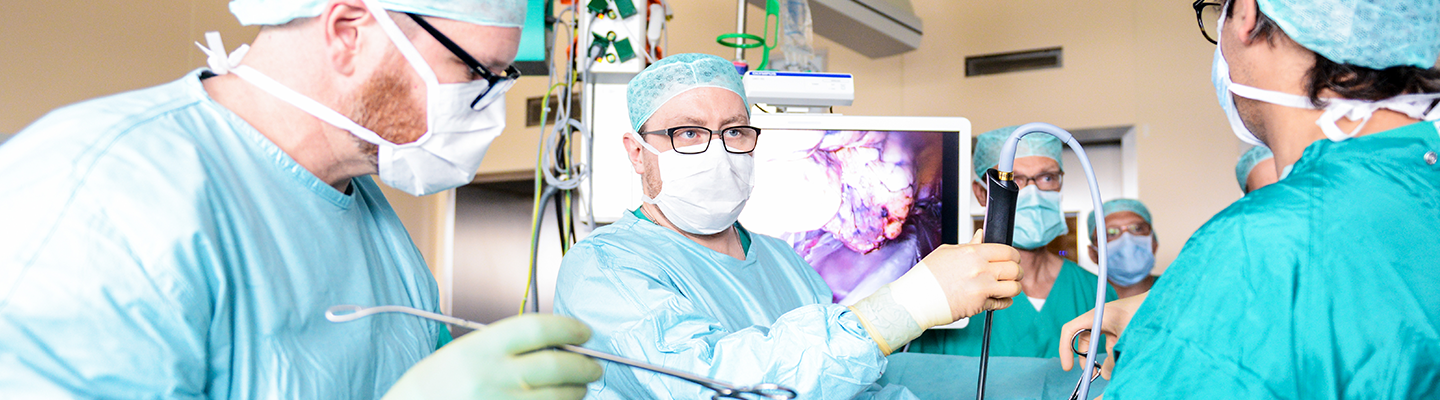
- Secondly, >85% of operations are performed using minimally invasive techniques, even after previous chemotherapy and / or radiotherapy, whereby central venous catheters, arterial blood pressure measurement and indwelling bladder catheters are not used intraoperatively so that patients can be adequately mobilized after the operation on the day of the operation without having to stay in the intensive care unit.
- Thirdly, pain treatment is closely coordinated with the Clinical Department of Anaesthesiology so that early mobilization and the avoidance of postoperative complications due to insufficient activity are specifically avoided.
Overall, key features of modern and complex ERAS (Enhanced Recovery After Surgery) programs are already established today, and pioneering treatment concepts such as complex lung surgery under spontaneous breathing with intraoperative nociception measurement under targeted virtual reality shielding are commonplace.