About the Institute
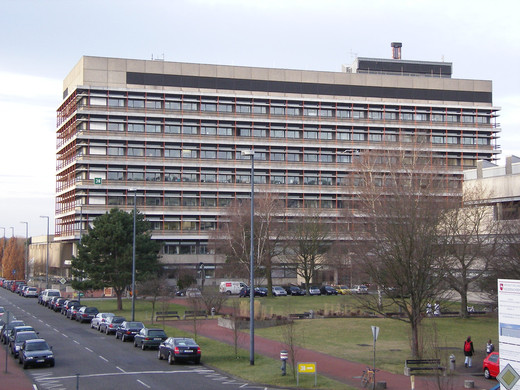
After forensic medicine was founded at Hannover Medical School in 1965, the subject of forensic medicine was initially only represented in teaching. The first lecturer was the then associate professor Dr. Bernd Brinkmann, formerly of Hamburg and now full professor of forensic medicine at the University of Münster. He and the then head of the Center, Prof. Dr. A. Georgii, jointly planned the establishment of an Institute of Pathology and Forensic Medicine.
With the completion of the premises in the "Theoretical Institutes II" building, Prof. Dr. Dr. P. Zink was appointed the first Chair of Forensic Medicine in Hanover at the beginning of the 1977 summer semester. By the time he left for the University of Bern in 1982, he had succeeded in establishing a functioning Institute that carried out research and teaching tasks as well as forensic medical services. Between the reappointment of the chair on 1.10.1983 and 31.12.2009, the Institute was headed by Prof. Dr. H. D. Tröger. Prof. Dr. Michael Klintschar has been head of the Institute since 1.1.2010.
In addition to teaching and research, a large number of practical tasks are carried out for the administration of justice. As part of its daily forensic practice activities, the Institute is responsible for the regional court districts of Aurich, Hanover, Oldenburg and Osnabrück as well as parts of the regional court districts of Braunschweig, Bückeburg, Hildesheim and Lüneburg.
Since October 2010, the Institute of Forensic Medicine has been offering a new specialized service in Lower Saxony with the "Child Protection Project" and the "Establishment of a Child Protection Outpatient Clinic" under the direction of PD Dr. A.S. Debertin, which enables practicing and clinical physicians to provide qualified medical diagnostics, documentation and forensic evidence in cases of suspected child abuse and suspected sexual abuse.
There has been a branch office in Oldenburg since 1986. Previously, the State Pathological Institute of the Weser/Ems district government had been housed in this building since 1935, where up to 150 forensic examinations were carried out each year, providing good conditions for forensic medical work.