Report of the final meeting on March 21, 2024 in Berlin
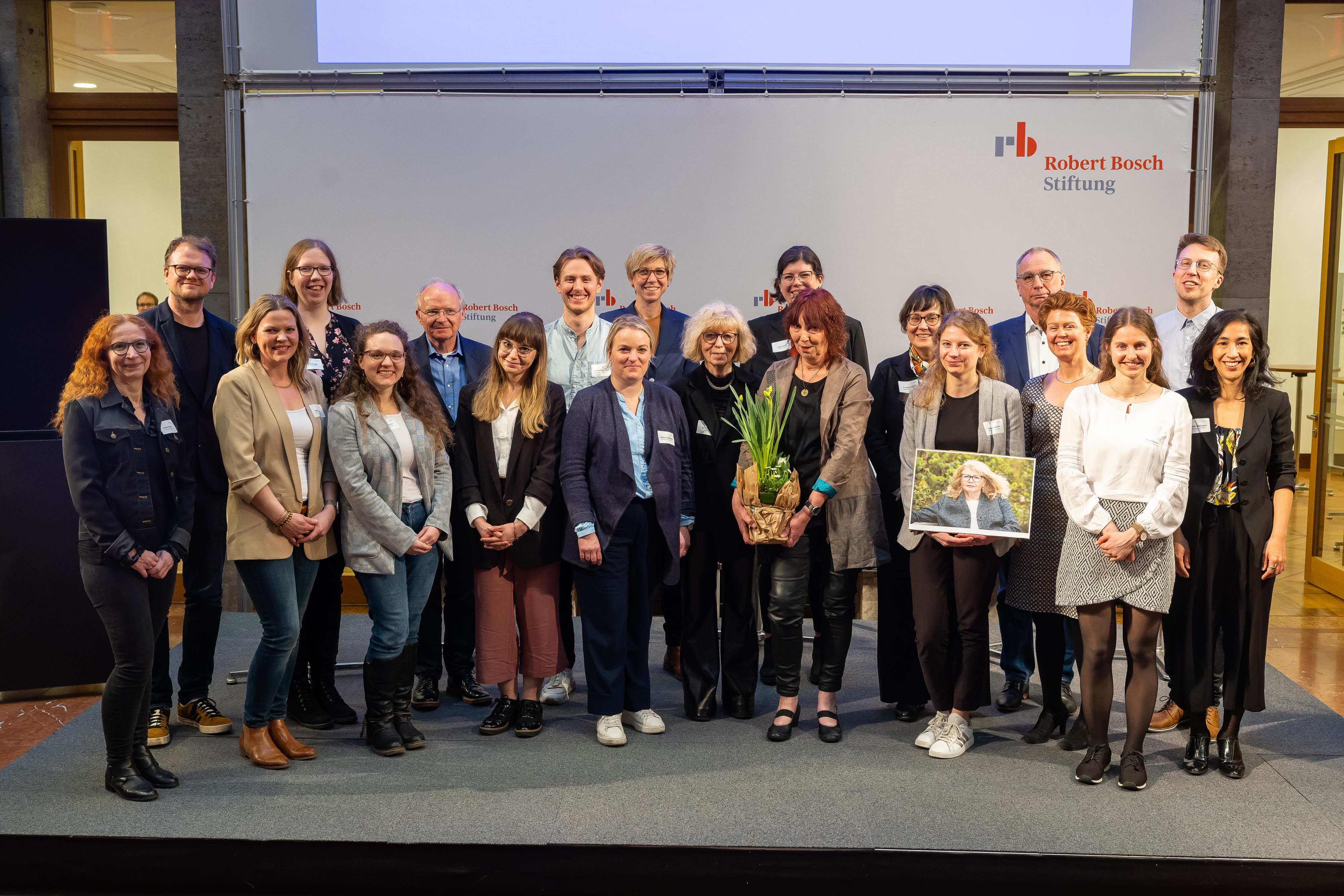
On 21.03.2024, the final conference of the ChEG doctoral programme "Chronic Diseases and Health Literacy" took place in Berlin, organized by Prof'in Dr. Marie-Luise Dierks and Dr. Gabriele Seidel as well as Dr. Jonas Lander and Ronny Klawunn from Hannover Medical School, Susanne Melin from the Robert Bosch Stiftung and the doctoral students.
Under the motto "Health literacy: one topic, different perspectives, new developments", the doctoral students presented their research results in front of 60 invited guests in the Robert Bosch Stiftung's premises with lectures and posters. Prof. Dr. Dr. Gerd Gigerenzer gave the keynote speech on the topic of health through risk competence.
The subsequent presentations of the research results were divided into several thematic focuses. The focus on "Health communication and health literacy" was moderated by Sarah Ahrens, standing in for Prof. Dr. Christiane Maaß. In her presentation, Loraine Keller addressed factors that promote and hinder the reception of health information for people of advanced age, Sarah Ahrens spoke about the conception of comprehensible and applicable texts in simple language for learners of German as a second language, and Janina Kröger pointed out hidden complexities in health guides.
Prof. Dr. Doris Schaeffer moderated the second thematic focus, "Health literacy of the population and individual target groups". First, Janine Michele presented her research on promoting health literacy among chronically ill adolescents, followed by Aurélia Naoko Naef, who highlighted the special health literacy requirements of adolescents with type 1 diabetes in the digital age, and finally Leonard Oppermann presented research findings on the physical activity-related health literacy of office workers.
The final focus was on presentations on "Organizational and professional health literacy", moderated by Prof. Dr. Eva Bitzer. In her presentation, Jacqueline Posselt addressed the promotion of informed decisions on the use of digital health applications for mental illness in a GP context, Nadine Fischbock spoke about the question of whether health literacy promotion is part of the professional self-image of nurses, and Nicola Häberle presented the results of an online survey of hospital managers on health literacy-promoting structures and processes in hospitals.
The contributions not only address the different levels of promoting health literacy. They also show which methodological approaches are used in health literacy research, and they also contain potential for further studies. The research results will be published in the journal "Prevention and Health Promotion - Focussed Issue: "Chronic Diseases and Health Literacy at the Interface between Individuals, Professions and Organizations" . Some articles have already been published online:
Fischbock N, Naef AN, Rathmann K and Dierks M-L (2024). Health literacy and Nursing - an analysis of the profession-related promotion of health literacy among patients in acute inpatient care. An observational study. Präv Gesundheitsf. https://doi.org/10.1007/s11553-024-01125-z
Häberle N, Lander J, Dierks M-L, Bitzer EM (2024). Organizational health literacy in German hospitals during the COVID-19 pandemic - results of a cross-sectional study among hospital managers. Präv Gesundheitsf. https://doi.org/10.1007/s11553-024-01128-w
Kröger J, Maaß C (2024). Lack of comprehensibility due to technical language in health information on chronic diseases - a qualitative corpus analysis. Präv Gesundheitsf. https://doi.org/10.1007/s11553-024-01124-0
Michele J, Gillen J (2024). Enabling health literacy among chronically ill adolescents and young adults in vocational settings: a typing approach. Präv Gesundheitsf. https://doi.org/10.1007/s11553-024-01134-y
Naef AN, Felsenheimer A, Klawunn R, Fischbock N, Tezcan-Güntekin H, Amelung VE (2024). Digital interventions to promote health literacy: a comparison of the perspectives of adolescents with type 1 diabetes and physicians. Prev Gesundheitsf doi.org/10.1007/s11553-024-01122-2
Oppermann L, Posselt J, Seidel G, Dierks M-L (2024). Promoting physical activity-related health literacy in the workplace - qualitative evaluation of a pilot program. Präv Gesundheitsf. https://doi.org/10.1007/s11553-024-01133-z
Posselt J, Lander J, Dierks M-L (2024). Digital health applications in primary care: a basis for discussion to promote informed utilization decisions. Präv Gesundheitsf. https://doi.org/10.1007/s11553-024-01126-y
Interdisciplinary health literacy research: findings from the ChEG Summer School 2022
Under the theme of "interdisciplinary health literacy (research)", the doctoral students in the research group "Chronic Diseases and Health Literacy" (ChEG) organized a summer school at Hannover Medical School in August 2022. Over 30 young researchers from fields such as public health, health education and linguistics explored the interdisciplinary connections in the field of health literacy. The challenges faced by young researchers and what researchers from different disciplines can learn from each other were also discussed.
The results of the Summer School can be read in the following article:
Posselt J, Ahrens S, Oppermann L, Naef AN (2022): Interdisciplinary health literacy research. the perspective of early career researchers. Findings from the ChEG Summer School. In: Qualitas 22(4), pp. 34-36
Health professions and health literacy promotion
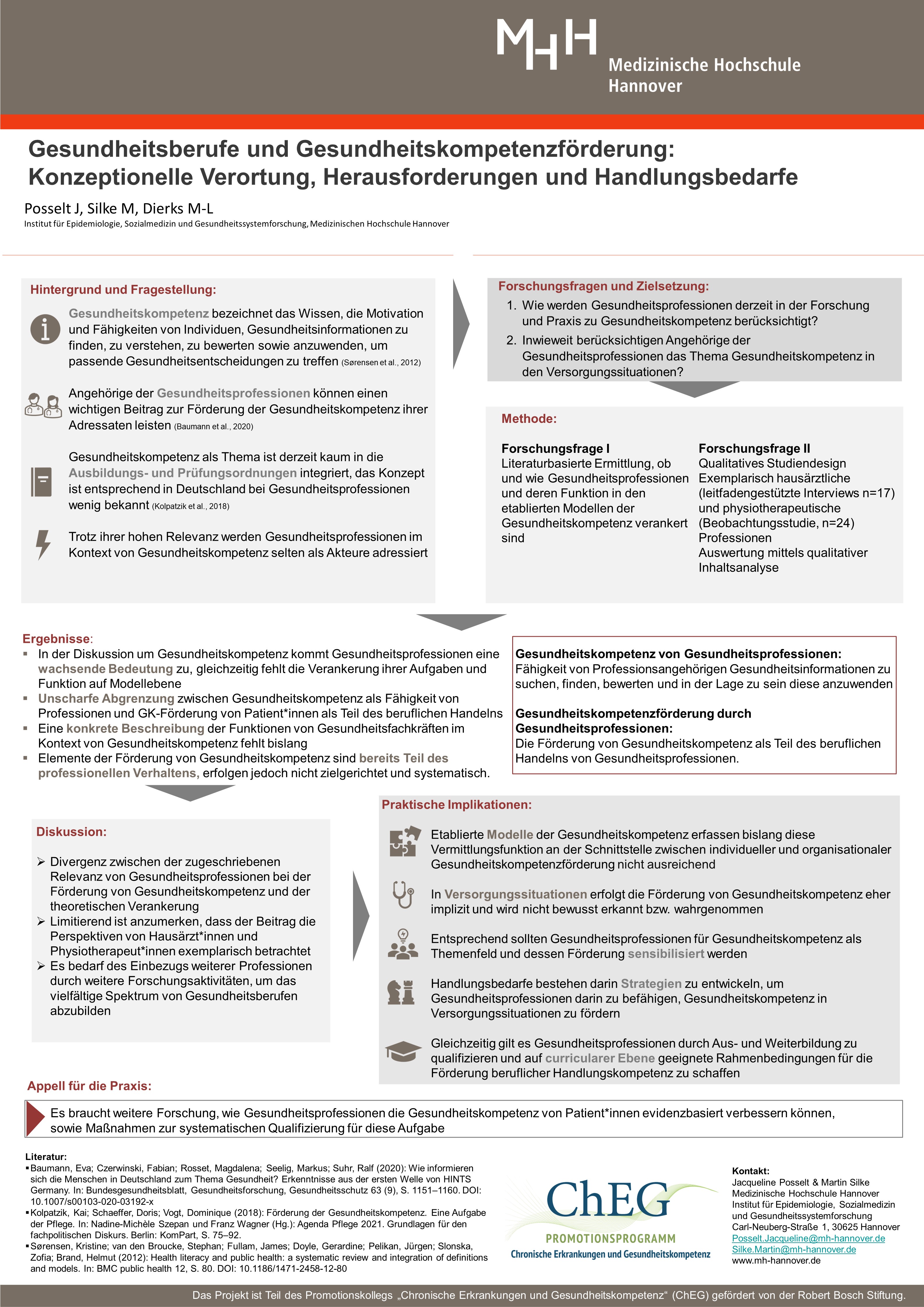
To what extent are health professions currently considered in health literacy research and practice? The ChEG program was represented with a poster at the German Congress for Health Services Research in Potsdam at the beginning of October and presented how the topic is conceptually positioned and what challenges result from this. For further needs for action, it is worth taking a look at the associated article from the cross-college research project.
- Posselt J, Silke M, Dierks M-L: Health literacy as part of the professional competence of healthcare professionals: conceptual positioning, challenges and need for action. Pädagogik der Gesundheitsberufe 2022 (8), 3. page(s) 171 to 175. hpsmedia GmbH. ISSN: 2199-9562.
Prizes for poster presentations at the symposium "Health literacy - between science and practice" on 15/16.09.2022
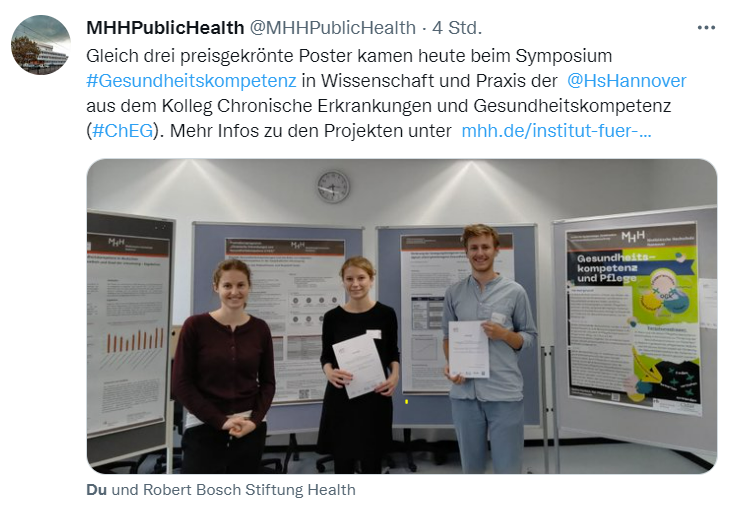
On September 15 and 16, 2022, Faculty V of Hanover University of Applied Sciences and Arts held a symposium entitled "Health literacy - between science and practice". The symposium focused on four main topics: health literacy in the student and university context, health literacy in the workplace context, health literacy in society and politics and digital health literacy. Projects from the ChEG Kolleg were also included, which were presented as part of a poster presentation. Three posters from the college were awarded prizes in the categories of design, scientific quality and practical transfer.
Self-management and health literacy - Prof. Dr. Dr. Kate Lorig (Stanford University) discusses with doctoral students of the ChEG program on 24.06.2022
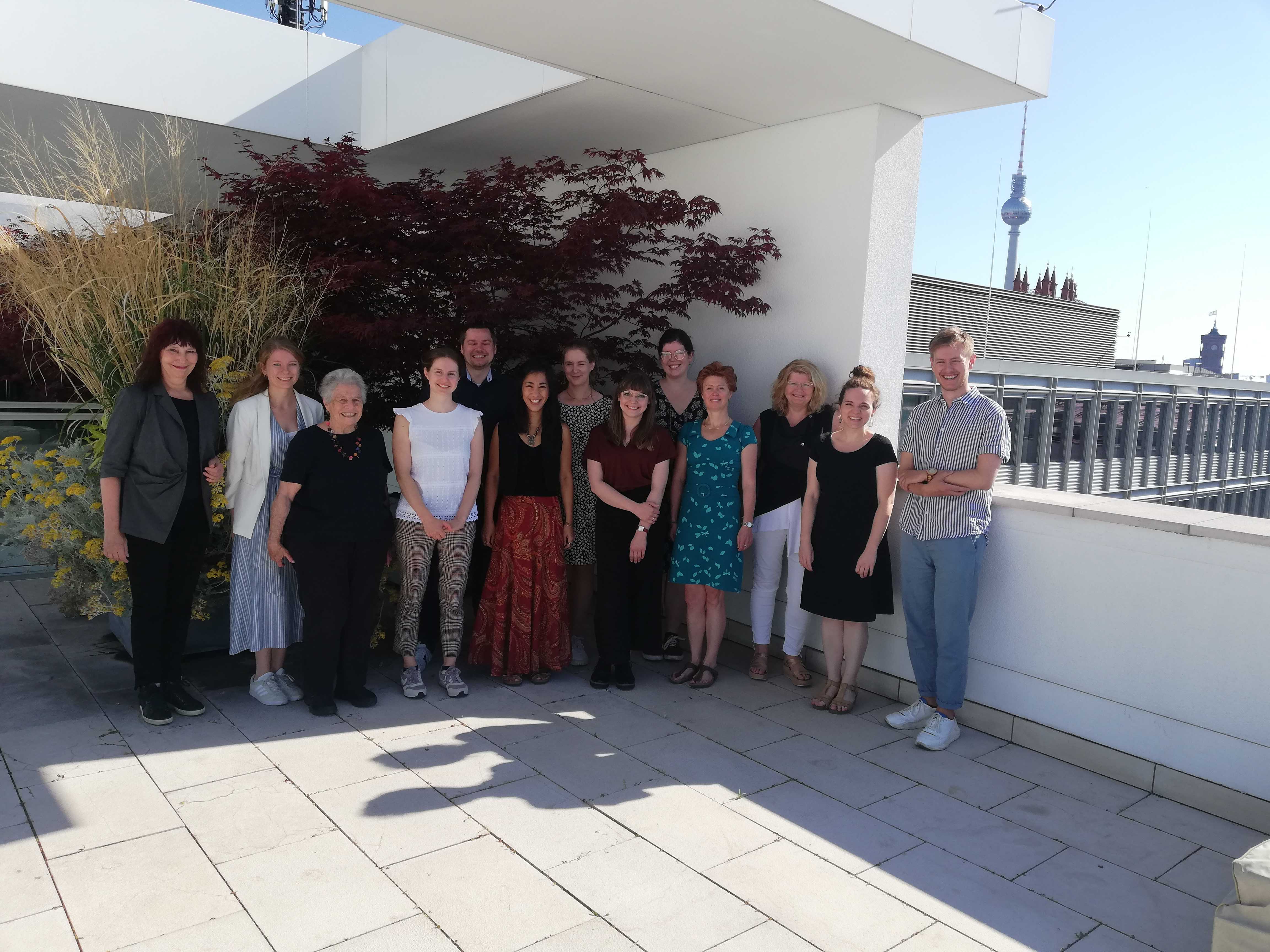
The links that can be established between the theoretical concept of self-management and the intended self-efficacy and the concept of (digital) health literacy were the subject of a training course as part of the doctoral program "Health Literacy and Chronic Diseases (ChEG)", which is being carried out at Hannover Medical School with funding from the Robert Bosch Stiftung. A preliminary conclusion is that there are numerous overlaps, although with regard to self-efficacy the focus is on motivational aspects, while health literacy is primarily concerned with the ability to deal with information. Prof. Dr. Dr. Kate Lorig, who has been active in this field of research for years, was present as an expert and also addressed the topic of "health literacy", which has historically been based on literacy. She was also able to provide valuable background information on self-management programs, their implementation in the USA and many other countries around the world and, in particular, on evidence, evaluation methods and evaluation strategies. Finally, the numerous impulses for our research projects and the clear statement that everyone is involved in a very relevant and current field of research were particularly valuable for us ChEG participants.
Target group-oriented health literacy promotion for vulnerable groups on poverty and health 2022
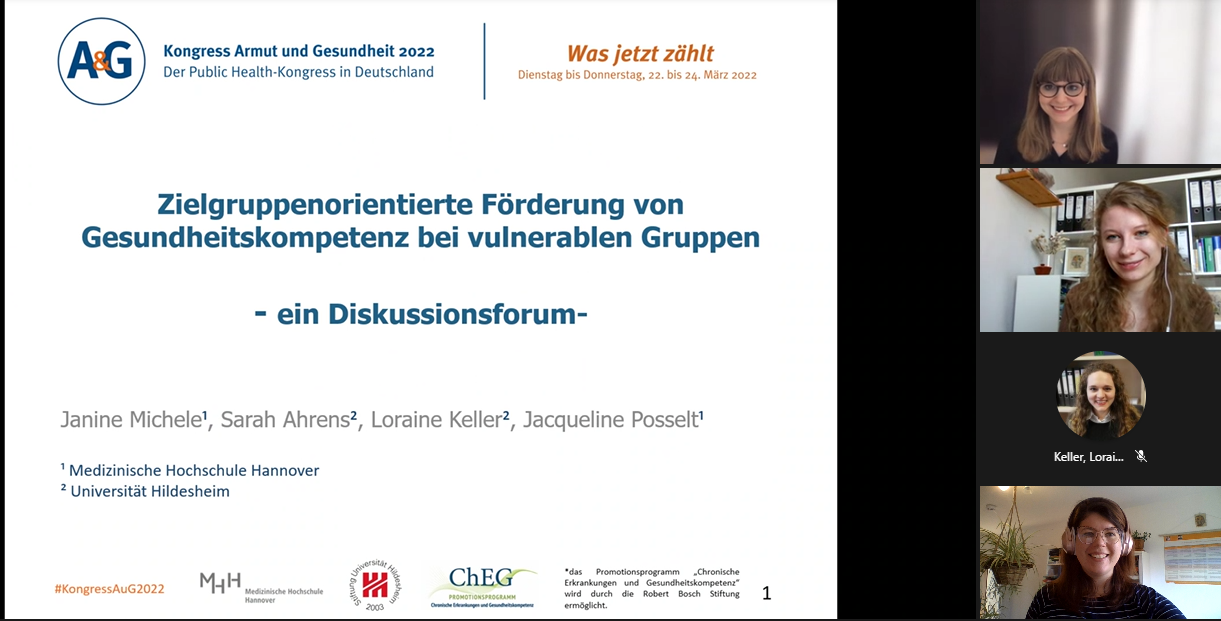
Low health literacy interacts with socially determined health inequality, which particularly affects vulnerable groups such as migrant women, young people with chronic illnesses and people of advanced age. Three discussion forums were held at Poverty and Health 2022 based on the congress motto "What counts now" to promote health literacy among these target groups.
Topic booklet on health literacy from the Lower Saxony Health Association
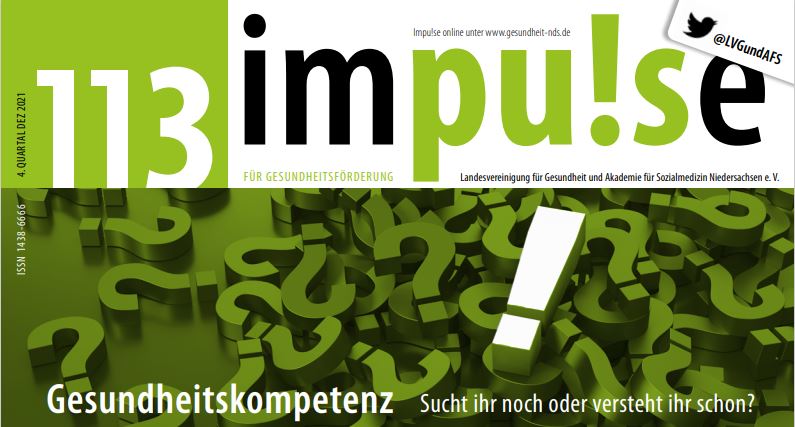
Health literacy among people with chronic diseases is particularly relevant and at the same time difficult to promote. Various approaches from the ChEG program are presented in the current issue of Impu!se of the Landesvereinigung für Gesundheit und Akademie für Sozialmedizin Niedersachen e.V. (Lower Saxony State Association for Health and Academy for Social Medicine). Click here for the full article and the issue on health literacy: Impu!se für Gesundheitsförderung - Landesvereinigung für Gesundheit und Akademie für Sozialmedizin Niedersachsen e. V. (gesundheit-nds.de)
Poster presentation at the 6th conference of the Austrian Platform for Health Literacy 2021 (ÖPGK)
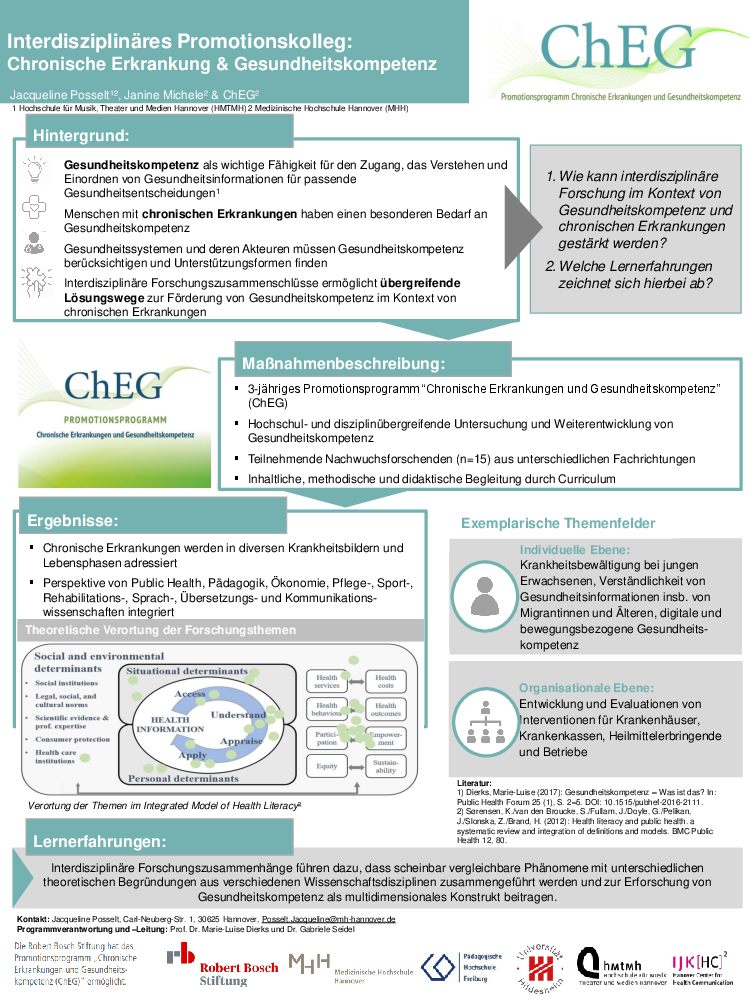
"Why is interdisciplinary research particularly relevant in the context of health literacy and how can it be promoted among people with chronic diseases? Answers to these questions based on learning experiences from the college were presented virtually at the 6th conference of the Austrian Platform for Health Literacy (ÖPGK). The conference proceedings can be found here: Review of the 6th ÖPGK Conference - ÖPGK (oepgk.at)"
One year ChEG: A doctoral program under corona conditions
A year ago, the ChEG scholarship holders and associated participants started the program at Hannover Medical School, funded by the Robert Bosch Stiftung. In this article, the participants report on the program, the background and their experiences and successes from the first year.
1:0 for the pandemic - no start from pole position
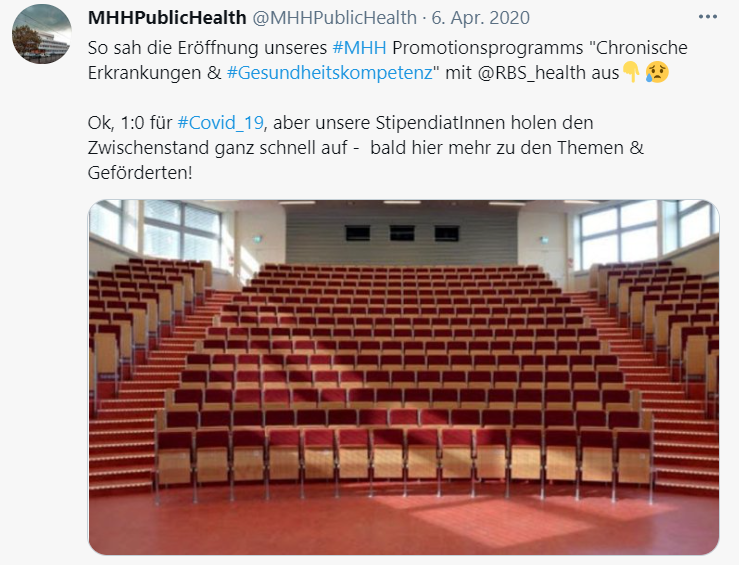
At the start of the doctoral program on 6 April 2020, the lecture hall at Hannover Medical School unfortunately remained empty. At the time, none of those involved could have imagined that a year later we would still have to swap the UniMax for a video conference or the campus for the kitchen table at home.
Although the start of the program took place under unfavorable conditions between the onset of the pandemic and lockdown: The corona pandemic shows us more than ever how relevant health literacy is and at the same time illustrates how significant, diverse and challenging health literacy-related issues can be.
Background: The National Action Plan and the ChEG program
The need for further research into the topic of health literacy in Germany has been the subject of political and scientific debate at least since the recommendations of the National Action Plan on Health Literacy. In order to gain further valuable insights into various topics related to health literacy and to qualify young scientists with a focus on health literacy in connection with chronic diseases, the doctoral program "ChEG - Chronic Diseases and Health Literacy" was successfully applied for at the Robert Bosch Stiftung on the initiative of Prof. Dr. Marie-Luise Dierks and Dr. Gabriele Seidel.
ChEG is an interdisciplinary doctoral program under the direction of Hannover Medical School in cooperation with Bielefeld University, Freiburg University of Education, the University of Hildesheim and Hannover University of Music, Drama and Media. The aim of the program is the scientific development of theoretical concepts and empirical foundations in the field of health literacy in relation to individuals, healthcare facilities and the healthcare system.
The qualification projects of the scholarship holders and associated members are accompanied by a framework program with interdisciplinary and transdisciplinary discussion forums as well as methodological and content-related seminars. The first year's offerings included seminars on health literacy, patient orientation, in-depth qualitative methodology, numerous offerings in the field of public health, a regular journal club and a research workshop.
The projects
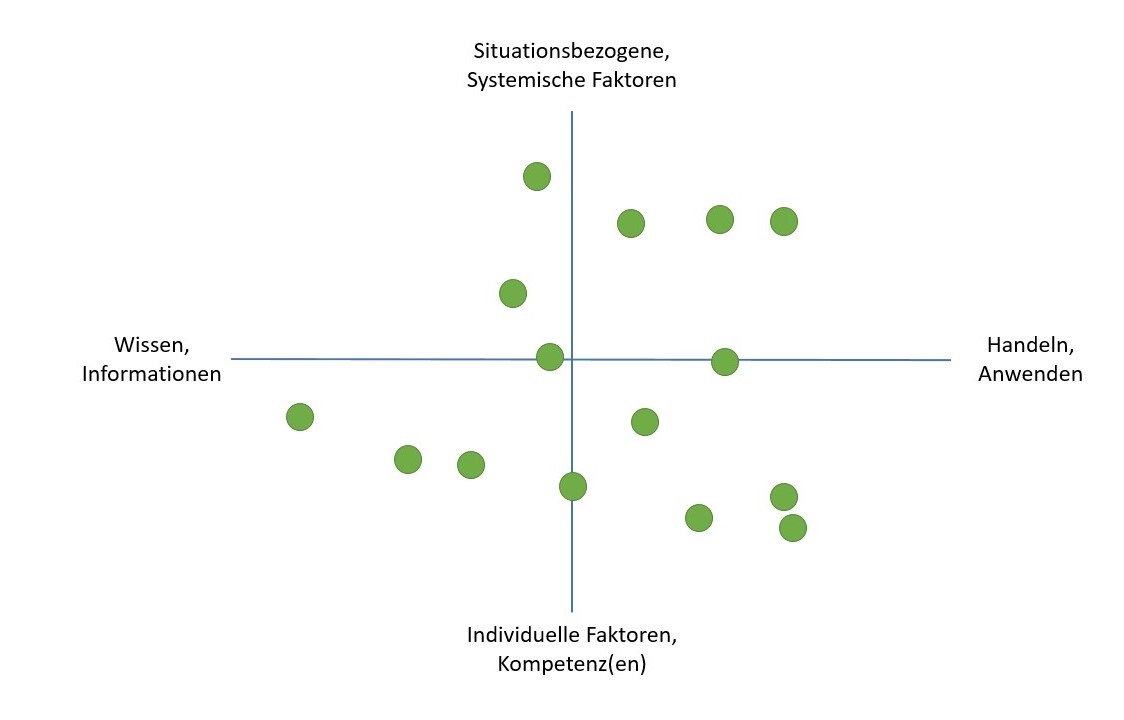
The doctoral program enters its second year with two new dissertation projects and scholarship holders. 15 ChEG participants are working on a variety of research questions in the context of the overarching research program. The various disciplines and, not least, cross-faculty research projects, which enable an interdisciplinary approach to the issues, should be emphasized.
A look at the classification of the research topics illustrates the diversity of the program and the balance between knowledge and action-oriented topics as well as individual and systemic perspectives.
Further activities of the program
Parallel to the curriculum's framework programme, many programme participants are actively involved in the DNGK's junior researcher group for exchange with other young researchers and in the organization of events by and for young researchers.
Conclusion after one year of ChEG
The pandemic may have slowed down the start of the program and changed the framework conditions. However, the research group has not allowed itself to be affected by this and has made efficient use of the first year of the doctorate between the coffee machine at home, its own desk and the online framework program to develop the theoretical and methodological foundations in the context of health literacy and lay the foundation for the field phase. During this time, we received a lot of support from our supervisors and coordinators, and we would like to take this opportunity to thank them warmly. Finally, last year we succeeded in creating new (virtual) formats for exchange and collaboration and thus growing together as a program. The participants are looking forward to further work, new challenges, overarching discussion platforms and shared learning experiences.
This article also appeared in the May 2021 newsletter of the German Network for Health Literacy.