Prostate artery embolization
For the treatment of urinary tract obstruction caused by benign prostatic hyperplasia
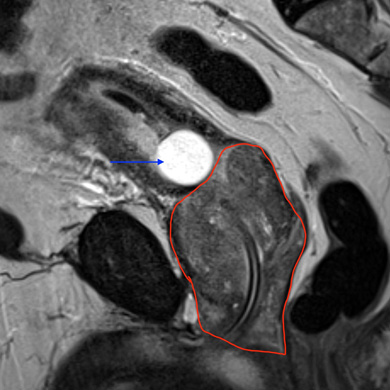
For the treatment of urinary tract obstruction caused by benign prostatic hyperplasia.
The probability of developing a benign enlargement of the prostate increases with age. In more than half of all 60-year-old men and in up to 90% of all men between 70-89, symptoms are caused by this enlargement.
When the prostate enlarges, it can narrow or partially block the urethra, causing problems with urination. These include, for example, a frequent urge to urinate, delays in emptying the bladder, dribbling after urinating, inability to urinate or empty the bladder completely, unwanted urination (incontinence), straining to urinate or a weak urine stream.
These symptoms interfere with daily life. If medication therapy does not lead to the desired result, there are other treatment options.
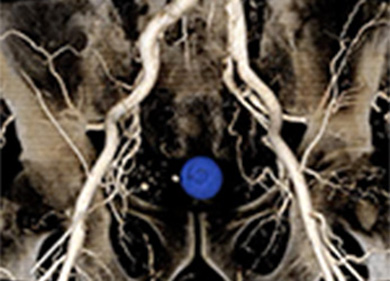
In addition to surgical scraping of the prostate through the urethra or tissue cauterization using laser light, the prostate can also be reduced in size by vascular sclerotherapy alone (known as embolization).
During prostate embolization, a catheter (= a tube approx. 1 mm in diameter) is inserted into the prostate artery via an artery in the forearm or groin. By slowly and carefully injecting very small particles (balls with a size of approx. 300-500µm), the smallest vessels of the prostate and then also the prostate's supplying artery are blocked. Due to the resulting lack of nutrient and oxygen supply, departments of the prostate die off in the following days and a reduction in size is achieved. At the same time, the pressure on the urethra running through the prostate is reduced and the above-mentioned symptoms disappear.
In order to achieve the best possible result, it is necessary to embolize both the right and left arteries of the prostate. This is usually done in one session and via the same access, so that only one puncture in the forearm or groin is sufficient. The vascular access is performed under local anesthesia so that general anesthesia is not necessary. During the entire microtherapeutic procedure, our patients are fully conscious, so there is no risk of anesthesia. There is generally little or no pain during and after the procedure, so our patients only receive painkillers if necessary.
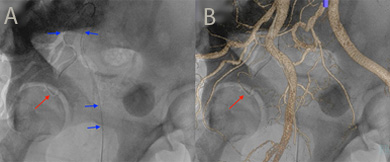
The challenge of this procedure is the extremely small dimensions of the prostate arteries, which must be reached as precisely as possible with the catheter in order to avoid damaging neighboring organs. At Hannover Medical School, this procedure is therefore supported by the latest generation of angiography devices. These offer the possibility of creating a very high-resolution three-dimensional data set of the pelvic organs and vessels at the start of the examination. The physicians can then use this data set to create an individual navigation plan for the subsequent procedure. On the one hand, this increases accuracy, but on the other hand it also leads to shorter intervention times and thus a further reduction in the stress for our patients.
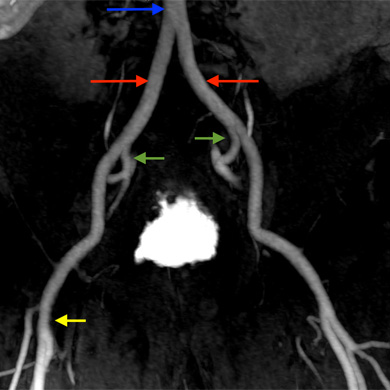
In addition, an MRI examination of the prostate takes place before every procedure. On the one hand, prostate cancer can be ruled out here, and on the other hand, the pelvic vessels are also visualized in this examination. This allows potential difficulties on the way to the prostate artery to be identified before the actual procedure and the examination to be planned accordingly.
The procedure usually only requires hospitalization for a maximum of 2 nights.
The decision as to whether embolization is an option for the patient is always made at the Medical School together with colleagues from the Department of Urology. This ensures that the most suitable procedure can always be offered to our patients and that other causes that could lead to urinary problems are ruled out in advance.
If you are interested in this procedure, you can make an appointment in our consultation hours via the interventional radiology office. Please bring all your previous examination results and any MRI examinations of the prostate (on CD/DVD) with you to this appointment.