Vascular treatment for pulmonary hypertension
Interventional therapy of inoperable CTEPH using pulmonary artery balloon angioplasty (BPA)
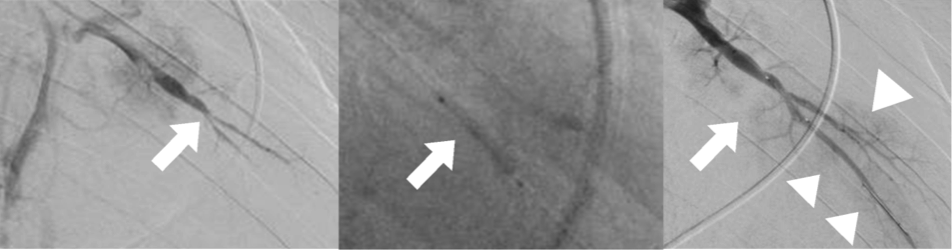
For over 15 years, patients with non-operable CTEPH have been treated in a small number of experienced centers worldwide with catheter-assisted pulmonary artery balloon angioplasty (BPA). Centers in Japan and Europe are world leaders in the treatment of CTEPH using balloon catheters. In spring 2012, we were the first center in Germany to perform pulmonary vessel dilatation using balloon catheters at the MHH's Interventional Radiology Department in close cooperation with the Pneumology Department. With the help of BPA, changes in the pulmonary arteries, which are localized in the smallest pulmonary arteries, can be passed through using a guide wire and then expanded with a balloon (Figure 1). Due to possible complications, treatment is limited to individual pulmonary arteries in circumscribed parts of the lungs. Therefore, several therapy sessions are required to treat the entire pulmonary arterial pathway. The procedure usually only requires a hospital stay of a few days. On the first day, the patient is admitted to hospital and informed about the procedure, and blood values are checked. The procedure takes place on the second day. This is followed by monitoring on the ward and, as a rule, discharge in the following days.
The decision as to whether balloon angioplasty is suitable for the patient is always made at the Medical School together with colleagues from the Department of Pulmonology and the Department of Cardiac, Thoracic, Transplantation and Vascular Surgery. This ensures that the most suitable procedure is always offered to our patients.
Procedure
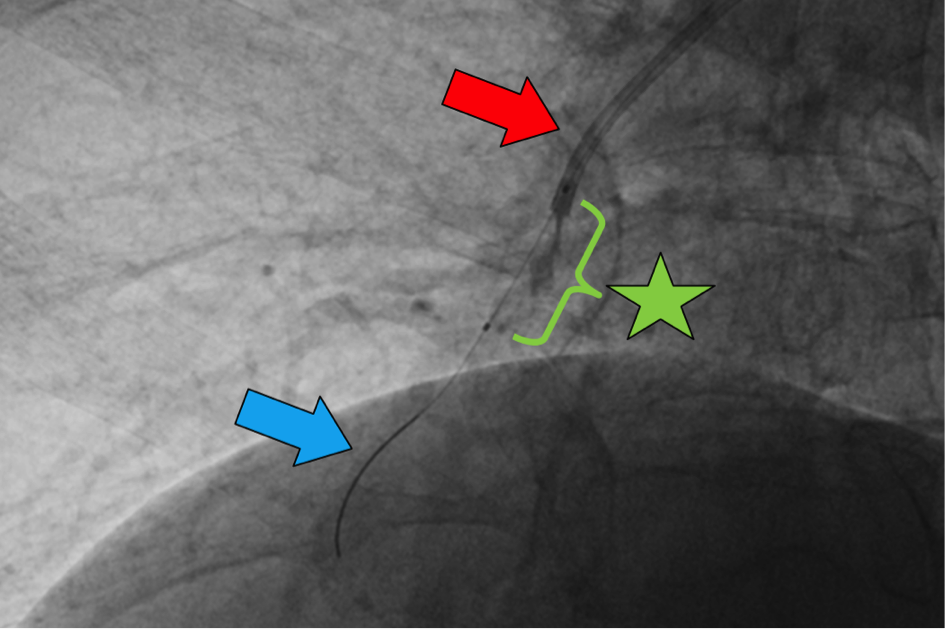
BPA is carried out on an awake patient, partly because the patient has to follow certain breathing commands. A temporary access to the venous vascular system is created by means of sonography-guided puncture of a groin vein. A guiding catheter is then inserted into the pulmonary artery and the balloon catheter and the associated guide wire are inserted via this guiding catheter (Fig. 2).
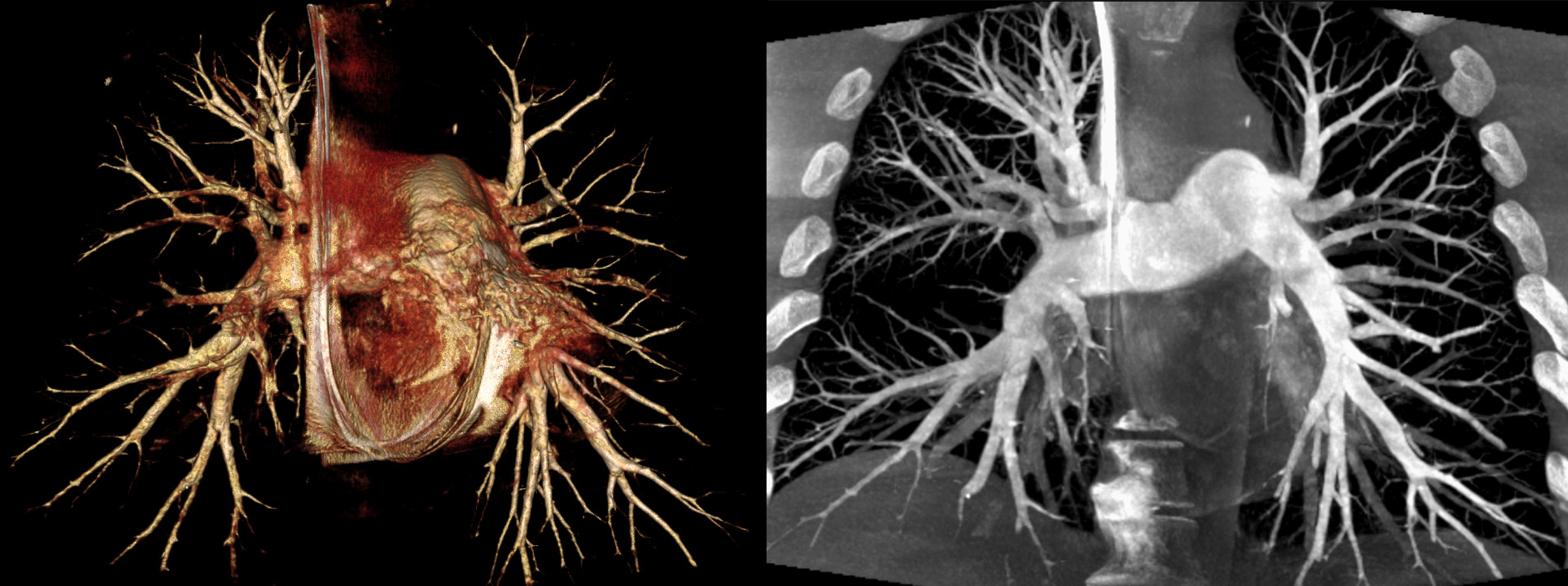
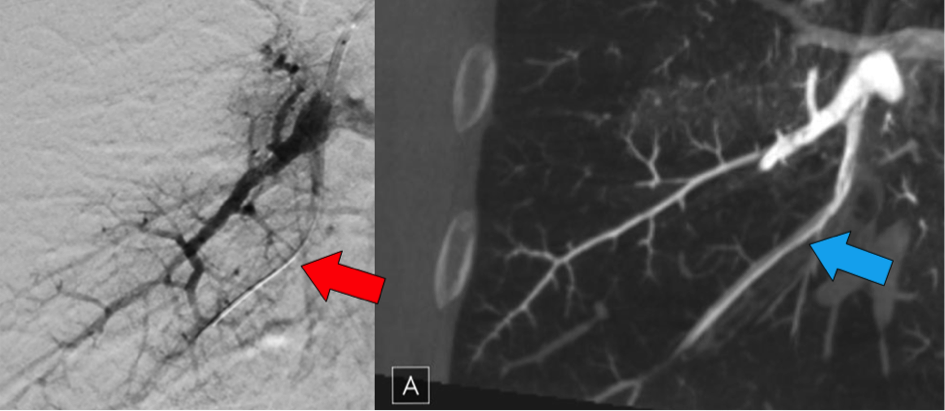
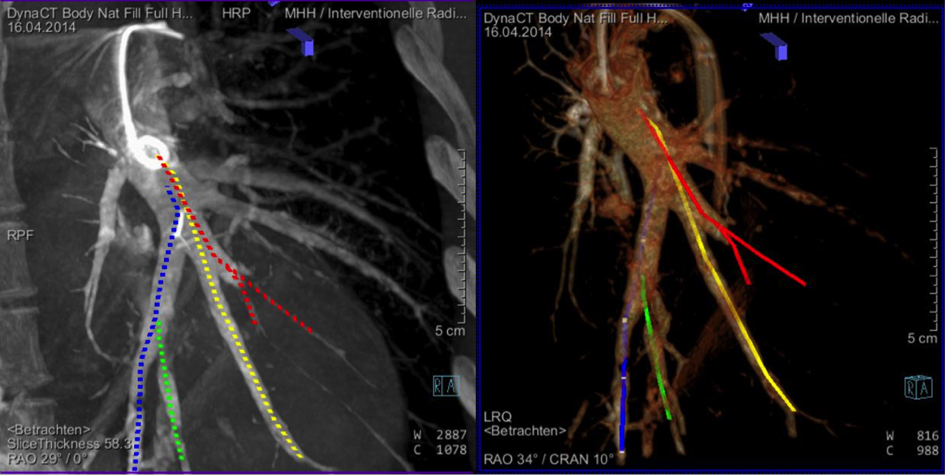
According to the target areas selected in advance for therapy in the high-resolution 3D planning of the pulmonary artery flow path, the planned segmental arteries are specifically probed with a wire and the findings are then treated with special balloons (Fig. 5).
The aim is to eliminate the CTEPH findings and improve the pulmonary circulation behind the findings with the consequences of improved oxygen uptake into the blood, a reduction in the load on the right heart and an increase in exercise tolerance. In the meantime, BPA has become a standardized therapeutic procedure at the MHH with a high level of expertise, low complication rates and pleasing results.