Neurodegeneration: Endogenous and exogenous drivers of synaptic pathology
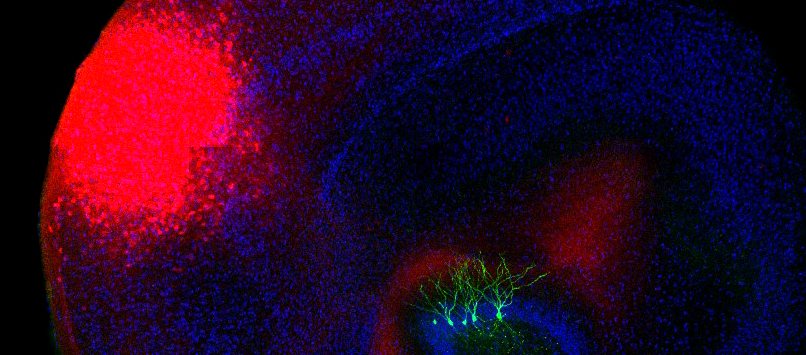
Neurodegenerative diseases pose a major challenge to healthcare systems worldwide. They are characterized by an irreversible loss of nerve cells, which predominantly occurs in older age and is caused by various brain disorders such as Alzheimer’s disease, Parkinson’s disease, or frontotemporal dementia. Synaptic dysfunction and microglial activation can already be observed in the early stages of the disease. However, the exact causes of neurodegenerative diseases remain largely unclear to this day. In this research focus, we investigate neuronal (neurocentric) and external factors that could contribute to synaptic and membrane-related dysfunction in the context of neurodegeneration. Together with our collaborators, our goal is to decipher pathophysiological mechanisms and develop new therapeutic strategies aimed at restoring synaptic function in neurodegeneration.
Our experiments investigate both tau- and Aβ-mediated synaptic degeneration at multiple levels—from tissue culture models to human neocortical resection specimens. In addition to analyzing age-related changes in synapses and their underlying mechanisms, we focus on metabolic and microbiome-associated influences on synaptic plasticity, neuronal excitability, and glial cell functions in the context of neurodegeneration.
Experimental methods:
- Organotypic brain tissue cultures
- Whole-cell patch-clamp recordings on individual cells
- High-resolution confocal microscopy, analysis of synaptic microarchitecture
- Electron Microscopy
- Cytokine profile analyses
- Single-nucleus sequencing
- CRISPR/Cas-based gene editing
Collaborators:
- Dr. Marijana Basic (Gnotobiology Facility, Institute for Laboratory Animal Science, MHH)
- Prof. Dr. Evgeni Ponimaskin (Institute of Neurophysiology, MHH)
- Prof. Dr. Axel Schambach (Institute of Experimental Haematology and Oncology, MHH)
- Prof. Dr. Kerstin Schwabe (Clinical Department of Neurosurgery, MHH)
- Prof. Dr. Meike Stiesch (Clinical Department of Dental Prosthetics and Biomedical Materials, MHH)
For collaboration inquiries, please contact
Dr. Pia Kruse (Group Leader, Kruse.Pia@mh-hannover.de) and Prof. Dr. Maximilian Lenz (neuroanatomie@mh-hannover.de).
Key publications:
All-trans retinoic acid induces synaptic plasticity in human cortical neurons. Lenz M, Kruse P, Eichler A, Straehle J, Beck J, Deller T, Vlachos A. eLife. 2021 Mar 30;10:e63026. doi: 10.7554/eLife.63026.
All-trans retinoic acid induces synaptopodin-dependent metaplasticity in mouse dentate granule cells. Lenz M, Eichler A, Kruse P, Muellerleile J, Deller T, Jedlicka P, Vlachos A. eLife. 2021 Nov 1;10:e71983. doi: 10.7554/eLife.71983.
Denervated mouse CA1 pyramidal neurons exhibit homeostatic synaptic plasticity following entorhinal cortex lesion. Lenz M, Eichler A, Kruse P, Stöhr P, Kleidonas D, Galanis C, Lu H, Vlachos A. Front Mol Neurosci. 2023 Apr 12;16:1148219. doi: 10.3389/fnmol.2023.1148219. eCollection 2023.