Neuroinfection and Immunity: The Interaction of Infection and the Immune System in the Regulation of Neuronal Function
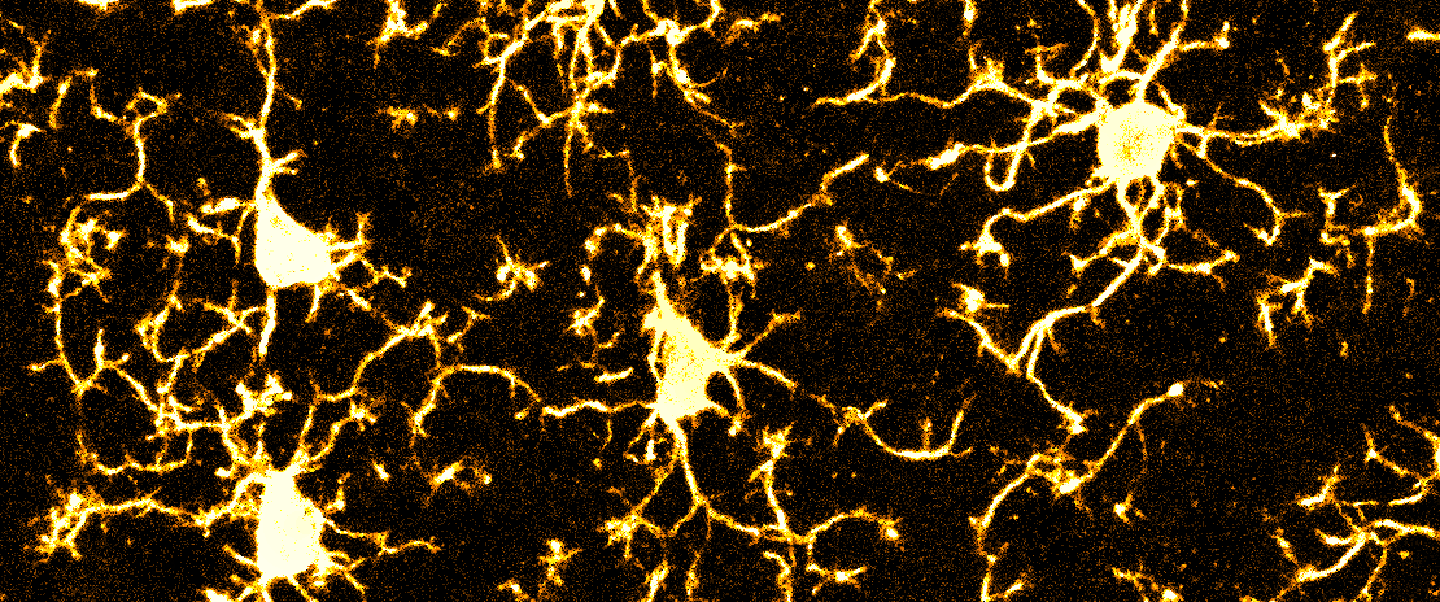
Neurotropic viral infections represent a strong inflammatory stimulus that can significantly affect neural networks. The clinical presentation of viral infections ranges from nearly asymptomatic courses to severe, sometimes fatal diseases that can be accompanied by permanent impairments. In this research focus, we investigate mechanisms of neurovirulence, viral spread, and synaptic dysfunction following viral infections of the brain. Together with our collaboration partners, our goal is to develop new therapeutic strategies for acute and chronic neurotropic viral infections.
Various viruses, including the Venezuelan Equine Encephalitis Virus (VEEV), Herpes simplex virus (HSV), Cytomegalovirus (CMV), and SARS-CoV-2, infect different cell types in the central nervous system (CNS). Our experimental approaches investigate infection-induced changes in synaptic plasticity, which are thought to lead to maladaptive reorganization in neural networks. Tissue cultures serve as suitable in vitro models for this purpose, allowing us to track processes over extended periods of time. In addition, we analyze external and cellular factors that promote viral reactivation, particularly in the context of cellular interactions within the tissue of the central nervous system.
Experimental methods:
- Organotypic brain tissue cultures
- Whole-cell patch-clamp recordings on individual cells
- High-resolution confocal microscopy, analysis of synaptic microarchitecture
- Electron Microscopy
- Cytokine profile analyses
- Single-nucleus sequencing
- CRISPR/Cas-based gene editing
Collaborators:
- Prof. Dr. Gisa Gerold (Institute of Virology, University of Innsbruck)
- Prof. Dr. Aiden Haghikia (Clinical Department of Neurology, MHH)
- Prof. Dr. Florian Heidel (Clinical Department of Oncology, Hematology, and Hemostasiology, MHH)
- Prof. Dr. Ulrich Kalinke (Twincore)
For collaboration inquiries, please contact
Dr. Amelie Eichler (Group Leader, Eichler.Amelie@mh-hannover.de) and Prof. Dr. Maximilian Lenz (neuroanatomie@mh-hannover.de).
Key publications:
Microglial Cytokines Mediate Plasticity Induced by 10 Hz Repetitive Magnetic Stimulation. Eichler A, Kleidonas D, Turi Z, Fliegauf M, Kirsch M, Pfeifer D, Masuda T, Prinz M, Lenz M, Vlachos A. J Neurosci. 2023 Apr 26;43(17):3042-3060. doi: 10.1523/JNEUROSCI.2226-22.2023. Epub 2023 Mar 28.
Interleukin 10 Restores Lipopolysaccharide-Induced Alterations in Synaptic Plasticity Probed by Repetitive Magnetic Stimulation. Lenz M, Eichler A, Kruse P, Strehl A, Rodriguez-Rozada S, Goren I, Yogev N, Frank S, Waisman A, Deller T, Jung S, Maggio N, Vlachos A. Front Immunol. Dec 16, 2020;11:614509. doi: 10.3389/fimmu.2020.614509. eCollection 2020.
Denervated mouse dentate granule cells adjust their excitatory but not inhibitory synapses following in vitro entorhinal cortex lesion. Lenz M, Galanis C, Kleidonas D, Fellenz M, Deller T, Vlachos A. Exp Neurol. 2019 Feb;312:1-9. doi: 10.1016/j.expneurol.2018.10.013. Epub 2018 Oct 25.
Monitoring and Modulating Inflammation-Associated Alterations in Synaptic Plasticity: Role of Brain Stimulation and the Blood-Brain Interface. Lenz M, Eichler A, Vlachos A. Biomolecules. 2021 Feb 26;11(3):359. doi: 10.3390/biom11030359.