December 8, 2021
Neurooncology Update 2021
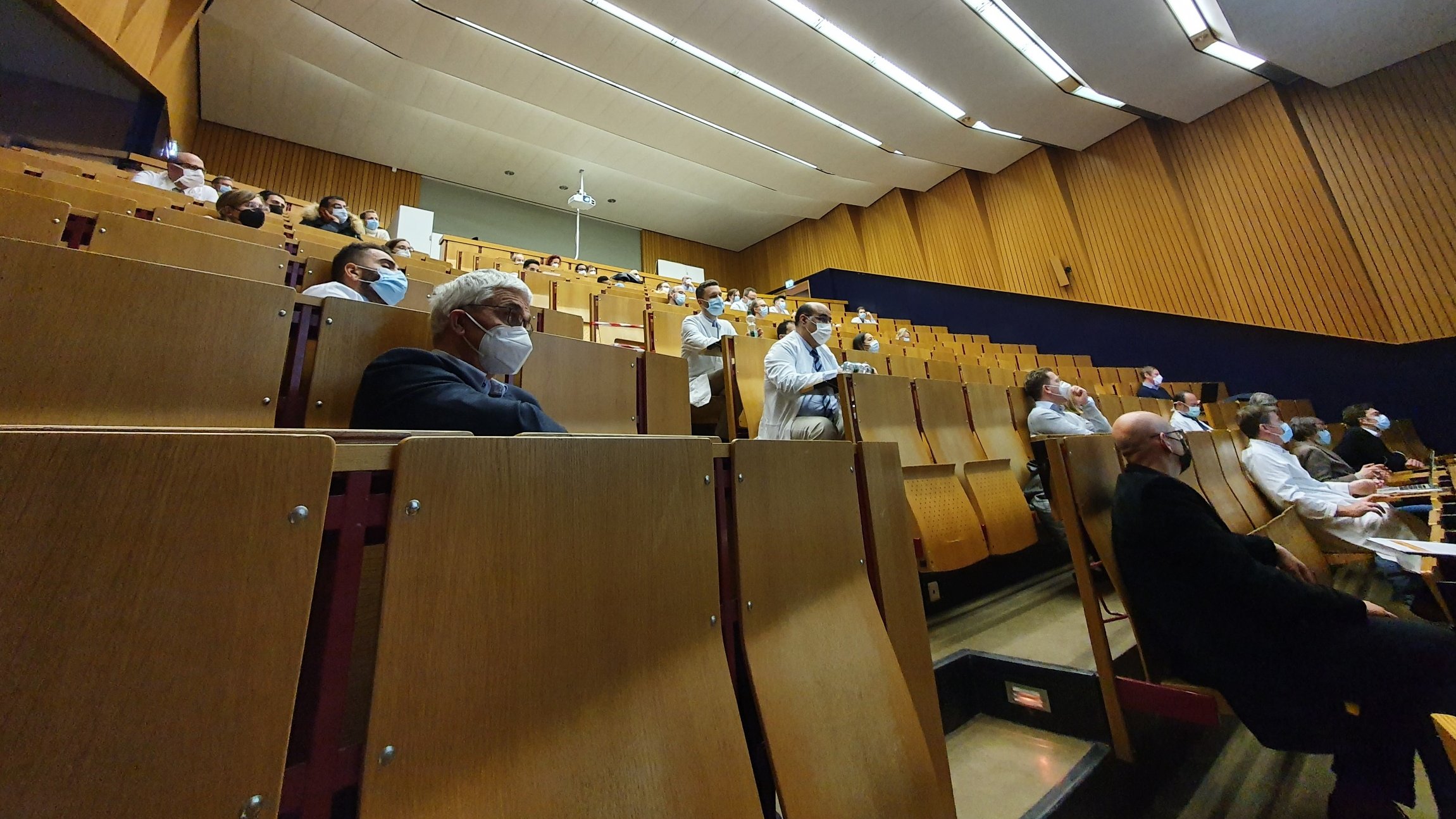
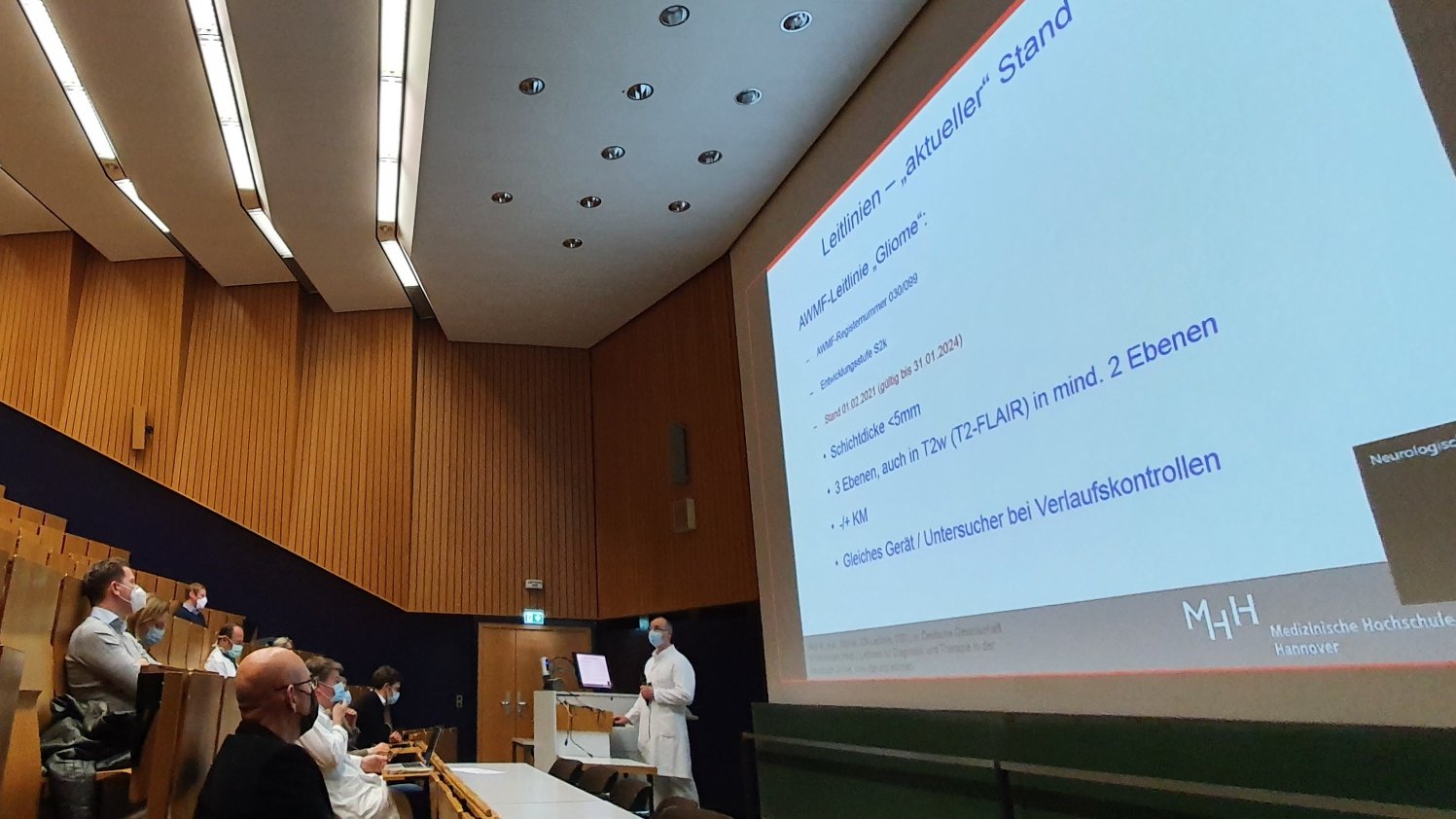
Last year, the Neurooncology Update had to be canceled due to the coronavirus. This year it took place as a hybrid event. Around 50 people were present in lecture hall R plus 106 participants in the livestream. This event also took place under 2G+ conditions. This means that external/non-MHH employees had to present an up-to-date test in addition to their proof of vaccination or recovery. After some initial difficulties with the technology, the event was a complete success. The event was financially supported by Novocure, which also had a stand at the event and presented TTF therapy.
Enclosed you will find the exciting program:
- MRI for cranial tumors - a program for all entities? Dr. med. Peter Raab, Institute of Diagnostic and Interventional Neuroradiology, MHH
- Paraneoplastic neurological syndromes, Dr. med. Philipp Schwenkenbecher, Clinical Department of Neurology, MHH
- The WHO 2021 Classification of Brain Tumors and the Heidelberg Brain Tumor Classifier, Prof. Dr. med. Christian Hartmann, Chair of Neuropathology, Institute of Pathology, MHH
- Brain tumor families and their genetic changes, Prof. Dr. med. Ruthild Weber, Institute of Human Genetics
- The CATNON study - Do we need to rethink the therapy of WHO III gliomas? Dr. med. Bettina Wiese, Clinical Department of Neurosurgery, MHH & Clinic for Neurology, DIAKOVERE Henriettenstift
- Sinus cavernosus meningiomas: long-term results after microsurgery and adjuvant fractionated stereotactic radiotherapy, Mr. Manolis Polemikos, Clinical Department of Neurosurgery, MHH
- Glioblastoma recurrences after radiotherapy - chances of re-radiation, Dr. med. Roland Merten, Clinical Department of Radiotherapy and Special Oncology, MHH
December 1, 2021
2nd Neurological-Neurosurgical Wednesday Colloquium
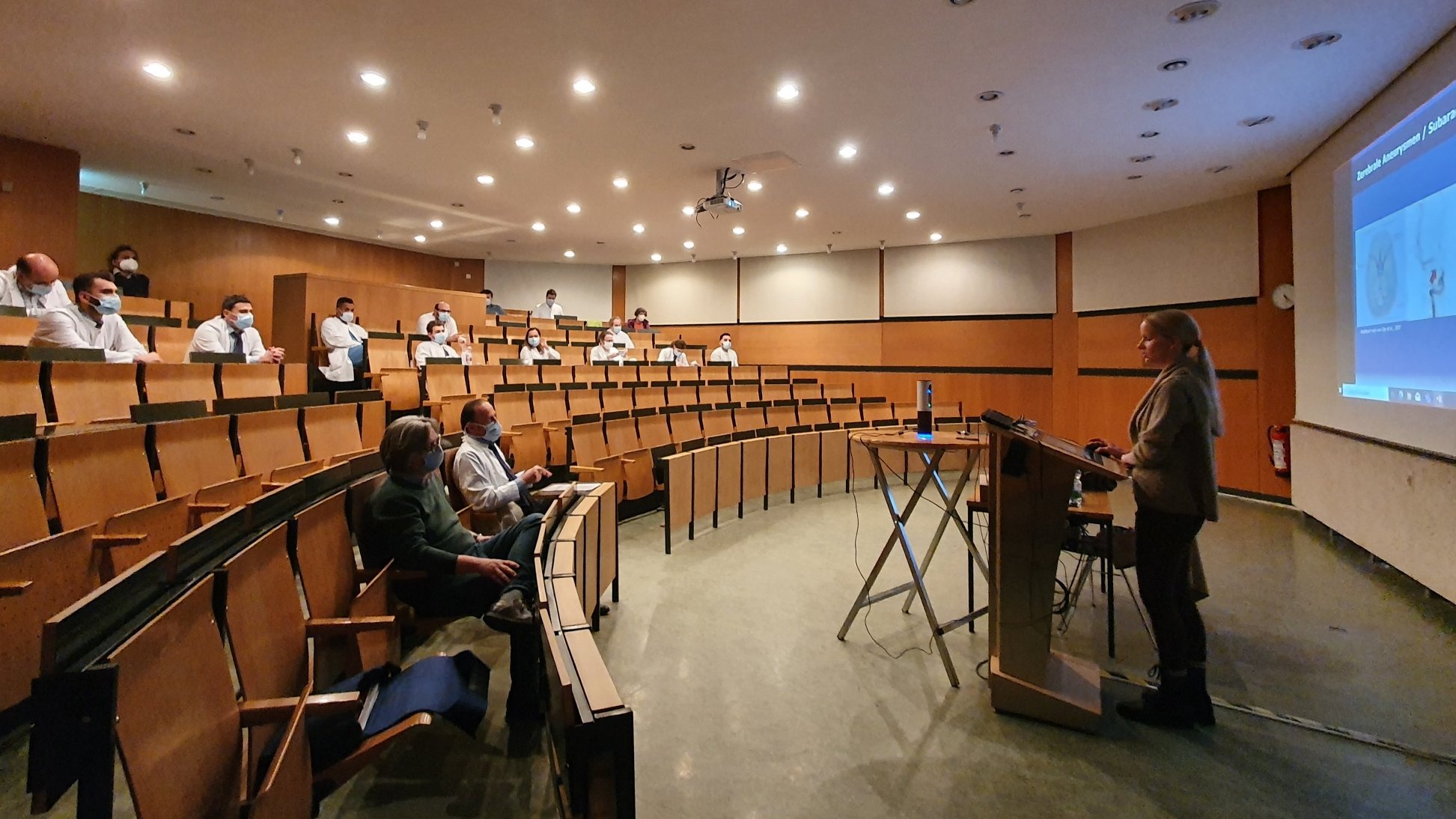
Prof. Dr. med. Dorothee Mielke, Ltd. Senior Physician, Clinical Department of Neurosurgery, University Medical Center Göttingen spoke on the topic "Vasospasm after subarachnoid hemorrhage: New findings and current studies".
This was the first event held under 2G+ conditions. The lecture was also streamed online.
All participants had the opportunity to ask questions.
November 10, 2021
Neurological-Neurosurgical Wednesday Colloquium
After a long corona break, an on-site event took place again on 10.11.2021. Prof. Dr. Volker Seifert (Professor (emer.)), former Director of the Clinical Department of Neurosurgery at Goethe University Frankfurt a. Main, gave a lecture on "Surgical treatment of cerebral aneurysms - state of the art." This event was offered not only as a pure face-to-face event but also as a "webinar" event. The Wednesday colloquium also took place during the coronavirus restrictions - but only online as a web conference. Prof. Seifert's lecture was also broadcast online for listeners who had dialed in using the webinar link.
October 12, 2021
Re-certification Neurooncology Center
The Clinical Department of Neurosurgery was recertified by the German Cancer Society on October 12, 2021. The auditor had no complaints and was unable to identify any deviations. She also praised the cooperation with Nursing in this area.
June 25, 2021
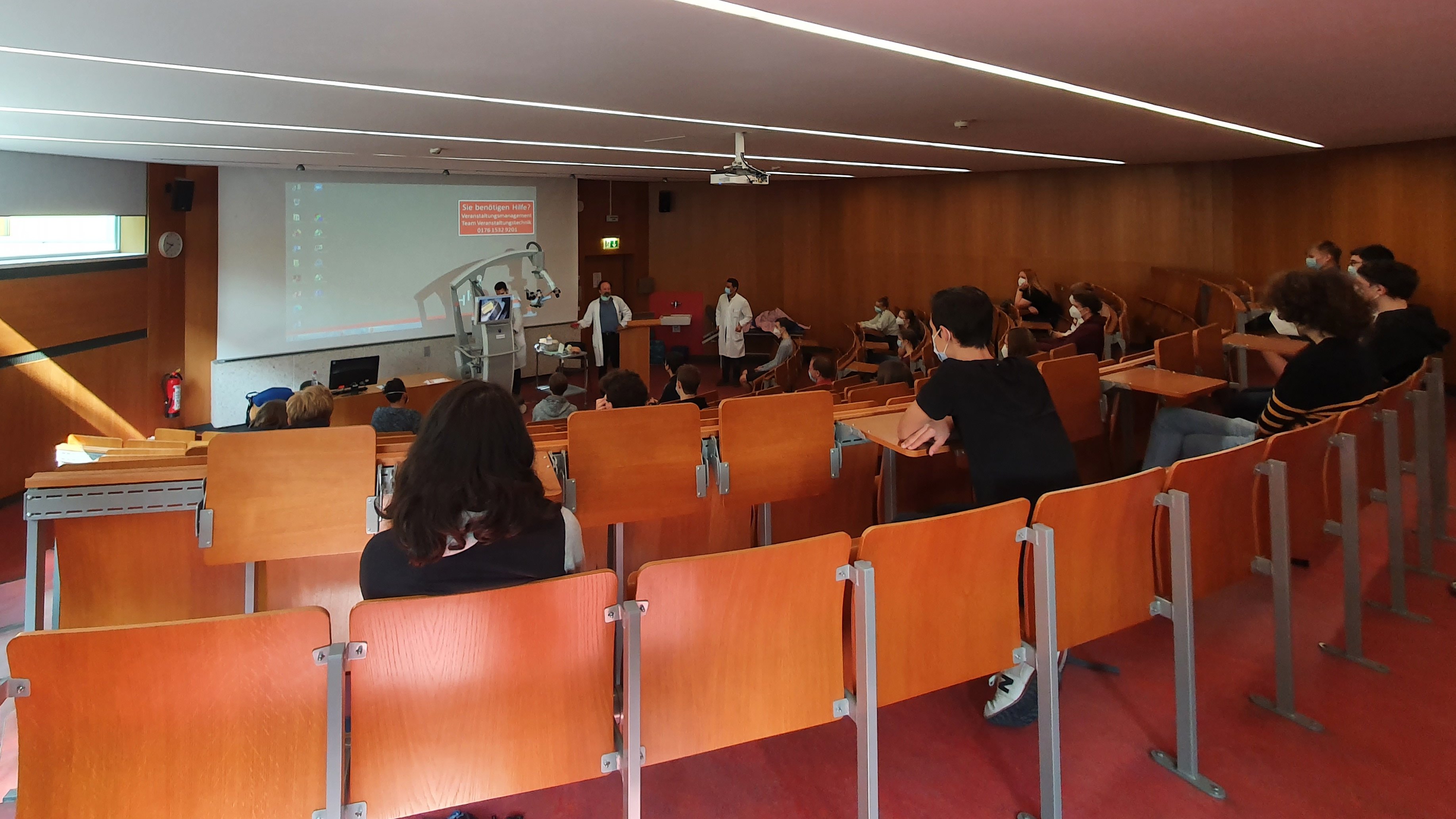
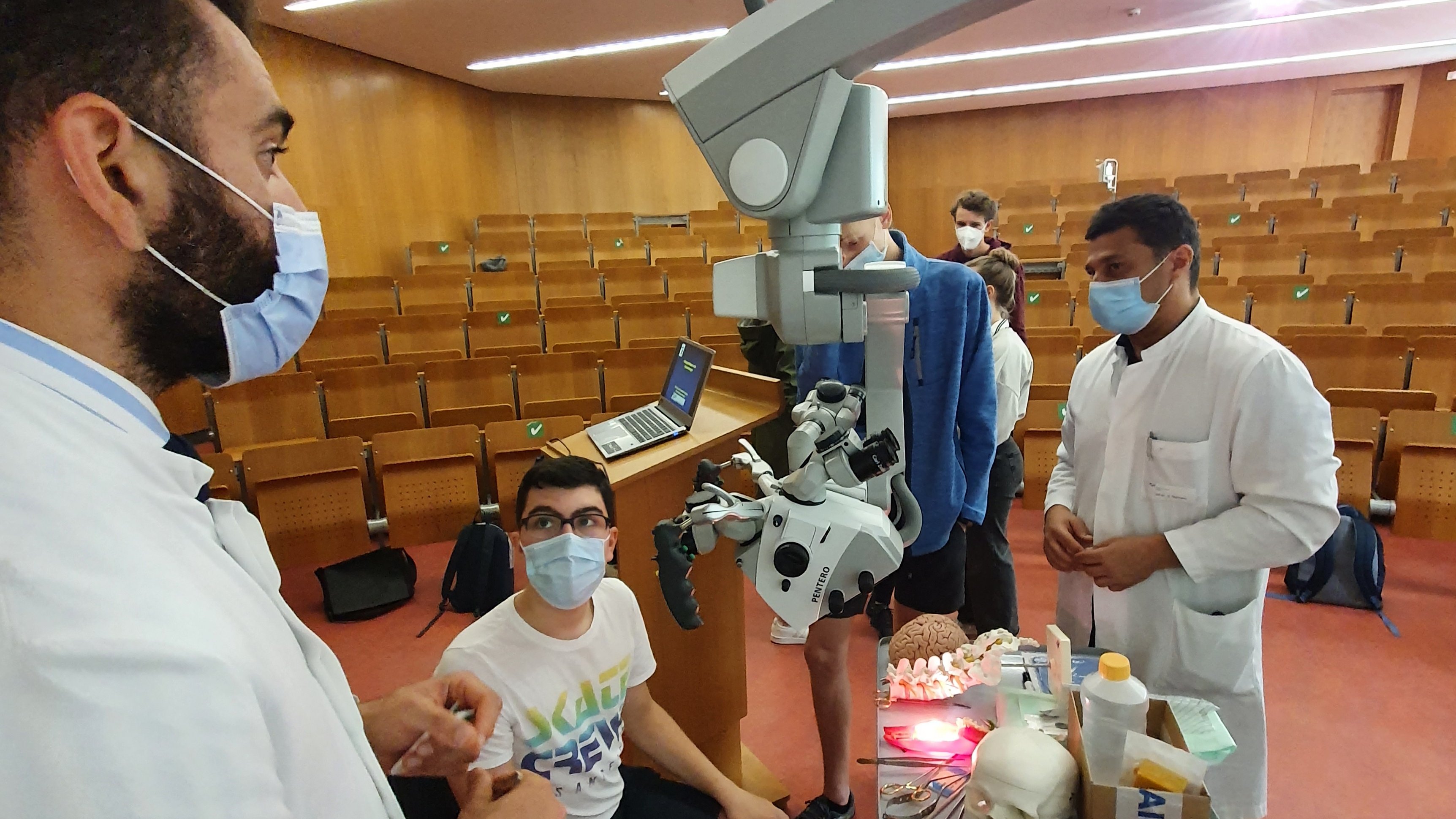
10th grade of the Schillergymnasium Hanover on a visit
After almost 18 months without events for students or the opportunity to do a student internship, the 10th grade of the Schiller-Gymnasium Hannover visited the Clinical Department of Neurosurgery as part of the scientific PU day (PU = profile lessons) "Research and Presentation".
In the lecture hall under Corona-compliant conditions, Ms. Schubert, Prof. Krauss' lecturer, first gave an overview lecture on the MHH and the Clinical Department of Neurosurgery. This was followed by a presentation of the Clinical Department's ZEISS Pentero microscope. Senior consultant Mr. Polemikos showed the interested students how the surgeon and assistant view an operation using the example of a bell pepper. The students were able to see the view through the microscope themselves. PD Hermann, Deputy Director of the Clinical Department, showed what happens in children with hydrocephalus and what minimal interventions can be used to treat it. In the last lecture of the series, Prof. Krauss, Director of the Clinical Department of Neurosurgery, spoke about brain machine interfaces and deep brain stimulation.
After two hours, the students went back to their school and, like their teachers, were also enthusiastic about the event.
June 8, 2021
World Brain Tumor Day
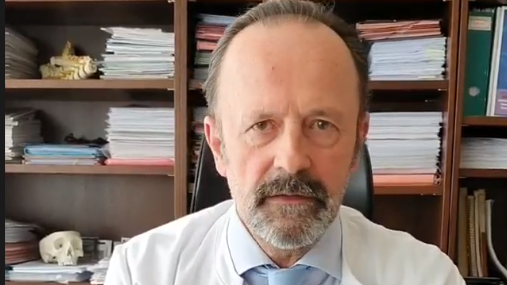
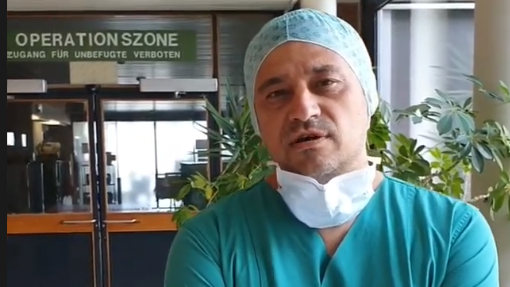
The Neurooncology Center of Hannover Medical School presents itself with a story on Instagram about the treatment of children with neuro-oncological diseases.
The above-mentioned experts, among others, explain how treatment and therapy is carried out.
April 2021
Training event: Neurovascular Board
The Neurovascular Board has been recognized by the Medical Association of Lower Saxony as an official continuing education event. Two continuing education points are awarded per event. The Neurovascular Board was initiated by Prof. Krauss, Prof. Lanfermann and Prof. Höglinger at the beginning of 2021. Complex neurovascular patients are regularly discussed here. It takes place every Thursday at 3.30 pm in seminar room 52 directly after the X-ray discussion of the Clinical Department of Neurosurgery under the scientific direction of Dr. Götz.
March 4, 2021
Generous donation
The Clinical Department of Neurosurgery received a generous private donation of €10,000 to support research and teaching following the successful treatment of an aneurysm in a cerebral artery after a subarachnoid hemorrhage.
March 3, 2021
New study center for the StimTox-CD study (excerpt from "Dystonie aktuell")
The StimTox-CD study, which is led by Prof. Volkmann, Neurological Department, University Clinical Department Würzburg, is one of the most important studies currently being conducted in German-speaking countries to further research the effectiveness of deep brain stimulation in dystonia. We are pleased to announce that after a lengthy preparatory phase during which several administrative issues had to be resolved, the Medical School with the Clinical Departments of Neurosurgery and Neurology was also initiated as a study center on October 7, 2020.
Although deep brain stimulation for the treatment of cervical dystonia was introduced in the late 1990s (Krauss, 1999), most attention was initially paid to the treatment of generalized dystonia. Over the years, however, a large number of studies were conducted that confirmed the effectiveness of deep brain stimulation in cervical dystonia. The breakthrough finally came after the publication of the multicenter study involving several German-speaking Clinical Departments, in which the effectiveness of the therapy was confirmed in a randomized study (Volkmann, 2014). The double-blind study design impressively demonstrated the effectiveness of pallidal stimulation on the severity of dystonia compared to temporary "sham stimulation".
The current StimTox-CD study is investigating whether patients who do not respond adequately to treatment with botulinum toxin benefit from treatment with deep brain stimulation. The clinical trial aims to show that deep brain stimulation achieves a more far-reaching improvement in dystonia in this patient group than repeated botulinum toxin injections. By September 2020, 29 patients had been included in the study, 27 of whom were randomized. Due to the coronavirus, there have been temporary restrictions in recent months, but video telephony has made it possible to create new ways of
The active study centers are currently located in Würzburg, Berlin, Kiel, Dresden, Düsseldorf, Hamburg, Cologne and Tübingen, and now Hanover is also a study center. Since 2005, more than 200 deep brain stimulations for dystonia have been performed at Hannover Medical School.