Psychosocial diagnosis and treatment of patients before and after organ transplantation
The new evidence- and consensus-based S3 guideline is online
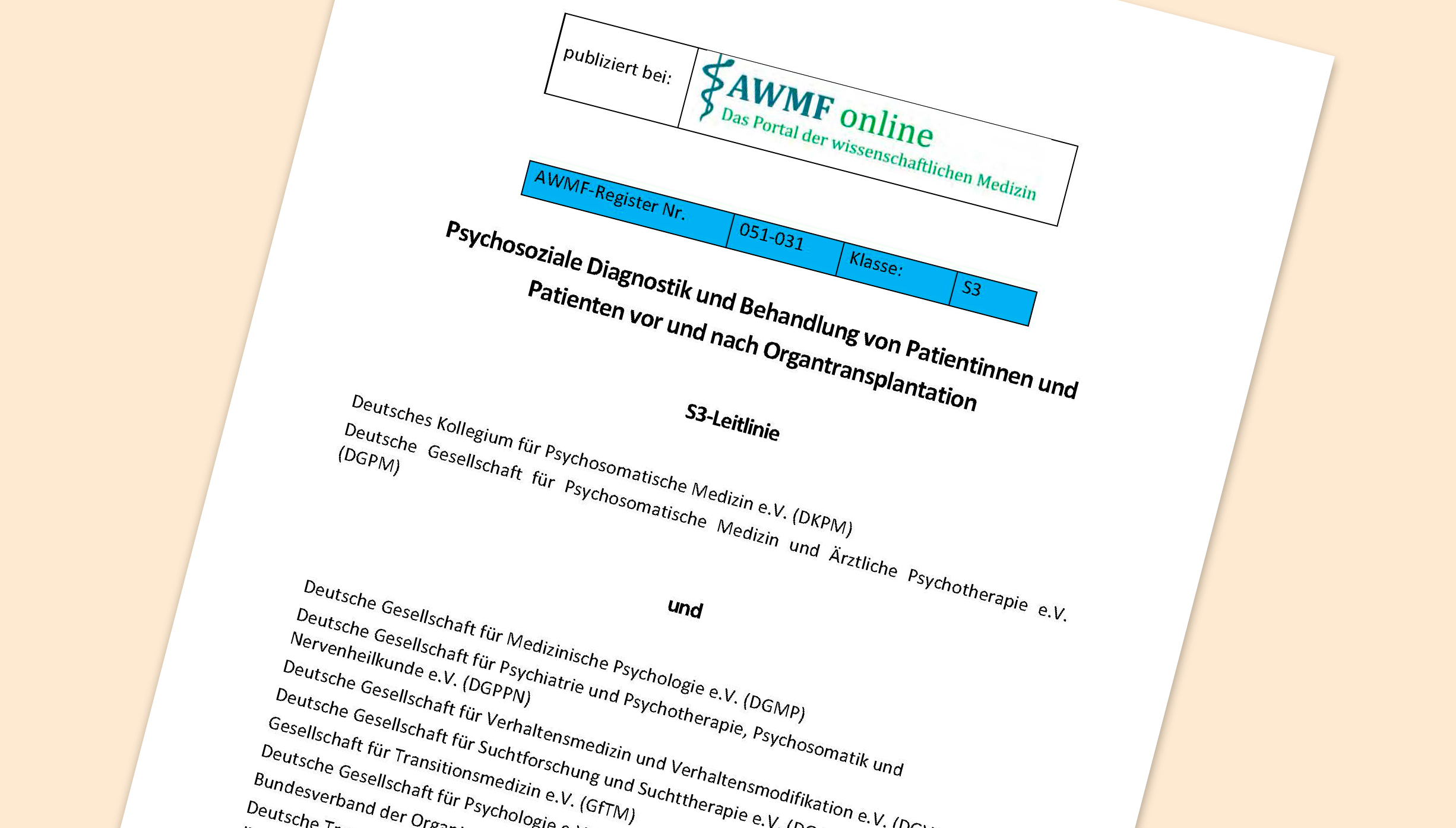
Transplant patients are confronted with physical, psychological and social challenges and stresses in all phases of treatment. Treatment is often focused primarily on medical aspects. As a result, potential problems and burdens for patients in the psychosocial area can be overlooked. In some transplant patients, psychological factors are also causally involved in the development and worsening of the physical disease process and therefore also require sufficient medical attention and therapy. Addiction disorders, such as those caused by alcohol and nicotine, with their known physical consequences, such as alcohol-associated liver disease, alcohol-related heart failure or chronic obstructive pulmonary disease, are examples of this.
This new guideline is intended to contribute to the establishment of standards for psychosocial diagnosis, indication and implementation of psychosocial treatment as well as the dissemination of evidence-based recommendations. On the basis of this guideline, decisions in transplant medicine should be placed on a more rational footing (e.g. which interventions lead to an improvement in adherence; under which conditions is psychosocial co-treatment indicated). The guideline is intended to supplement the guidelines drawn up by the German Medical Association. It also deals with topics that otherwise receive less attention, such as the role of relatives, self-help, transition and transplant care. A detailed chapter is dedicated to living donation and the psychosocial risk factors for which there is evidence of an unfavorable change in psychosocial endpoints after organ donation.
The guideline was drawn up under the leadership of the psychosomatic societies (DKPM and DGPM) in collaboration with representatives from 15 other German and Austrian societies. Members from both pediatric and adult nephrology were involved in the development.
The guideline contains recommendations and statements on the following topics:
- Structural requirements for psychosocial care
- Psychosocial risk factors for low adherence and / or a poor prognosis in the areas of quality of life, complications, rehospitalizations, rejection, organ loss and mortality. There are also chapters on depression, anxiety, substance use disorders, obesity and delirium.
- Psychosocial diagnostics and content and structure of psychosocial evaluation
- Recording, consequences and risk factors for non-adherence and interventions to improve adherence after organ transplantation. Here, the mandate holders came to the conclusion with a recommendation grade A that an intervention should be recommended to patients in the event of non-adherence, with multimodal interventions being preferred.
- Special features of psychopharmacotherapy in transplant medicine
- Evaluation, pre- and aftercare in living organ donation and
- The role of relatives
The mandate holders reached a strong consensus on the recommendation that needs-based psychosocial care for transplant patients should be ensured in all transplant centers and cooperating hospitals and rehabilitation facilities in order to provide patients with optimal psychosocial care.
The long and short versions of the guideline and the guideline report can be accessed at www.awmf.org/leitlinien/detail/ll/051-031.html.
The guideline coordinators
The preparation of the guideline was coordinated by Prof. de Zwaan and Dr. Nöhre of the Clinical Department of Psychosomatics and Psychotherapy.